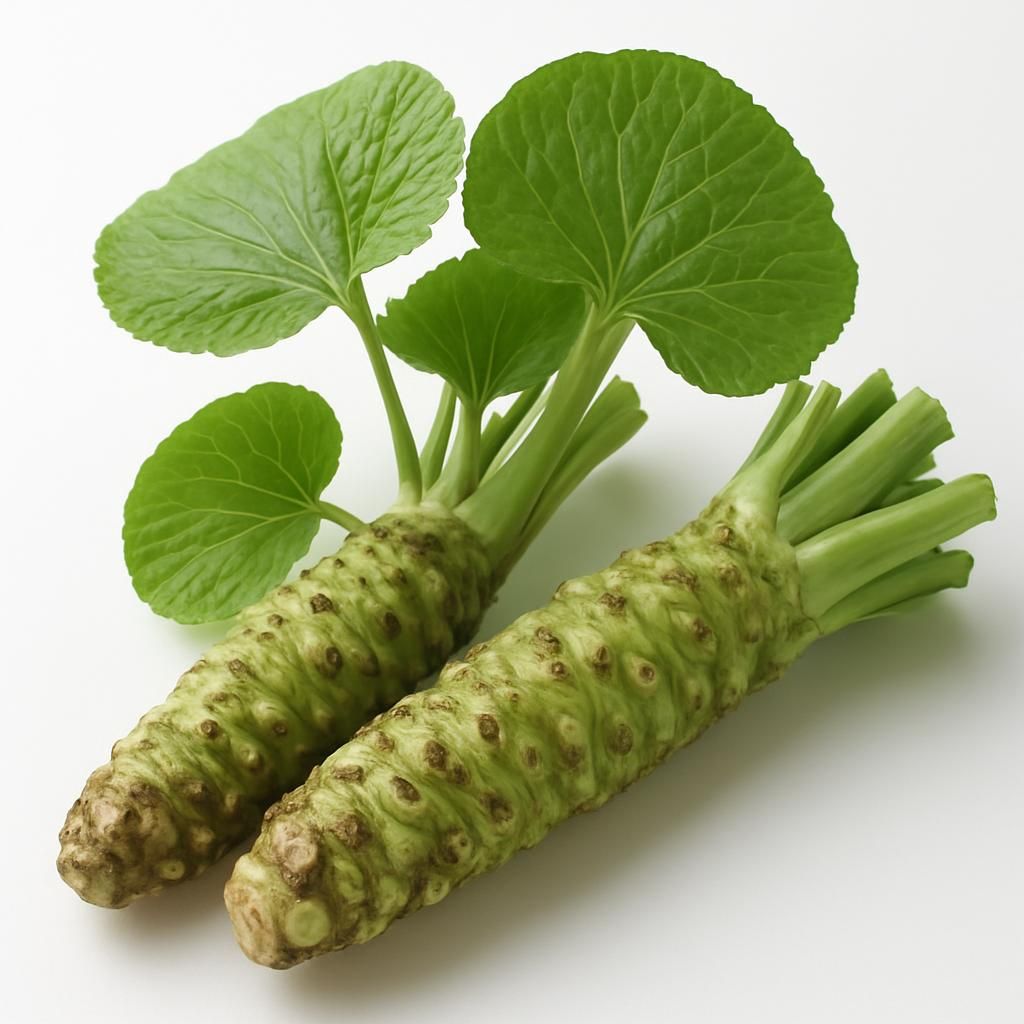
Introduction to Wasabi (Wasabia japonica - Mazuma)
Wasabi (Wasabia japonica - Mazuma) is a premium rhizomatous herb native to the cool mountain streams of Japan. Its swollen stems, commonly referred to as rhizomes, contain the sharp, sinus-clearing compound allyl isothiocyanate that defines authentic wasabi paste. The Mazuma cultivar is favored for its vigorous growth, deep green foliage, and high-quality rhizomes that command premium market prices. Commercial production remains limited due to exacting environmental needs, creating strong demand for locally grown, fresh rhizomes.
Growing Wasabi (Wasabia japonica - Mazuma) successfully requires replicating the shaded, consistently cool, and flowing-water conditions of its native habitat. The plant matures slowly, often taking 18–24 months from planting to first harvest, but offers multiple harvests from a single planting when managed correctly. This guide delivers professional-grade, actionable information for both small-scale and commercial growers seeking reliable yields of high-grade wasabi.
Botanical Profile of Wasabi (Wasabia japonica - Mazuma)
Wasabia japonica belongs to the Brassicaceae family and is a herbaceous perennial that forms a basal rosette of large, cordate leaves atop long petioles. The Mazuma selection produces thick, cylindrical rhizomes that elongate vertically and develop a characteristic pale-green to cream interior. Under optimal conditions the plant reaches 30–45 cm in height with leaves spanning 15–25 cm across. Flowering stalks may appear after the second year, producing small white cruciform flowers, although most commercial growers remove them to redirect energy into rhizome development.
Soil, pH, and Climate Requirements for Wasabi (Wasabia japonica - Mazuma)
Wasabi thrives in cool, moist, highly organic substrates with excellent drainage yet constant moisture. The following table summarizes the ideal growing parameters:
| Parameter | Ideal Range | Notes |
|---|---|---|
| Soil Type | Sandy loam to loam with high organic matter | Incorporate 30–40 % well-aged leaf mold or coconut coir |
| Soil pH | 6.0–7.0 | Maintain slightly acidic to neutral conditions |
| Temperature (Air) | 8–20 °C (day); 4–12 °C (night) | Avoid temperatures above 22 °C for extended periods |
| Temperature (Root Zone) | 10–16 °C | Critical for rhizome quality and pungency |
| Relative Humidity | 70–90 % | High humidity reduces transpiration stress |
| Light | 30–50 % shade (dappled or indirect) | Full sun causes leaf scorch and bitter rhizomes |
| Water | Constant flow or daily misting | 2–5 L per plant per day in flowing systems |
| Spacing | 30 cm between plants; 40 cm rows | Adequate airflow prevents fungal issues |
Step-by-Step Planting & Propagation
- Source disease-free Mazuma stock plants or tissue-cultured plantlets from reputable suppliers.
- Prepare a propagation bed or nursery trays with a sterile mix of 50 % perlite and 50 % peat or coconut coir; maintain 12–15 °C and 80 % humidity.
- Divide mature rhizomes into 5–8 cm sections, each containing at least one viable bud; dust cut surfaces with agricultural charcoal.
- Plant sections horizontally 2–3 cm deep; roots emerge within 10–14 days and new shoots within 3–4 weeks.
- Once plantlets reach 10–12 cm, transplant into final shaded beds or NFT channels, ensuring the crown sits just above the media surface.
Care & Maintenance regimes for Wasabi (Wasabia japonica - Mazuma)
Consistent monitoring of water quality, nutrient balance, and shade levels is essential. The following table outlines recommended schedules:
| Task | Frequency | Details |
|---|---|---|
| Irrigation / Flow | Daily continuous | Maintain 1–2 cm s⁻¹ flow rate; EC 0.8–1.2 mS cm⁻¹; pH 6.2–6.8 |
| Fertilizer | Every 14 days | Balanced organic fish hydrolysate (N-P-K 2-1-2) at 150 ppm N |
| Foliar Feed | Monthly | Seaweed extract (1:500) to supply trace minerals and reduce stress |
| Pruning | As needed | Remove yellowing leaves and flowering stalks to direct energy to rhizome |
| Mulch / Media Top-up | Every 6 months | Add 2 cm fresh leaf mold to maintain moisture and suppress weeds |
Pests, Diseases & Organic Management
Common issues include Aphids, Slugs, and Pythium. Implement integrated strategies: introduce predatory insects such as lacewings for aphid control, apply iron-phosphate slug baits, and maintain sterile media and water filtration to prevent root rot. Copper hydroxide sprays at 14-day intervals during wet periods help suppress bacterial leaf spots.
Harvesting, Curing & Optimal Storage
Harvest begins 18–24 months after planting when rhizomes reach 15–20 cm. Gently lift plants, wash rhizomes under cool running water, and remove leaves. Cure at 4 °C and 85 % RH for 7–10 days to intensify flavor. Store whole rhizomes wrapped in damp paper at 2–4 °C for up to 30 days, or grate fresh and freeze in sealed portions.
Companion Planting for Wasabi (Wasabia japonica - Mazuma)
Pair Wasabi with shade-tolerant Thai Basil and Ginger to maximize vertical space and deter pests through aromatic compounds. Avoid planting near Tomato or Potato due to shared disease susceptibility.