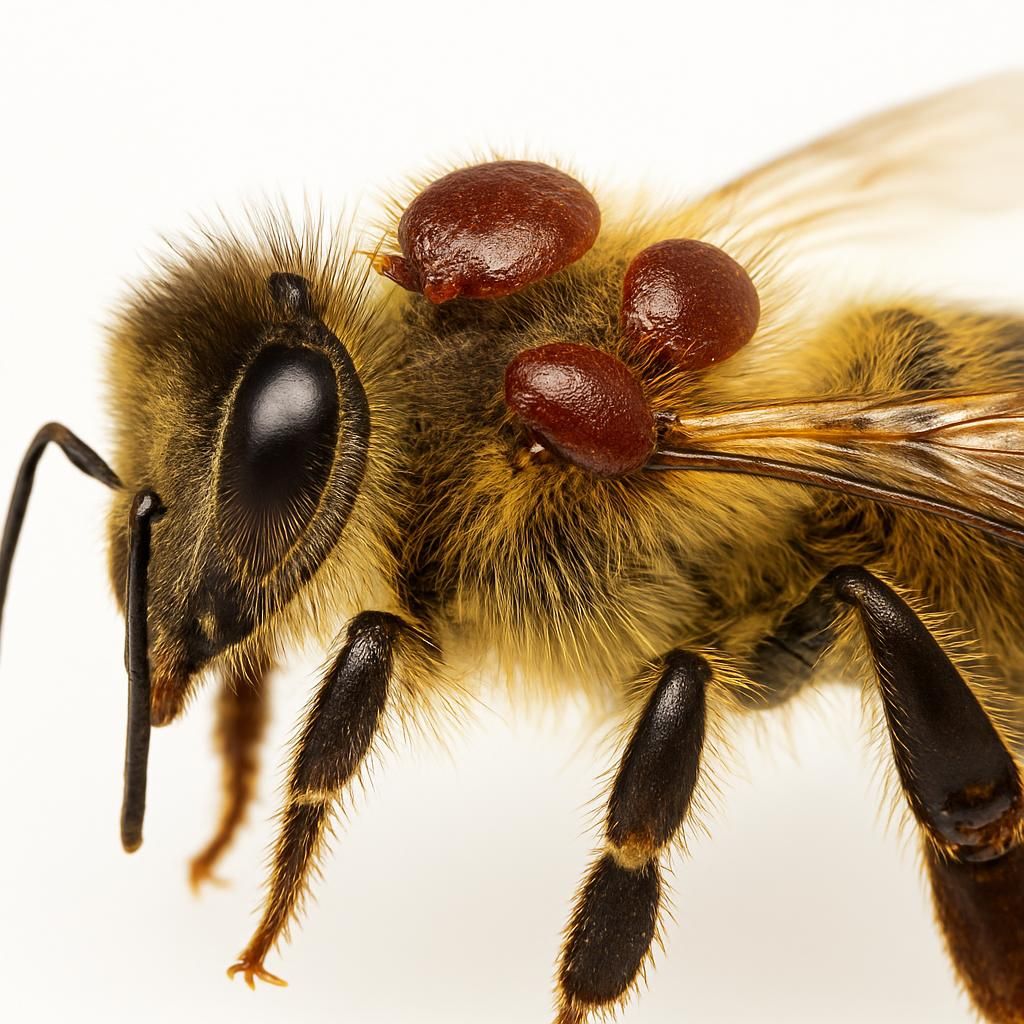
Introduction to Varroa mites
Varroa destructor, commonly known as the Varroa mite, is an obligate ectoparasite that feeds on the hemolymph and fat body tissue of honey bees (Apis mellifera). Originally native to the Asian honey bee Apis cerana, it has spread globally and now represents the primary threat to managed and feral honey bee populations. Mites reproduce inside sealed brood cells, preferentially targeting drone brood, and vector several debilitating viruses including deformed wing virus (DWV) and acute bee paralysis virus. Without intervention, infested colonies typically collapse within 2–3 years. Professional beekeepers integrate regular monitoring with mechanical, cultural, and approved organic treatments to maintain mite populations below economic thresholds.
Identifying Symptoms & Damage
Early detection relies on visual inspection of adult bees and brood. Adult mites appear as reddish-brown, oval-shaped parasites (1.0–1.5 mm) clinging to the thorax or abdomen of worker and drone bees. Heavily infested bees may exhibit deformed wings, shortened abdomens, and reduced body weight. Uncapped brood cells often reveal pale or dead pupae with punctured cuticles and scattered white fecal deposits from feeding mites. Drone brood shows higher infestation rates; drone cell cappings may appear sunken or perforated. Secondary symptoms include rapid colony decline, spotty brood patterns, and increased robbing behavior by neighboring colonies. Regular alcohol wash or sugar shake sampling quantifies infestation levels; treatment thresholds are typically reached at 2–3 mites per 100 bees during spring and 3 mites per 100 bees in late summer.
Lifecycle and Progression of Varroa mites (MUST INCLUDE A MARKDOWN TABLE OF LIFECYCLE STAGES)
The Varroa life cycle is tightly synchronized with the honey bee brood cycle. Foundress mites enter cells just before capping and produce offspring that mature and mate inside the sealed cell. The reproductive rate depends on temperature, humidity, and host availability.
| Stage | Duration (days) | Location | Key Characteristics |
|---|---|---|---|
| Phoretic (adult) | 5–11 | On adult bees | Mites feed on adult fat body; dispersal between colonies |
| Reproductive entry | <1 | Unsealed brood cell | Foundress mite enters cell 1–2 days before capping |
| Egg | 0.5–1 | Sealed brood cell | First egg is usually male; subsequent eggs are female |
| Protonymph | 1–2 | Sealed brood cell | Mobile feeding stage; first molt occurs |
| Deutonymph | 2–3 | Sealed brood cell | Second molt; female mites become sexually mature |
| Adult emergence | 1–2 | Cell uncapping | Mated daughters exit with emerging bee; males die |
Progression accelerates in spring and summer when brood rearing peaks; mite populations can increase 10–12 fold per generation under favorable conditions.
Environmental Triggers & Risk Factors
High temperatures (25–35 °C) and moderate humidity (50–70 %) favor rapid mite reproduction and survival. Weak or stressed colonies with limited nurse bees experience higher infestation because mites have fewer grooming opportunities. Drone brood production in early spring provides an ideal reproductive substrate. Proximity to other infested apiaries increases horizontal transmission through drifting and robbing bees. Poor nutrition, especially pollen shortages, reduces bee immune response and grooming efficiency. Overwintering colonies with insufficient stores or high mite loads entering fall face elevated collapse risk the following spring.
Organic Control & Treatment Plans (MUST INCLUDE A MARKDOWN TABLE OF TREATMENT OPTIONS AND FREQUENCIES)
Integrated pest management (IPM) prioritizes non-chemical methods before resorting to approved organic acaricides. Mechanical controls such as drone brood trapping and screened bottom boards reduce mite numbers without residues. When chemical intervention is required, only products registered for organic use are recommended.
| Treatment Option | Active Ingredient | Application Method | Frequency / Timing | Notes / Efficacy |
|---|---|---|---|---|
| Drone brood trapping | None (mechanical) | Insert drone foundation; remove capped frames | Every 7–10 days during spring buildup | Removes 50–70 % of mites; repeat 2–3 cycles |
| Screened bottom board | None (mechanical) | Replace solid board with screened version | Continuous | 10–20 % natural mite drop; improves ventilation |
| Powdered sugar dusting | Food-grade sugar | Dust 1 cup over cluster every 7 days | Weekly during high infestation | Stimulates grooming; low efficacy alone |
| Formic acid (Mite-Away Quick Strips) | Formic acid | Place strips on top bars | 2 strips for 7 days, repeat after 14 days | Effective at 10–30 °C; kills phoretic & reproductive mites |
| Oxalic acid dribble | Oxalic acid dihydrate | Dribble 5 ml solution per seam of bees | 1–2 treatments in broodless period (late fall/winter) | 90–99 % efficacy on phoretic mites; avoid during honey flow |
| Thymol (Apiguard) | Thymol crystals | Place gel tray above brood nest | 2 trays, 2 weeks apart, 15–30 °C | Good for moderate infestations; temperature sensitive |
| HopGuard II | Hop beta acids | Insert strips between frames | 2 strips per colony, repeat after 14 days | Suitable for organic operations; temperature range 10–25 °C |
Always follow label directions, rotate active ingredients to delay resistance, and verify mite counts post-treatment.
Preventing Varroa mites in the Future
Prevention begins with purchasing mite-resistant stock such as Varroa Sensitive Hygiene (VSH) or Russian honey bees. Maintain strong, well-fed colonies by providing supplemental pollen patties during dearth periods. Implement a strict quarantine protocol for incoming nucs and packages, including a 21-day isolation period with initial mite testing. Practice regular colony splitting to break the brood cycle and reduce mite reproduction. Use integrated monitoring every 3–4 weeks from spring through fall; record results to track trends. Avoid unnecessary chemical treatments that may harm beneficial hive microbes. Collaborate with neighboring beekeepers to coordinate treatment timing and reduce regional mite pressure.
Crops Most Affected by Varroa mites
Varroa mites primarily affect honey bee colonies rather than crops directly. However, the resulting decline in pollination services impacts a wide range of insect-pollinated crops including Almond, Apple, Blueberry, Cherry, Cucumber, and many others. Colonies weakened by Varroa transmit fewer effective pollinators, leading to reduced fruit set and lower yields in these high-value crops.
For more detailed information on honey bee parasites, see the Mites wiki page. Read practical beekeeping insights in the blog post 7 Summer Pest Traps That Sabotage Small Farm Harvests.