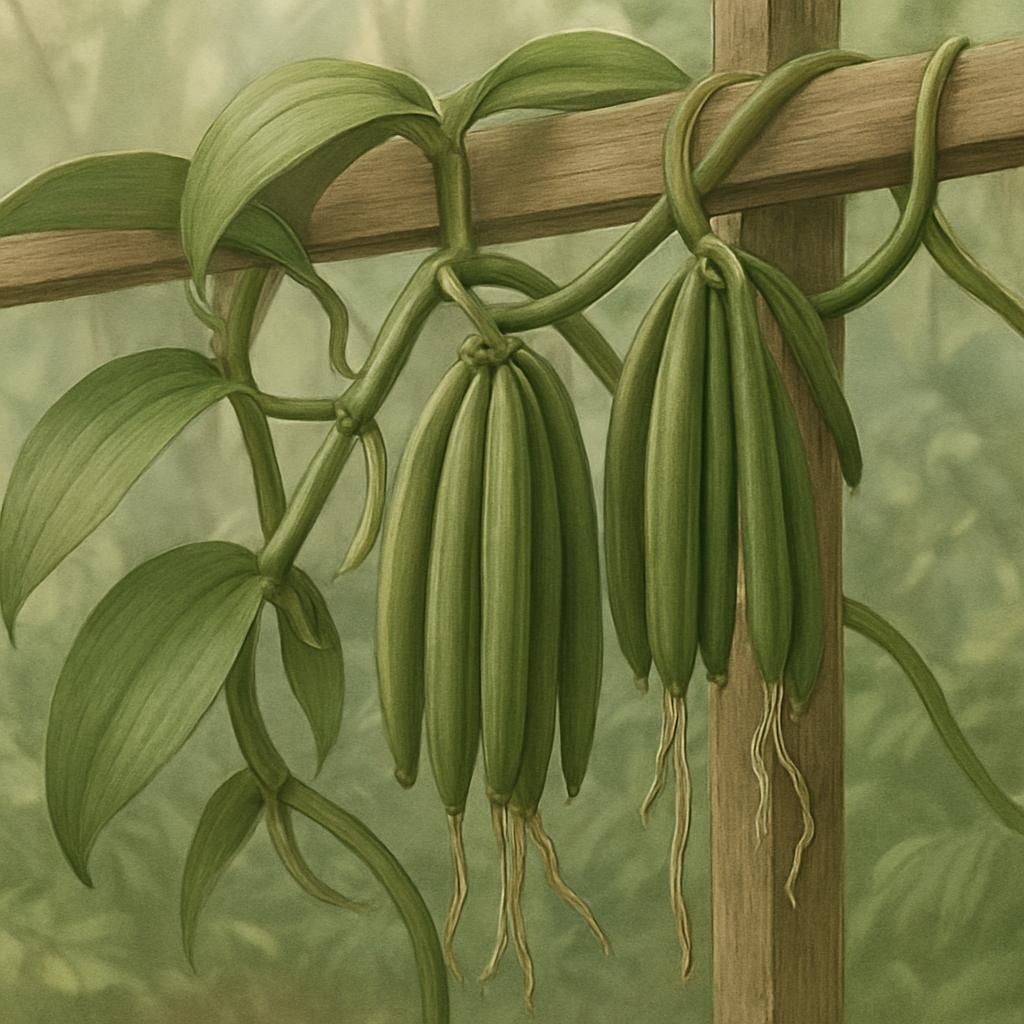
Introduction to Vanilla (Tahitiensis)
Vanilla tahitensis is a high-value tropical orchid vine native to French Polynesia, cultivated primarily for its intensely aromatic, thick pods used in gourmet flavoring, perfumery, and premium extracts. Unlike the more common Vanilla species, Tahitian vanilla offers a distinctive fruity, floral profile with lower vanillin content but superior oil retention. Successful cultivation requires mimicking its native humid rainforest environment with consistent moisture, shade, and support structures.
Commercial production remains concentrated in Tahiti, Hawaii, and select equatorial regions, where the crop delivers strong economic returns for small farms when quality curing standards are met. Growers benefit from the plant’s perennial nature, with vines remaining productive for 12–15 years under optimal management.
Botanical Profile of Vanilla (Tahitiensis)
Vanilla tahitensis is a climbing perennial orchid in the Orchidaceae family, producing long, fleshy stems that reach 10–15 meters when supported. The plant develops aerial roots along its nodes to anchor on host trees or trellises while absorbing atmospheric moisture. Its thick, leathery leaves are alternate and elliptical, measuring 15–25 cm in length.
The vine produces clusters of pale yellow-green flowers that open for a single day. Hand-pollination is essential outside its native range, as the natural pollinator (a specific bee species) is absent in most cultivation areas. Successful pollination results in elongated pods that mature over 8–9 months, developing their characteristic oily texture and complex aroma during curing.
Soil, pH, and Climate Requirements for Vanilla (Tahitiensis)
Vanilla tahitensis thrives in well-drained, organic-rich substrates that retain moisture without waterlogging. The ideal medium combines decomposed leaf litter, coarse bark, and volcanic rock fragments to replicate its epiphytic origins while providing root aeration.
| Parameter | Ideal Range | Notes |
|---|---|---|
| Soil Type | Sandy loam to loamy with high organic matter | Mix of leaf mold, coconut husk, and perlite |
| pH | 6.0–7.0 | Slightly acidic to neutral |
| Temperature (day) | 24–30°C | Consistent warmth essential |
| Temperature (night) | 18–24°C | Avoid drops below 15°C |
| Relative Humidity | 75–85% | Critical for flowering and pod development |
| Annual Rainfall | 1500–2500 mm | Evenly distributed; supplement in dry seasons |
| Light | 30–50% shade | Filtered light or shade cloth recommended |
| Elevation | 0–600 m | Sea level to mid-elevation tropics |
Step-by-Step Planting & Propagation
Propagation of Vanilla tahitensis is achieved through stem cuttings taken from healthy, mature vines. Select 30–40 cm cuttings with 3–4 nodes and at least one aerial root. Remove lower leaves and plant the cutting horizontally in a moist propagation mix, ensuring two nodes remain buried.
Rooting occurs within 4–6 weeks under high humidity and indirect light. Once established, transplant young vines to permanent supports such as living trees (Gliricidia) or wooden trellises spaced 2–2.5 m apart. Train vines horizontally along the support to encourage lateral branching and flowering.
Planting density typically ranges from 800–1200 vines per hectare, allowing adequate airflow to reduce disease pressure. Mulch heavily with organic material to maintain soil moisture and suppress weeds.
Care & Maintenance regimes for Vanilla (Tahitiensis)
Consistent care is required to maintain vine health and maximize pod production. Focus on moisture management, balanced nutrition, and strategic pruning to promote flowering.
| Task | Frequency | Details |
|---|---|---|
| Watering | 2–3 times weekly | Keep substrate moist but never soggy; increase during flowering |
| Fertilizer | Every 4–6 weeks (growing season) | Balanced 10-10-10 or organic equivalent; reduce nitrogen after flowering |
| Pruning | Twice annually | Remove dead wood and thin dense growth after harvest; train new shoots |
| Mulching | Renew every 3–4 months | 5–8 cm layer of leaf litter or coconut husk |
| Shade Management | Seasonal adjustment | Increase shade during peak summer heat |
Pests, Diseases & Organic Management
Vanilla tahitensis is susceptible to several pests and diseases that can significantly reduce yields if not managed promptly. Regular scouting and cultural practices form the foundation of organic control.
Common pests include scale insects, mealybugs, and thrips. These sap-feeding insects weaken vines and promote sooty mold. Introduce beneficial insects such as ladybugs and lacewings, and apply neem oil or insecticidal soap at early infestation stages.
Fungal diseases such as root rot and Fusarium wilt are exacerbated by poor drainage or overwatering. Improve soil aeration, avoid water stagnation, and apply beneficial Trichoderma species as a preventive soil drench. Remove and destroy infected plant material to limit spread.
Harvesting, Curing & Optimal Storage
Pods are harvested when they turn yellow at the blossom end, typically 8–9 months after pollination. Harvest in the early morning to minimize field heat stress on the beans.
Curing involves a series of sweating, drying, and conditioning steps lasting 6–8 months. Begin with a hot-water kill (63–65°C for 3 minutes), followed by daily sweating under blankets for 7–10 days. Gradually sun-dry pods until moisture content reaches 25–30%, then store in airtight containers for flavor development.
Properly cured Tahitian vanilla maintains its aromatic quality for 12–18 months when stored in cool, dark conditions. Vacuum-sealed packaging extends shelf life and preserves the distinctive fruity notes valued by premium buyers.
Companion Planting for Vanilla (Tahitiensis)
Strategic companion planting enhances biodiversity, improves microclimate, and supports natural pest control in vanilla systems. Living support trees such as Gliricidia provide nitrogen fixation, shade, and structural support while improving soil fertility.
Understory herbs like Thai Basil and Thyme deter certain insect pests and attract beneficial pollinators. Marigold plantings around the perimeter repel nematodes and add visual appeal to the plantation. Avoid heavy feeders or tall crops that compete for light and moisture.
Integrating shallow-rooted legumes and aromatic species creates a resilient polyculture that reduces disease incidence and supports long-term soil health.