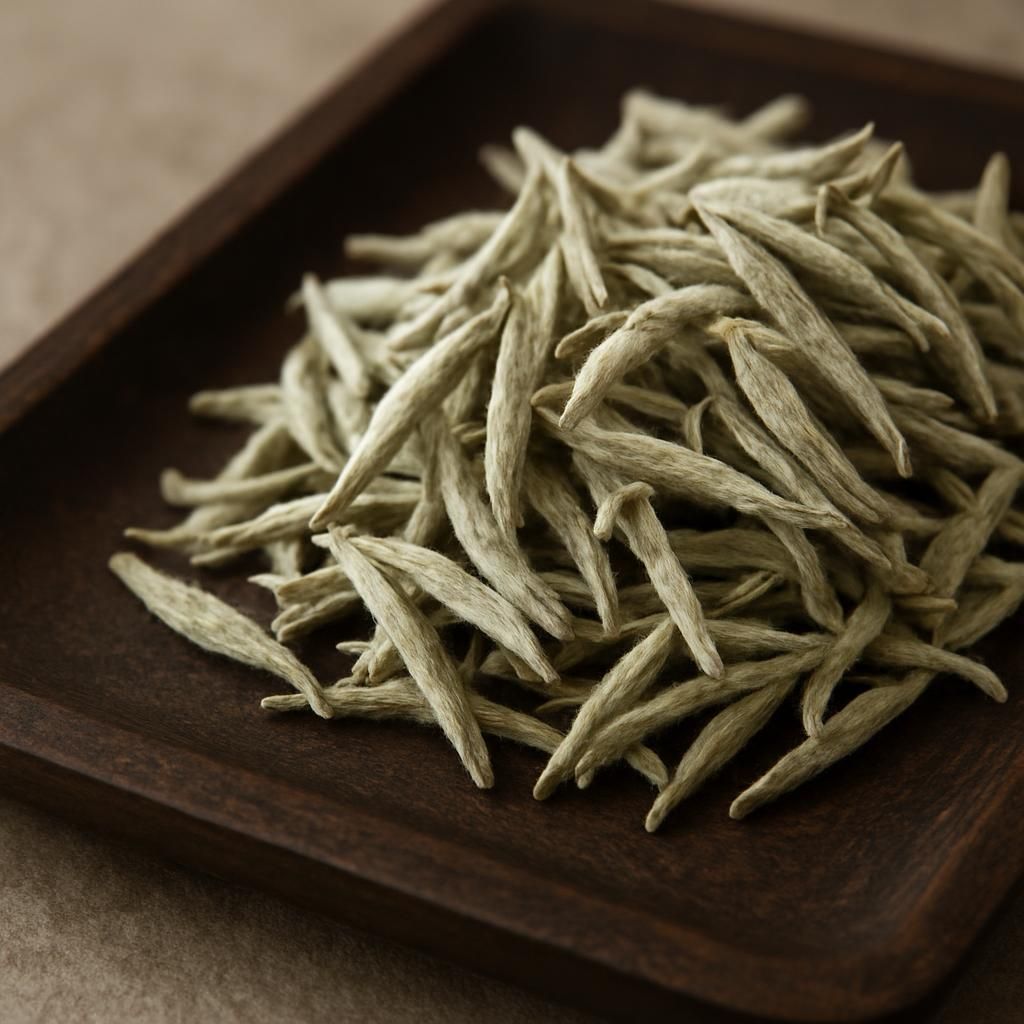
Introduction to Tea (White - Silver Needle)
Silver Needle (Bai Hao Yin Zhen) represents the pinnacle of white tea production, crafted solely from plump, silvery-white buds of the Camellia sinensis plant. Originating from the Fuding region of Fujian Province, China, this delicate tea commands premium prices due to its labor-intensive harvest and subtle flavor profile. Professional growers appreciate its high market value and relatively low processing requirements compared to oxidized teas.
Successful cultivation demands precise environmental control, meticulous harvesting timing, and organic practices that preserve the tea's natural antioxidants and amino acids. This guide provides actionable, field-tested strategies for establishing and maintaining productive Silver Needle plantations.
Botanical Profile of Tea (White - Silver Needle)
Camellia sinensis var. sinensis is an evergreen shrub belonging to the Theaceae family. The plant features leathery, serrated leaves and produces small, fragrant white flowers with yellow stamens. Silver Needle specifically utilizes the unopened terminal buds covered in fine, silvery trichomes that give the finished tea its characteristic appearance.
The cultivar typically reaches 1–2 meters in height when pruned for plucking, with a slow growth rate suited to cool, misty highland conditions. Buds emerge in early spring flushes, and the plant exhibits strong apical dominance, making regular pruning essential for maintaining harvestable shoots. Genetic diversity within sinensis varieties allows selection for cold tolerance, disease resistance, and bud density.
Soil, pH, and Climate Requirements for Tea (White - Silver Needle)
Optimal soil and climate conditions are critical for producing high-quality Silver Needle buds with desirable chemical composition.
| Parameter | Ideal Range | Notes |
|---|---|---|
| Soil Type | Well-drained loam to sandy loam | Avoid heavy clay; raised beds recommended |
| Soil pH | 4.5 – 5.5 | Acidic conditions enhance nutrient uptake |
| Organic Matter | 3–5% | Incorporate compost or leaf mold annually |
| Temperature | 15–25 °C daytime; 5–12 °C night | Protect from frost below –5 °C |
| Annual Rainfall | 1,200–2,000 mm | Even distribution preferred |
| Relative Humidity | 70–85% | High humidity reduces transpiration stress |
| Altitude | 800–2,000 m | Higher elevations improve flavor compounds |
| Sunlight | Partial shade (30–50%) | Filtered light or shade nets recommended |
Step-by-Step Planting & Propagation
Site Selection: Choose slopes with good air drainage and morning sun exposure. Conduct soil tests and amend with elemental sulfur if pH exceeds 5.8.
Propagation: Silver Needle tea is typically propagated from semi-hardwood cuttings taken in late summer. Select healthy, disease-free mother plants. Cuttings 10–15 cm long with 3–4 leaves root best in a 1:1 mix of perlite and peat under 80% humidity and bottom heat at 24 °C.
Nursery Phase: Rooted cuttings are grown in 15 cm pots for 12–18 months before field planting. Gradually harden off plants over 4–6 weeks.
Field Planting: Transplant at 1.2 m × 1.5 m spacing in double rows on contour beds. Plant during the onset of the rainy season. Apply 5–10 L of well-rotted compost per planting hole.
Initial Training: Pinch the apical bud at 30 cm height to encourage lateral branching. Establish a plucking table at 45–60 cm within the first year.
Care & Maintenance regimes for Tea (White - Silver Needle)
Consistent cultural practices maximize bud quality and plant longevity.
| Practice | Schedule | Details |
|---|---|---|
| Irrigation | 25–30 mm/week during dry periods | Drip irrigation preferred; avoid overhead watering to reduce disease |
| Fertilizer | March, June, September | Apply 150–200 kg N/ha/year split into three applications; use organic sources (fish emulsion, compost tea) |
| Pruning | Annual light prune post-harvest | Remove 15–20 cm of growth to maintain table height; rejuvenation prune every 5–7 years |
| Mulching | Renew twice yearly | 5–8 cm layer of rice straw or leaf litter to suppress weeds and retain moisture |
| Weeding | Monthly during growing season | Hand weeding or shallow cultivation; avoid herbicides near young plants |
Pests, Diseases & Organic Management
Tea Mosquito Bug (/wiki/tea-mosquito-bug) is the primary pest, causing necrotic spots on buds. Monitor weekly and release predatory mirid bugs or apply neem-based sprays at early infestation. Spider Mites may appear during hot, dry spells; increase humidity and introduce predatory mites.
Fungal threats include Anthracnose and Root rot. Improve drainage, avoid overhead irrigation, and apply copper-based fungicides only as a last resort. Maintain biodiversity with Clover ground covers to support beneficial insects.
Harvesting, Curing & Optimal Storage
Harvest only plump, unopened buds with silvery pubescence during the first spring flush (March–April in subtropical regions). Pluck between 9–11 a.m. when dew has dried. Process within two hours of harvest.
Curing involves withering buds on bamboo trays in a controlled environment (22–25 °C, 65–70% RH) for 48–72 hours with gentle air circulation. No rolling or oxidation occurs. Finished tea should contain <5% moisture.
Store in airtight, opaque containers at 15–18 °C with relative humidity below 60%. Vacuum-sealed foil bags extend shelf life up to 18 months while preserving delicate floral notes.
Companion Planting for Tea (White - Silver Needle)
Interplant with nitrogen-fixing Clover or Hairy vetch to improve soil fertility and reduce erosion on slopes. Aromatic herbs such as Rosemary and Thyme deter aphids and enhance biodiversity. Avoid planting near Tomato or Potato to minimize shared disease pressure.
For more insights on small-farm soil strategies, see The Hidden Power of Mulching: 8 Organic Strategies to Transform Small Farm Soil.