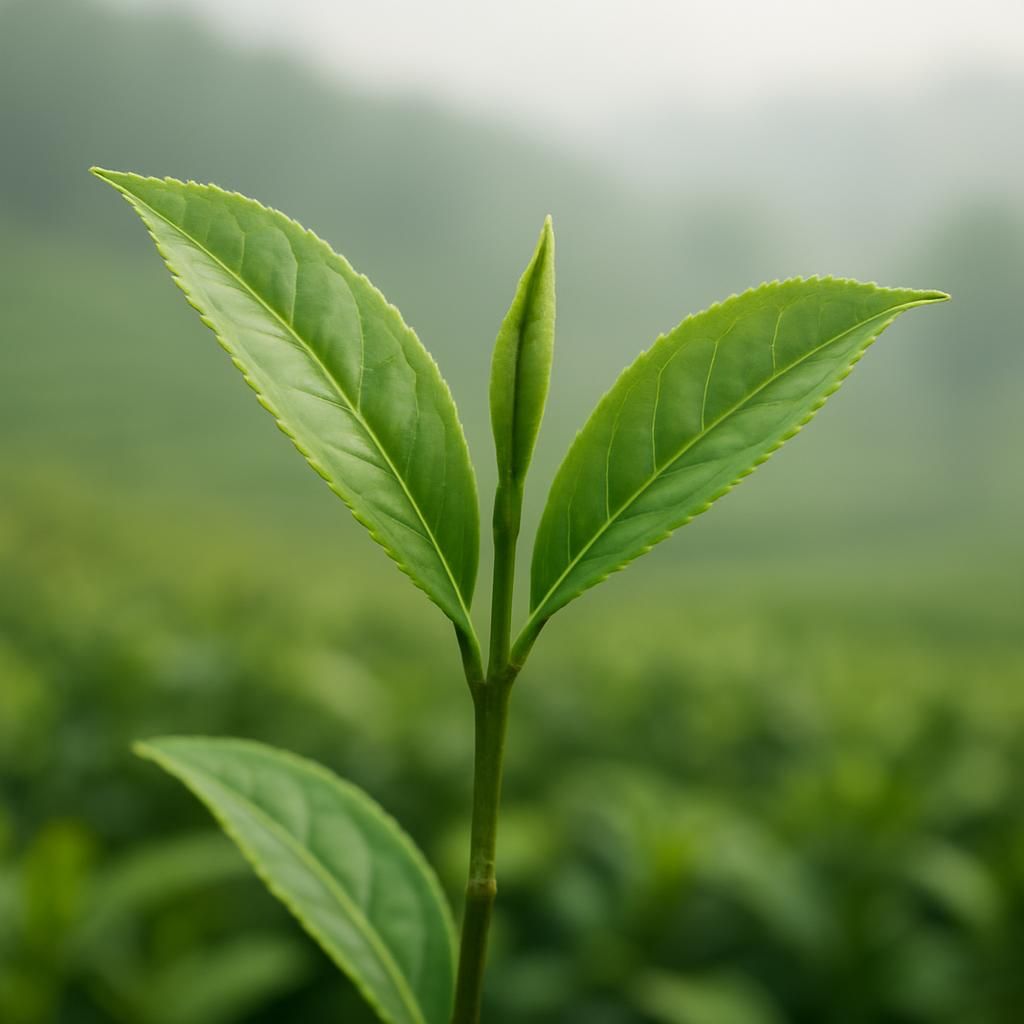
Introduction to Tea (Camellia sinensis - Assamica)
Tea (Camellia sinensis var. assamica) is the backbone of major black tea production worldwide, originating from the Assam region of India. This fast-growing variety produces larger, more robust leaves than the China type and is prized for its brisk, malty flavor profile. Commercial plantations range from sea level to 1,800 m elevation, with the highest quality often coming from well-managed estates receiving 1,500–3,000 mm of evenly distributed rainfall.
Successful cultivation demands acidic soils, consistent moisture, and regular pruning to stimulate new flush. Smallholders and large estates alike benefit from integrated pest management and organic soil-building practices that improve leaf quality while reducing input costs.
Botanical Profile of Tea (Camellia sinensis - Assamica)
Camellia sinensis var. assamica is an evergreen woody shrub or small tree reaching 3–10 m if unpruned. Leaves are large (8–20 cm), glossy, and serrated with prominent veins. Flowers are white with yellow anthers and appear in late autumn; seeds are contained in woody capsules. The plant exhibits strong apical dominance, making regular pruning essential for sustained leaf production.
Soil, pH, and Climate Requirements for Tea (Camellia sinensis - Assamica)
Tea demands well-drained, deep, acidic soils rich in organic matter. Waterlogging quickly causes root decline, while alkaline conditions induce chlorosis.
| Parameter | Ideal Range | Notes |
|---|---|---|
| Soil pH | 4.5 – 5.5 | Below 4.0 or above 6.0 reduces nutrient uptake |
| Soil Texture | Loamy to sandy loam | Minimum 1.5 m depth preferred |
| Organic Matter | 3–6 % | Improves moisture retention and structure |
| Annual Rainfall | 1,500–3,000 mm | Even distribution critical |
| Temperature Range | 18–30 °C (day); min 10 °C | Frost below 5 °C damages young leaves |
| Altitude | 0–1,800 m | Higher altitudes often produce finer flavor |
| Relative Humidity | 70–90 % | Supports rapid flush growth |
Step-by-Step Planting & Propagation
- Select healthy, disease-free cuttings or clonal plants from certified nurseries.
- Prepare nursery beds with 50 % shade and a 1:1:1 mix of topsoil, sand, and well-rotted compost.
- Take 15–20 cm semi-hardwood cuttings with 3–4 leaves; treat base with rooting hormone.
- Plant cuttings 5 cm deep at 10 × 10 cm spacing; maintain 80 % humidity under mist.
- Rooting occurs in 8–12 weeks; harden off for 4 weeks before field transplant.
- Field planting: dig 45 × 45 × 45 cm pits; incorporate 5 kg compost and 100 g rock phosphate per pit.
- Plant at 1.2 × 0.6 m spacing for high-density hedgerow systems or 1.5 × 1 m for conventional rows.
- Mulch immediately with 10–15 cm organic material and irrigate to field capacity.
Care & Maintenance regimes for Tea (Camellia sinensis - Assamica)
Consistent irrigation, balanced nutrition, and timely pruning are critical for sustained flush production.
| Operation | Frequency / Timing | Details |
|---|---|---|
| Irrigation | Weekly or 25–30 mm when rainfall < 25 mm | Drip or overhead sprinklers; avoid waterlogging |
| Fertilizer | 4 splits/year (Feb, May, Aug, Nov) | NPK 20-5-10 or equivalent at 300–400 kg N/ha/yr; apply after pruning |
| Pruning | Annual light prune (Dec–Jan) | Cut back to 50–60 cm; remove dead wood; rejuvenation prune every 5–7 yr |
| Weeding | 3–4 rounds/year | Manual or spot herbicide; maintain 1 m weed-free circle around plants |
| Mulching | Renew twice yearly | 10 cm layer of grass, leaves, or pruned tea prunings |
Pests, Diseases & Organic Management
Major pests include Tea Mosquito Bug, thrips, and mites. Diseases such as blister blight and root rot can devastate yields if unchecked.
Organic strategies:
- Introduce predatory mites and lady beetles for mite and aphid control.
- Apply neem oil (0.5 %) and garlic-chili extract weekly during flush.
- Improve drainage and use Trichoderma harzianum drenches to suppress root pathogens.
- Remove and destroy infected shoots to reduce inoculum.
- Maintain biodiversity with gliricidia shade trees and marigold borders.
Harvesting, Curing & Optimal Storage
Harvest the terminal bud and two youngest leaves ("two leaves and a bud") every 7–14 days during peak season. Pluck in early morning when leaf moisture is high. Wither leaves 12–18 hours to reduce moisture to 60–70 %. Roll or cut to rupture cells, then ferment 1–3 hours for black tea or immediately dry for green tea. Final drying at 90–100 °C reduces moisture to 3–5 %. Store in airtight, light-proof containers at 15–20 °C and < 60 % RH to preserve aroma for 12–18 months.
Companion Planting for Tea (Camellia sinensis - Assamica)
Leguminous shade trees such as gliricidia fix nitrogen and moderate microclimate. Marigold borders repel nematodes and thrips. Interplanting with ginger or turmeric provides additional income while improving soil organic matter. Avoid planting coffee too closely as both compete for similar nutrients.
For more on building resilient small-farm systems, see The Hidden Power of Mulching: 8 Organic Strategies to Transform Small Farm Soil.