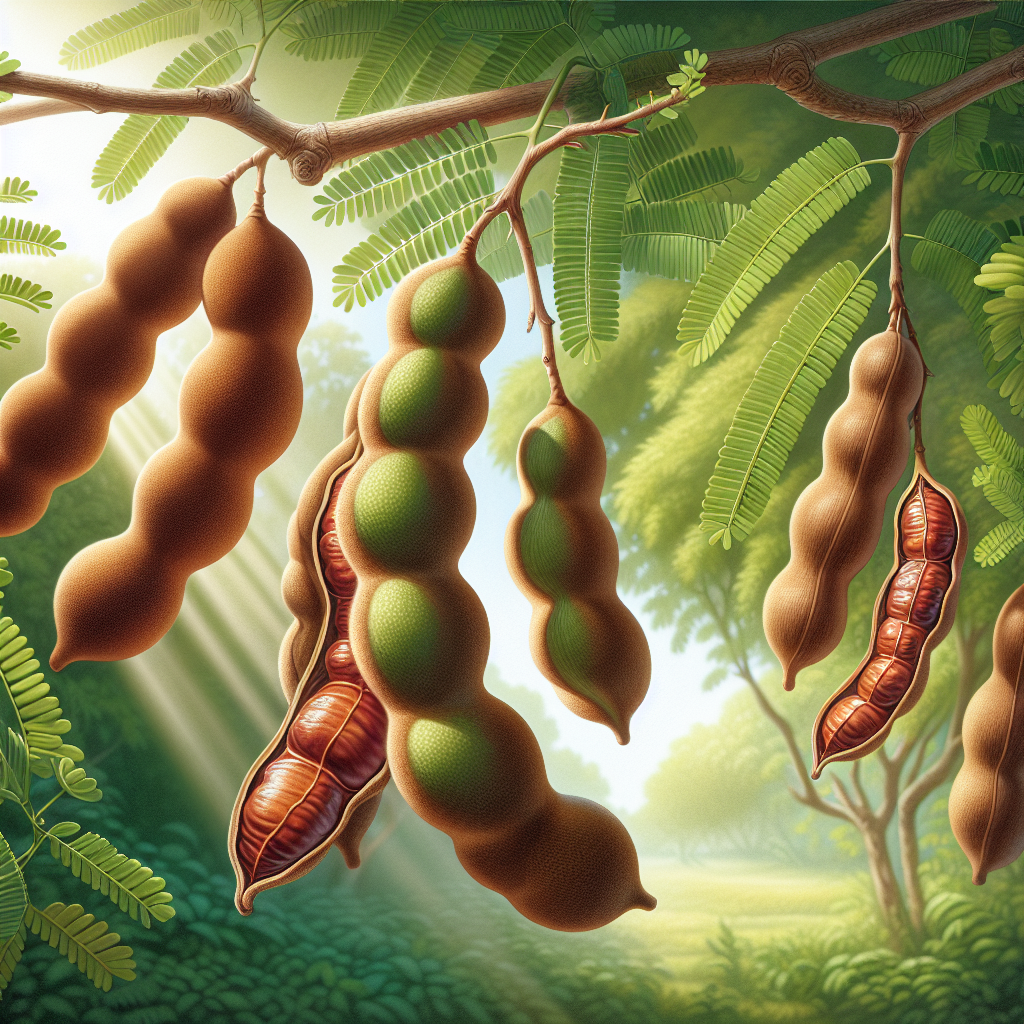
Introduction to Tamarind (Sweet Thailand)
Tamarind (Sweet Thailand), a select cultivar of Tamarindus indica, stands out in tropical agriculture for its uniquely sweet flavor profile, setting it apart from traditional tart varieties. Originating from Thailand's fertile river valleys, this variety produces pods with minimal acidity and high sugar content, making it perfect for fresh consumption, desserts, juices, and gourmet preserves. Unlike standard tamarind, Sweet Thailand offers a honey-like taste that commands premium market prices in Asia, Europe, and North America.
This deep-dive guide equips commercial growers, smallholders, and homesteaders with professional-grade techniques for maximizing yields. Expect trees to reach 15-25 meters in height with a broad canopy, providing shade for understory crops while yielding 100-300 kg of pods per mature tree annually. Mango (crop) growers often integrate it for diversified income. Success hinges on site selection, as this cultivar excels in hot, humid tropics but adapts to semi-arid zones with irrigation. For small farms combating heat stress, check this blog on summer heatwaves.
Botanical Profile of Tamarind (Sweet Thailand)
Tamarindus indica 'Sweet Thailand' belongs to the Fabaceae family, subfamily Caesalpinioideae, characterized by pinnate leaves, fragrant pale yellow flowers with red veins, and indehiscent pods filled with sweet, reddish-brown pulp surrounding large seeds. This cultivar features thicker pod walls and higher brix levels (18-22° sugar) compared to Indian or African types (10-15°). Trees exhibit a slow juvenile phase (3-5 years to first flowers) but accelerate post-grafting, with peak productivity from years 10-50.
Growth habit is upright with drooping branches, forming a dome-shaped canopy up to 12 meters wide. Bark is rough, gray-brown, fissured with age. Leaves are evergreen, paripinnate with 10-20 oblong leaflets (1-3 cm long), turning coppery during flushes. Flowers cluster in panicles (10-15 cm), blooming March-June in Northern Hemisphere tropics, pollinated by bees and wind. Pods mature 6-8 months later, 10-20 cm long, straight or slightly curved, containing 4-12 seeds embedded in fibrous, edible pulp.
Root system is deep taproot-dominant with extensive laterals, conferring drought resistance. As a legume, it fixes nitrogen via root nodules, enriching soils at 50-200 kg N/ha/year. Genetic purity is maintained through clonal propagation, as seedlings vary widely in sweetness. This variety resists common tamarind wilt better than wild types, thriving in elevations up to 1,000m.
Soil, pH, and Climate Requirements for Tamarind (Sweet Thailand)
Sweet Thailand tamarind demands well-drained, deep loamy soils with pH 5.5-7.5, tolerating clay loams and laterites but failing in waterlogged or saline conditions (>4 dS/m). Optimal texture is sandy loam (50-70% sand) with >1m depth to avoid root restriction. Incorporate 10-20 tons/ha farmyard manure pre-planting to boost organic matter to 2-3%, enhancing water retention and microbial activity.
Climate-wise, it flourishes in USDA zones 9b-11, requiring 1,000-3,000 annual chill hours absent (true tropical), with mean temperatures 24-32°C. Rainfall of 750-2,000 mm/year suits it, but supplemental irrigation (500-800 mm) during dry spells (<3 months) boosts yields 30-50%. Humidity >60% aids pod fill; avoid frost (<5°C kills buds). Full sun (6-8 hours/day) is essential; windbreaks protect young trees from >50 km/h gales.
Soil testing is critical: aim for 0.5-1% N, 20-40 ppm P, 150-300 ppm K pre-plant. Micronutrients like Zn (1-2 ppm) and B (0.5 ppm) prevent deficiencies. In acidic soils (<5.5 pH), apply 1-2 tons/ha lime; alkaline sites (>8.0) need sulfur. Mulch with 10-15 cm organic matter conserves moisture and suppresses weeds, mimicking Thailand's orchard floors.
Step-by-Step Planting & Propagation
Propagation: Prioritize air-layering or veneer grafting on wild rootstock for true-to-type Sweet Thailand traits, achieving 80-90% success. Seeds germinate 70-80% but segregate; scarify and soak 48 hours at 40°C. Rooted cuttings root 60% in mist chambers (25°C, 80% RH, IBA 1,000 ppm).
Site Prep: Clear land, plow 30-40 cm deep, form basins (1x1x0.5m) at 8-10m spacing (100-150 trees/ha). Dig pits 1x1x1m, fill with topsoil + 20 kg FYM + 500g SSP + 200g MOP.
Planting: Monsoon onset (May-July); plant grafted saplings (60-90 cm) at soil mark, stake, mulch. Water 40-50L/tree weekly first year.
Training: Select 4-5 scaffold branches at 60-90 cm height, prune to vase shape years 1-3. Desuckering maintains vigor.
Intercropping: Years 1-4, grow Thai Basil (crop), legumes, or short-cycle crops between rows.
Care & Maintenance regimes for Tamarind (Sweet Thailand)
Irrigation: Drip irrigate 40-60L/tree/week dry season; deficit irrigate pre-harvest for sweeter pulp. Mulch reduces evaporation 40%.
Fertilization: Year 1: 200g NPK 10-20-20/tree split 4x. Mature: 1-2 kg N, 1 kg P2O5, 1.5 kg K2O/tree/year + 20 kg FYM. Foliar ZnSO4 (0.5%) annually.
Pruning: Annual post-harvest removal of deadwood, watersprouts; canopy thinning for light penetration. High pruning boosts yields 20%.
Weeding: Glyphosate spot-spray or mulch; cover crops like Clover (crop) suppress naturally.
Monitoring: Track Brix with refractometer; adjust K for >20° sweetness.
Pests, Diseases & Organic Management
Pests: Monitor Aphids (pest), Scale insects (pest), fruit borers. Neem oil (2-3%) or spinosad sprays; release Chrysoperla carnea. Trunk borers: inject carbaryl paste.
Diseases: Root rot (disease) from Phytophthora: improve drainage, Trichoderma drench. Leaf spots: copper oxychloride. For integrated pest management, see this blog on pest failures.
Organic Protocol: Bt for caterpillars, kaolin clay barriers, Pherotraps for moths. Biologicals: Beauveria bassiana for scales. Sanitation removes 70% inoculum.
Harvesting, Curing & Optimal Storage
Harvest when 80% pods brown (Feb-May), twist-pick to avoid bark damage. Yields peak at 200-400 kg/tree. Pods dry on-tree or sun-dry 3-5 days to 10-12% moisture.
Processing: Grade by size (>15 cm premium), depulp manually or mechanically. Pulp freezes at -18°C for 12 months; powder stores 2 years in HDPE bags.
Storage: Cool (10-15°C, 85% RH) extends shelf-life 6 months. Export pods in ventilated crates.
Companion Planting for Tamarind (Sweet Thailand)
Pair with nitrogen-fixers like pigeon pea for soil enrichment. Understory: Pineapple (crop), ginger, turmeric shade-tolerant. Repels nematodes; Marigold (crop) deters soil pests. Avoid water-hogging crops. Enhances biodiversity, cuts fertilizer 30%.