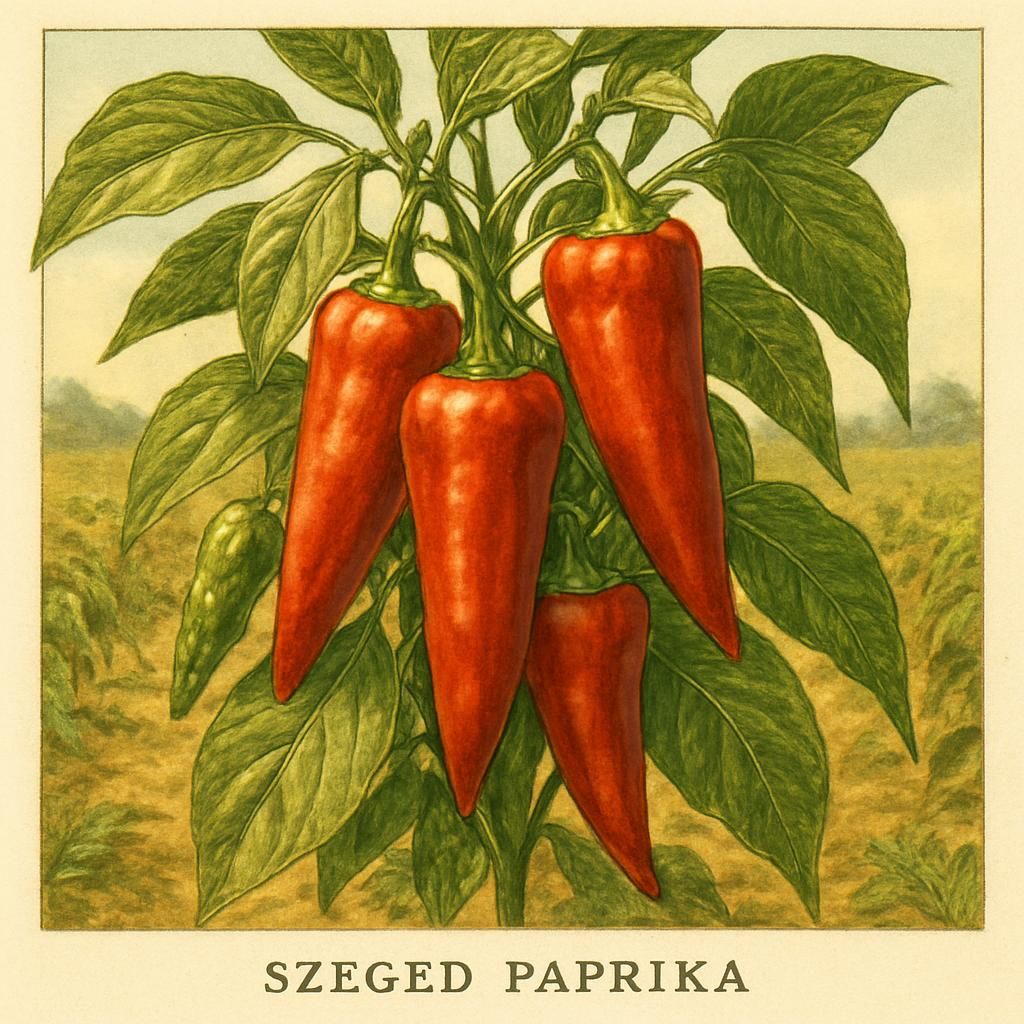
Introduction to Szeged Paprika
Szeged Paprika is a signature ingredient from Hungary, famed for its vibrant color and rich, sweet flavor. It is derived from particular varieties of the Capsicum annuum plant, which are cultivated in the fertile plains of the Szeged region. The paprika produced here is deeply embedded in Hungarian cuisine, used in iconic dishes like goulash and paprikash. Growing your own Szeged Paprika can be a rewarding venture, allowing you to experience its distinct taste fresh from your garden.
Botanical Profile of Szeged Paprika
Botanically classified under the species Capsicum annuum, Szeged Paprika shares its lineage with many other pepper varieties, including bell peppers and Ghost Pepper. It is an annual plant that grows up to 60-90 cm in height, featuring dark green leaves and producing bright red fruits when mature. The plant requires careful cultivation to yield the high-quality paprika synonymous with its name.
Soil, pH, and Climate Requirements for Szeged Paprika
Cultivating Szeged Paprika successfully hinges on replicating the unique conditions of its native Hungarian landscape. Ideal soil, pH, and climate conditions are crucial. Here's a detailed overview:
| Criteria | Ideal Conditions |
|---|---|
| Soil Type | Well-drained, sandy loam |
| Soil pH | 6.0 - 7.0 |
| Temperature Range | 21-26°C (70-79°F) |
| Sunlight | Full sun |
| Rainfall | Moderate, with irrigation as needed |
Step-by-Step Planting & Propagation
1. Seed Selection and Preparation
Choose seeds that are specifically labeled as 'Szeged Paprika'. Begin by filling seed trays with a high-quality potting mix and plant seeds approximately 1 cm deep.
2. Germination
Place the trays in a warm spot or use a heating mat to maintain a consistent soil temperature of 24°C. Germination should occur in about 7-10 days.
3. Transplanting
Once seedlings have at least two true leaves, transplant them into larger pots to develop a robust root system. Acclimate the seedlings to outdoor conditions by slowly introducing them to direct sunlight over a week.
4. Final Planting
Transplant seedlings to their final location once nighttime temperatures consistently remain above 15°C.
Care & Maintenance Regimes for Szeged Paprika
A successful Szeged Paprika crop necessitates a well-structured care plan. Here's a maintenance schedule:
| Task | Frequency |
|---|---|
| Watering | Twice a week, more in heat |
| Fertilization | Every 4 weeks |
| Pruning | As needed to encourage air flow |
Pests, Diseases & Organic Management
Szeged Paprika can be susceptible to pests like Spider Mites, aphids, and whiteflies. Regularly inspect plants and apply organic pest control methods such as neem oil or insecticidal soaps. Diseases like Powdery Mildew and root rot can occur; utilize crop rotation and well-drained soil to prevent these issues. Moreover, ensure ample space between plants to promote airflow and minimize fungal infections.
For more organic strategies, explore our blog post on Crop Diseases Under the Microscope: 9 Organic Fixes for Small Farm Resilience.
Harvesting, Curing & Optimal Storage
Harvesting
Harvesting typically occurs 60-75 days post-transplanting once the peppers are vibrant red. Use scissors or garden shears to cut the stem, avoiding damage to the plant.
Curing and Grinding
Post-harvest, dry the peppers in a well-ventilated space away from direct sunlight. Once completely desiccated, grind them into paprika powder.
Storage
Store in airtight containers in a cool, dark pantry to maintain flavor and color.
Companion Planting for Szeged Paprika
Effective companion planting boosts Szeged Paprika's resilience and yield. Consider pairing them with Basil, Tomatoes, or Corn to enhance growth through mutual pest deterrence and nutrient sharing. Learn more about effective companion planting techniques in our article Summer Companion Planting: 10 Organic Pairings to Boost Small Farm Resilience.