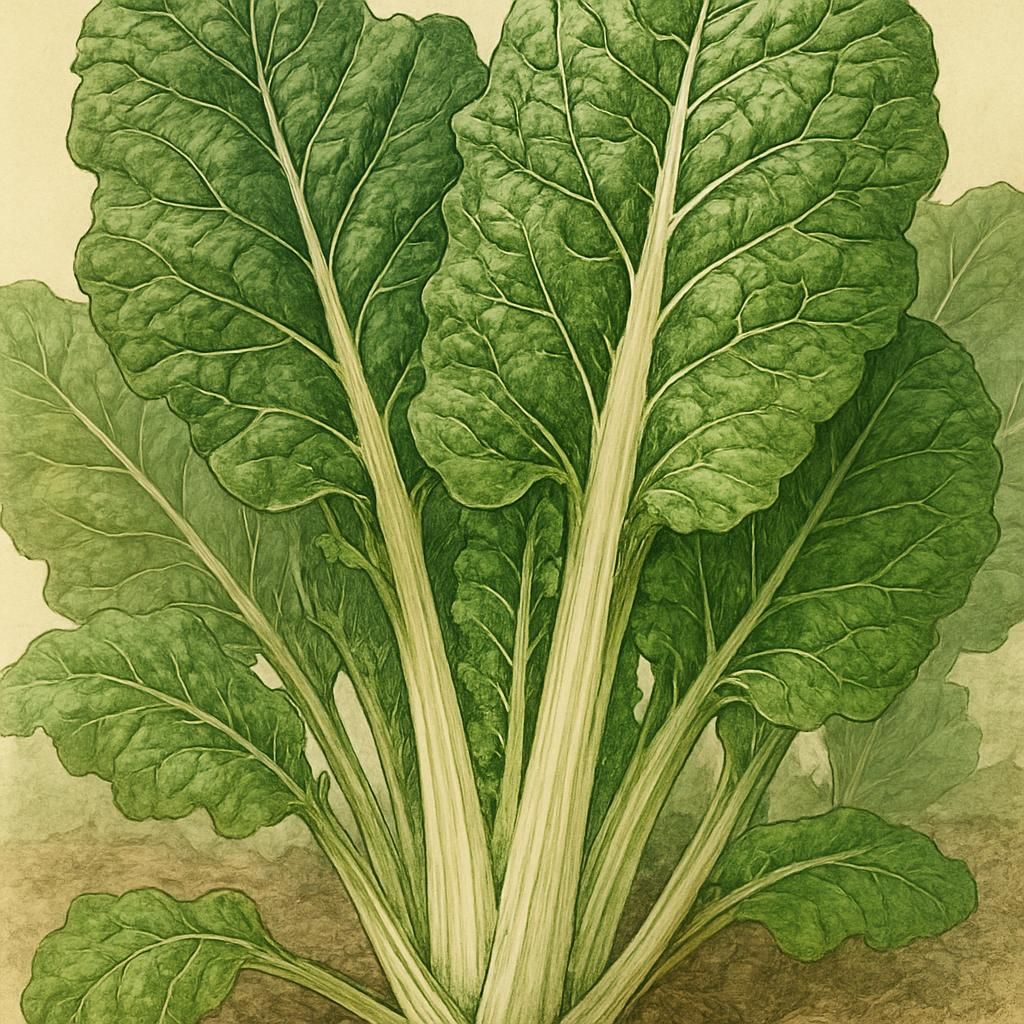
Introduction to Swiss Chard (Fordhook Giant)
Swiss Chard, particularly the Fordhook Giant variety, is a staple in many gardens due to its lush green leaves and vibrant stalks. Known for its high nutritional value, Swiss Chard offers a source of vitamins A, C, and K, along with essential minerals like magnesium and potassium.
Botanical Profile of Swiss Chard (Fordhook Giant)
Classified scientifically as Beta vulgaris subsp. cicla, Swiss Chard belongs to the Chenopodiaceae family. Fordhook Giant is recognized for its broad, dark green leaves and thick, white stalks. It is a biennial plant grown as an annual in most gardens.
Soil, pH, and Climate Requirements for Swiss Chard (Fordhook Giant)
Fordhook Giant Swiss Chard thrives in well-drained, loamy soil, though it can tolerate a range of soil types. It prefers a soil pH between 6.0 and 7.0 and can withstand some shade, although full sun encourages the best growth.
| Condition | Ideal Range |
|---|---|
| Soil Type | Loamy |
| Soil pH | 6.0 - 7.0 |
| Temperature | 50-75°F (10-24°C) |
| Sunlight | Full Sun to Partial Shade |
Step-by-Step Planting & Propagation
To plant Fordhook Giant, start by preparing the soil with organic matter such as compost. Sow seeds directly into the ground after the last frost date. Space seeds about 12-18 inches apart in rows about 18 inches apart. Cover with a thin layer of soil and water gently.
Care & Maintenance Regimes for Swiss Chard (Fordhook Giant)
Regular care involves consistent watering, weeding, and occasional fertilizing to promote robust growth and prevent stress.
| Aspect | Frequency/Details |
|---|---|
| Watering | Moderate, 1-2 inches per week |
| Fertilization | Once every 4-6 weeks with balanced fertilizer |
| Pruning | Remove outer leaves as needed |
Pests, Diseases & Organic Management
Common pests include Aphids and Spider Mites, while diseases like Leaf Spot Diseases can occur. Employ organic solutions such as neem oil and insecticidal soap for pest management. Rotate crops and use mulch to prevent diseases.
Harvesting, Curing & Optimal Storage
Harvest Swiss Chard by cutting outer leaves when they are about 8-10 inches long. This encourages new growth from the center. Store in a cool, damp place, ideally in the crisper drawer of a refrigerator, wrapped in cloth to maintain moisture.
Companion Planting for Swiss Chard (Fordhook Giant)
Good companions for Swiss Chard include Beets and Onions, which help repel pests and improve soil health. Avoid planting alongside Potatoes as they can share diseases.
For more insights on optimizing soil health, check out The Truth About Fall Garden Transitions for Small Farm Resilience.