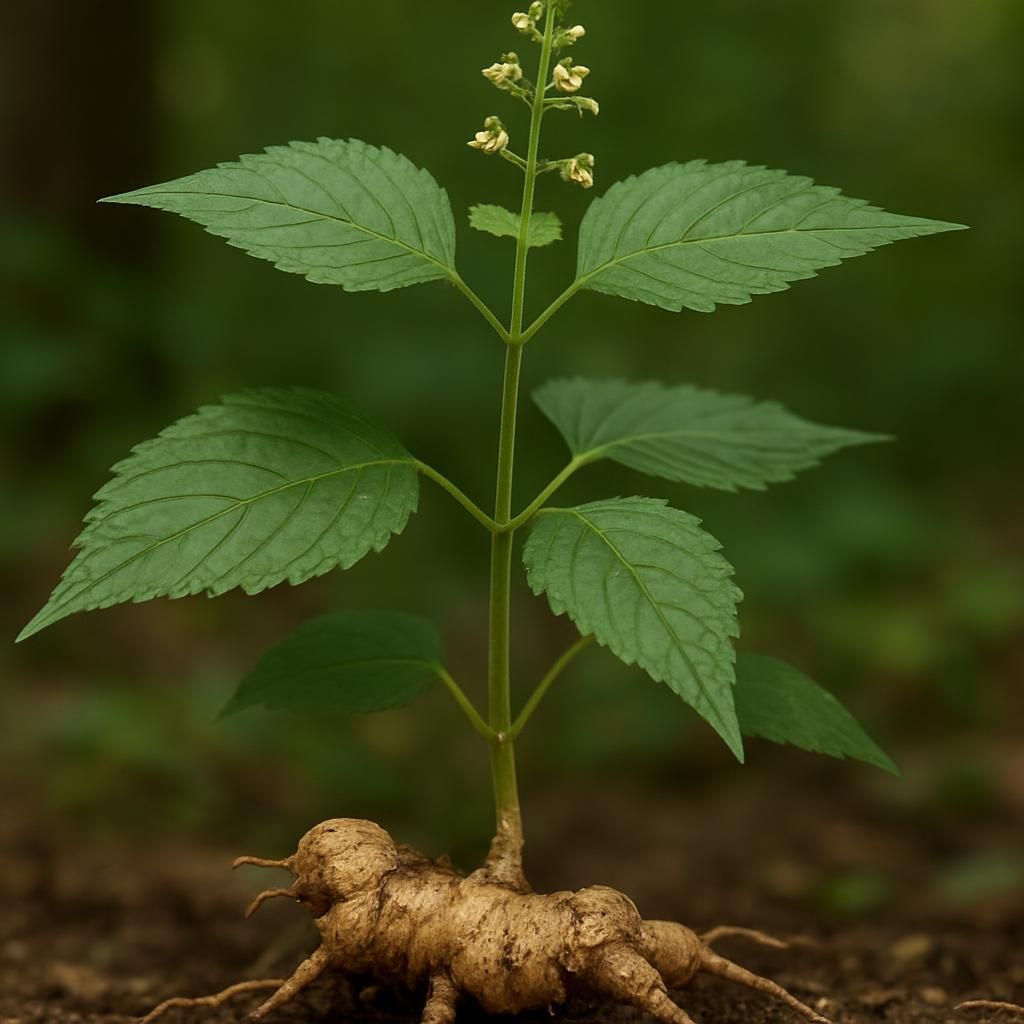
Introduction to Stone Root (Collinsonia canadensis)
Stone Root (Collinsonia canadensis), also known as richweed or horse balm, is a hardy perennial native to eastern North American woodlands. Traditionally used by Indigenous peoples and early settlers for its medicinal root, the plant has gained renewed interest among herbalists and small-scale growers seeking native medicinals. Its square stems, opposite leaves, and lemon-scented flowers make it both a functional and ornamental addition to the garden.
Botanical Profile of Stone Root (Collinsonia canadensis)
Collinsonia canadensis belongs to the mint family (Lamiaceae). It produces upright, square stems reaching 2–4 feet in height. The leaves are ovate, coarsely toothed, and opposite. In late summer, the plant bears terminal panicles of small, pale-yellow flowers with prominent stamens. The root system consists of a thick, knotty rhizome with a strong, resinous aroma when crushed.
Soil, pH, and Climate Requirements for Stone Root (Collinsonia canadensis)
Stone Root prefers rich, moist, well-drained soils typical of deciduous forest floors. It performs best in partial shade but tolerates full sun if moisture is consistent. The following table outlines ideal growing conditions:
| Parameter | Ideal Range/Value |\n|--------------------|------------------------------------| | Soil Type | Loamy, humus-rich woodland soil | | Soil pH | 5.5 – 7.0 | | Temperature Range | 60–80 °F (15–27 °C) daytime | | Annual Rainfall | 30–50 inches (762–1270 mm) | | Light Requirements | Partial shade to dappled sun | | USDA Hardiness | Zones 4–8 |
Step-by-Step Planting & Propagation
- Site Preparation: Choose a shaded or semi-shaded location with consistent moisture. Remove competing weeds and incorporate 2–3 inches of well-rotted leaf mold or compost.
- Rhizome Division: The most reliable method is dividing mature rhizomes in early spring or fall. Each division should contain at least one bud and several roots.
- Planting Depth: Set rhizomes 2–3 inches deep and 12–18 inches apart. Firm soil gently around each piece.
- Seed Propagation: Fresh seed can be sown in fall; cold stratification for 60–90 days improves germination. Seedlings are slower to establish than divisions.
- Watering: Keep newly planted divisions consistently moist for the first 4–6 weeks.
Care & Maintenance regimes for Stone Root (Collinsonia canadensis)
Once established, Stone Root requires minimal intervention. The table below summarizes recommended water, fertilizer, and pruning schedules:
| Season | Watering Schedule | Fertilizer | Pruning/Maintenance |
|---|---|---|---|
| Spring | 1 inch per week if rainfall low | Light top-dress with compost | Remove winter-damaged stems |
| Summer | Maintain even moisture | Side-dress with aged manure | Deadhead spent flowers to encourage root growth |
| Fall | Reduce watering as plants go dormant | None required | Cut back foliage after first frost |
| Winter | Minimal; protect with mulch | None | Apply 2–3 inches of leaf mulch |
Pests, Diseases & Organic Management
Stone Root is generally resistant to serious pests and diseases. Occasional issues include Aphids and Spider mites during hot, dry periods. Root rot can occur in poorly drained soils. Organic controls include insecticidal soap for aphids, strong water sprays for mites, and improving drainage to prevent fungal problems.
Harvesting, Curing & Optimal Storage
Harvest roots in the third or fourth year after planting, ideally in early fall when foliage begins to yellow. Carefully dig around the plant to avoid damaging the rhizome. Wash roots gently, cut into ½-inch pieces, and dry in a shaded, well-ventilated area at 90–100 °F (32–38 °C) until brittle. Store dried pieces in airtight glass jars in a cool, dark location for up to two years.
Companion Planting for Stone Root (Collinsonia canadensis)
Stone Root pairs well with other woodland herbs and native perennials. Recommended companions include Ginger, Turmeric, and Thyme. These plants share similar moisture and shade preferences and help create a biodiverse understory that supports beneficial insects. Avoid planting near aggressive spreaders that may outcompete young Stone Root plants.
For more on companion planting strategies, see Summer Companion Planting: 10 Organic Pairings to Boost Small Farm Resilience.