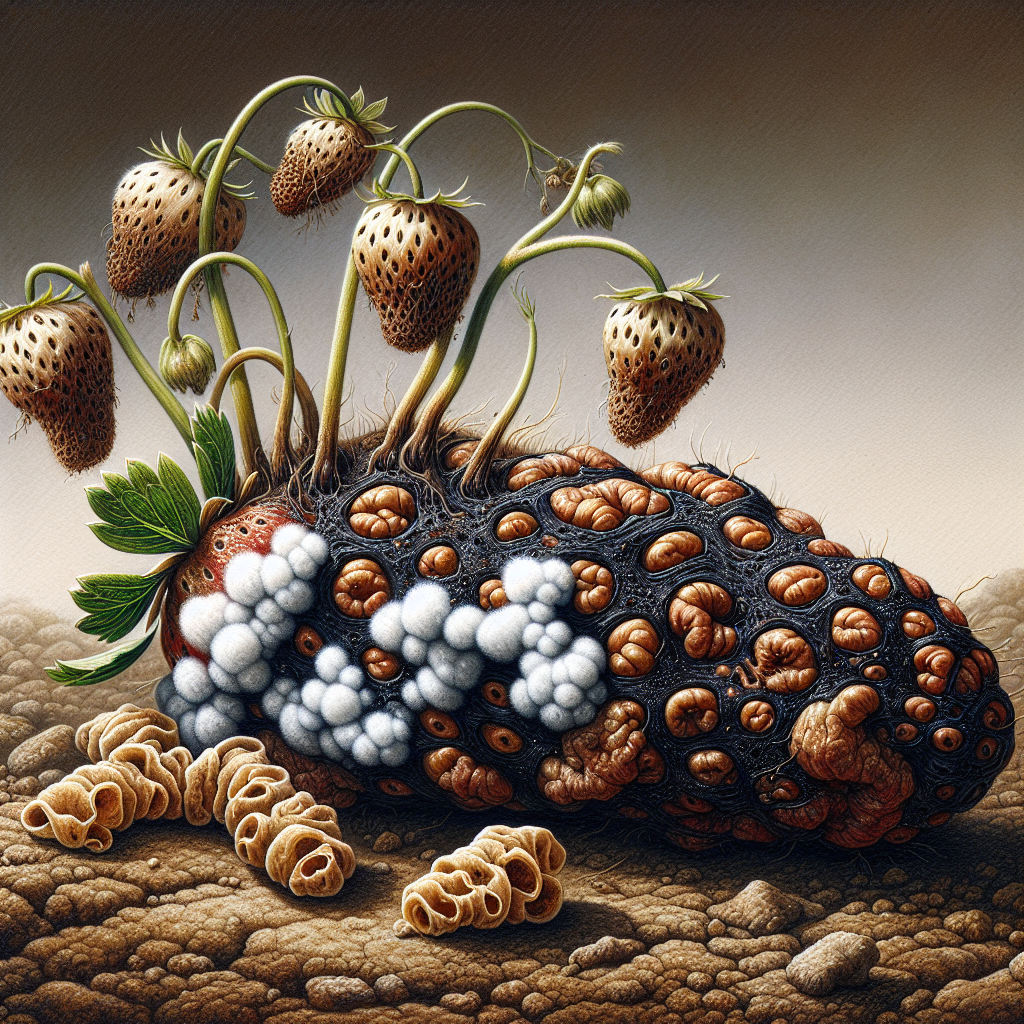
Introduction to stolon rots
Stolon rots represent a critical threat to stolon-producing crops, particularly in humid, warm agricultural regions where soil moisture levels remain consistently high. These diseases primarily affect the above-ground horizontal stems known as stolons, which are essential for vegetative propagation and crop expansion in plants like strawberry, raspberry, and certain grasses. The primary culprits are soilborne fungi such as Rhizoctonia solani, Sclerotium rolfsii (now Athelia rolfsii), and various Fusarium species, which infect through wounds or natural openings, leading to rapid tissue breakdown.
Unlike root rots, which target underground structures, stolon rots specifically compromise the runners that new plants depend on for establishment. This results in weakened daughter plants, reduced stand density, and up to 50-80% yield losses in severe outbreaks. Farmers often first notice issues during peak runnering periods in spring or fall, when environmental conditions favor pathogen activity. Early diagnosis is crucial, as infected stolons can serve as reservoirs for inoculum, perpetuating the disease cycle across seasons.
In commercial settings, stolon rots contribute to inconsistent harvests and increased production costs due to replanting needs. Organic growers face unique challenges, as chemical fumigants are off-limits, demanding integrated strategies focused on soil health and biological controls. Understanding the pathology of stolon rots empowers growers to implement timely interventions, safeguarding long-term productivity. For more on AI-assisted disease identification, check out Why Misidentifying Plants Costs Small Farms Thousands - And How AI Camera Diagnosis Fixes It Fast.
Identifying Symptoms & Damage
Accurate identification of stolon rots hinges on recognizing distinct symptoms that differentiate it from similar issues like Phytophthora infections or crown rot. Initial signs appear as water-soaked, reddish-brown lesions on young stolons, often starting at the soil line where moisture accumulates. As the rot progresses, lesions expand rapidly, girdling the stolon and causing it to collapse, with the tissue turning dark brown to black and emitting a foul, fermented odor indicative of secondary bacterial invasion.
Affected stolons become brittle and stringy, with white mycelial growth or sclerotia (small, hard fungal resting structures) visible under humid conditions—hallmarks of Rhizoctonia or Sclerotium. Daughter plants rooted from infected runners exhibit stunted growth, yellowing leaves, and wilting, even under adequate irrigation. In advanced stages, entire runner mats decay, leading to bare patches in fields. Damage is exacerbated in dense plantings, where high humidity traps moisture around stolons.
To confirm, slice open an affected stolon: healthy tissue is firm and white, while rotted areas show discolored, mushy interiors with possible fungal strands. Yield impacts are profound—rotted stolons fail to produce viable transplants, slashing propagation success by 70% or more. Differentiate from Pythium by the absence of cottony ooze and from mechanical injury by the presence of fungal structures. Regular scouting during runner initiation, using a hand lens for mycelia detection, is essential for timely action.
Lifecycle and Progression of stolon rots
Stolon rot pathogens follow a classic soilborne lifecycle, persisting as dormant sclerotia or mycelium in soil, plant debris, or weed hosts for years. Infection initiates when germinating sclerotia contact wounded or water-stressed stolons, favored by temperatures of 25-35°C (77-95°F) and soil moisture above 60%. Hyphae penetrate epidermal cells, colonizing vascular tissues and producing enzymes that dissolve cell walls, leading to rot within 3-7 days.
Progression accelerates in saturated soils, with Sclerotium rolfsii producing abundant mustard-seed-sized sclerotia on infected tissue, ensuring long-term survival. Rhizoctonia solani forms web-like mycelium that spreads laterally through soil, infecting adjacent stolons up to 30 cm away. Fusarium species often act as secondary invaders, thriving in weakened tissue. The disease peaks during prolonged wet spells, with spores splashing onto stolons via rain or irrigation.
Overwintering occurs in crop residues, with sclerotia viable for 2-5 years. In spring, new runners are most vulnerable during rooting, creating a vicious cycle. Disease progression maps to crop stages: 10-20% incidence at early runnering, escalating to 50%+ by mid-season without intervention. Understanding this lifecycle underscores the need for residue management and rotation to disrupt pathogen buildup.
Environmental Triggers & Risk Factors
Stolon rots flourish under specific conditions that promote fungal activity and host susceptibility. High soil moisture from over-irrigation, poor drainage, or heavy rains is the primary trigger, maintaining saturated zones around stolons. Warm temperatures (above 24°C/75°F) combined with high humidity (>80%) create ideal microclimates, especially in no-till systems or fields with heavy clay soils.
Risk factors include monocropping, which builds pathogen populations, and planting susceptible varieties in infested fields. Compaction from machinery reduces aeration, stressing stolons and inviting infection. Weed hosts like chickweed harbor inoculum, while overhead watering splashes pathogens onto runners. Acidic soils (pH <6.0) favor Sclerotium, and low organic matter limits beneficial microbes that suppress pathogens.
Climate change intensifies risks with erratic rains and warmer nights. Fields near creeks or low-lying areas face higher incidence. Practices like excessive nitrogen fertilization promote lush, watery stolons prone to rot. Mapping field history for prior outbreaks and monitoring weather via hyper-local forecasts can preempt surges.
Organic Control & Treatment Plans
Organic management of stolon rots emphasizes prevention but includes curative steps for outbreaks. Remove and destroy infected stolons immediately to curb spread, burying debris deeply or solarizing patches. Apply biological agents like Trichoderma harzianum or Bacillus subtilis as drenches (5-10 g/L water) at 2-week intervals, colonizing roots and outcompeting pathogens.
Aerate soils with deep tine cultivation to improve drainage, followed by mulching with straw (4-6 inches) to regulate moisture. Boost soil biology via compost teas rich in actinomycetes, applied monthly. For Sclerotium, lime to pH 6.5-7.0 reduces sclerotia germination. Companion planting with marigold releases nematicidal compounds that indirectly suppress fungi.
In severe cases, rogue entire rows and replant with resistant varieties after biofumigation using mustard cover crops. Foliar sprays of potassium bicarbonate (1-2%) enhance plant resistance. Integrate with crop rotation: avoid host crops for 2-3 years, interspersing with brassicas. Monitor progress with trap crops like mustard greens to gauge pathogen levels. Success rates exceed 70% with consistent application.
Preventing stolon rots in the Future
Prevention is the cornerstone of stolon rot management, focusing on cultural practices that deny pathogens their niche. Select resistant cultivars like 'Seascape' strawberry or 'Heritage' raspberry, and source certified disease-free transplants. Implement 3-year rotations with non-hosts like grains or clover to dilute soil inoculum.
Optimize irrigation: use drip systems buried below the crown to keep stolons dry, scheduling based on tensiometers (maintain 20-40 kPa). Improve drainage with raised beds (8-12 inches high) and contour plowing on slopes. Pre-plant solarization (6 weeks under clear plastic in summer) kills 80-90% of sclerotia. Build soil organic matter to 4-5% via cover crops and compost, fostering antagonistic microbes.
Sanitize tools with 10% bleach between plants, and control weeds meticulously. Fall tillage incorporates residues, exposing them to UV and predators. Annual soil tests guide amendments. Scout weekly during runnering, acting at 5% incidence. These IPM strategies can reduce outbreaks by 90%, ensuring sustainable production.
Crops Most Affected by stolon rots
Stolon rots predominantly impact stoloniferous perennials and some turfgrasses. Strawberry suffers most, with runners rotting en masse in production fields, crippling nursery stock. Raspberry and blackberry red and black varieties show high susceptibility, especially in matted-row systems. Blueberries in acidic, wet sites face stolon decline, while creeping bentgrass in golf courses exhibits patchy dieback.
Other victims include potato stolons in seed production and sweet potato slips. Turf species like Kentucky bluegrass and perennial ryegrass in lawns suffer during wet springs. Economic losses peak in berry crops, valued at millions annually. Resistant alternatives and vigilant monitoring mitigate risks across these staples.