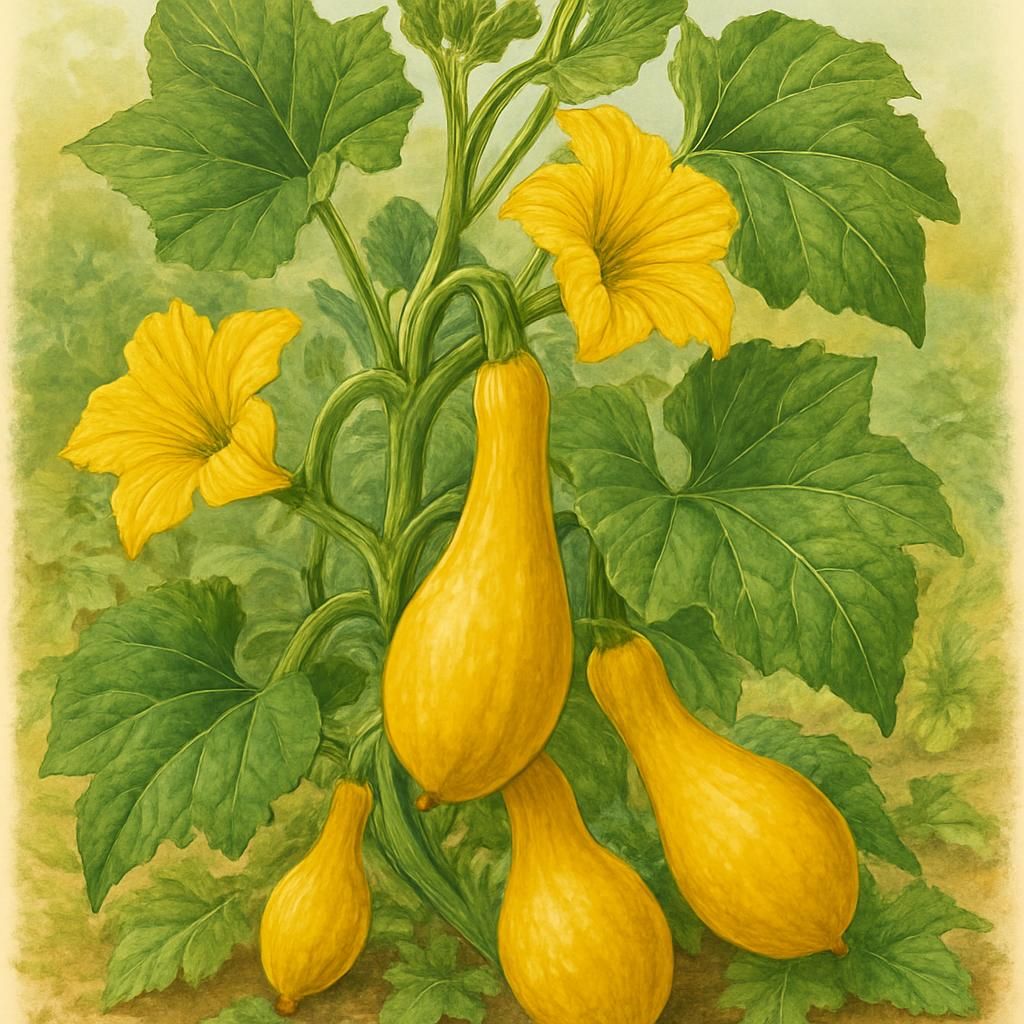
Introduction to Squash (Yellow Crookneck)
Yellow Crookneck Squash is a popular summer squash variety renowned for its vibrant color, distinct curved neck, and versatile culinary uses. Originating in North America, this squash is a staple in vegetable gardens due to its quick-growing nature and abundant yields. Typically grown in warmer climates, Yellow Crookneck Squash is enjoyed in dishes ranging from salads to stir-fries, offering a sweet and slightly nutty flavor.
Botanical Profile of Squash (Yellow Crookneck)
Belonging to the Cucurbitaceae family, Yellow Crookneck Squash (Cucurbita pepo var. crookneck) is an annual plant characterized by its broad leaves, sprawling vine-like growth, and distinct yellow fruits with a curved neck. The plant produces large, yellow-orange flowers that are often used as pollinator attractants, aiding in fruit development.
Soil, pH, and Climate Requirements for Squash (Yellow Crookneck)
Yellow Crookneck Squash thrives under specific soil and climate conditions that foster optimal growth and yield.
| Parameter | Ideal Condition |
|---|---|
| Soil Type | Loamy, well-drained |
| Soil pH | 6.0 - 7.0 |
| Climate | Warm, sunny |
| Temperature Range | 70°F - 95°F (21°C - 35°C) |
| Rainfall | Moderate, well-distributed |
Step-by-Step Planting & Propagation
- Seed Selection: Choose high-quality seeds from a reliable source.
- Soil Preparation: Perform soil testing to ensure pH levels are optimal. Amend with organic matter such as compost to improve nutrient content and drainage.
- Planting: Direct sow seeds into prepared soil after the last frost date. Plant seeds 1 inch deep and 3 feet apart to accommodate sprawling vines.
- Watering: Maintain consistent moisture without waterlogging the soil.
- Germination: Expect germination within 5-10 days given optimal conditions.
Care & Maintenance Regimes for Squash (Yellow Crookneck)
Regular maintenance is essential to prevent disease and ensure high yields.
| Activity | Schedule |
|---|---|
| Watering | 1-2 inches per week |
| Fertilizing | Every 3-4 weeks |
| Pruning | Remove any dead/dying leaves regularly |
| Pest Control | Monitor for Squash Bugs and Vine Borers weekly |
Pests, Diseases & Organic Management
Yellow Crookneck Squash is susceptible to certain pests and diseases, such as Cucumber Beetles, Squash Bugs, Powdery Mildew, and Anthracnose. Organic controls include:
- Utilize neem oil or insecticidal soap for pest control.
- Apply copper-based fungicides to manage mildew.
- Practice crop rotation and keep the garden clean to reduce disease incidence.
- Attract beneficial insects like ladybugs and lacewings to control pest populations naturally.
Harvesting, Curing & Optimal Storage
Yellow Crookneck Squash should be harvested when 5-6 inches long for the best flavor and texture. Use a sharp knife to cut the squash from the vine, leaving a short stem attached. To extend shelf life, avoid washing prior to storage. Store in a cool, dry place for up to a week. For longer storage, consider blanching and freezing.
Companion Planting for Squash (Yellow Crookneck)
Maximize growth and deter pests by pairing Yellow Crookneck Squash with the right companion plants. Beneficial companions include Nasturtium, which deters aphids, and Corn, which provides shade and supports vine growth. Avoid planting near Potatoes, as they can compete for nutrients and attract similar pests. For further guidance on effective planting techniques, refer to our blog post on Summer Companion Planting: 10 Organic Pairings to Boost Small Farm Resilience.
Growers looking to cultivate Yellow Crookneck Squash can also explore more about Squash (crop) within the broader Cucurbitaceae family.