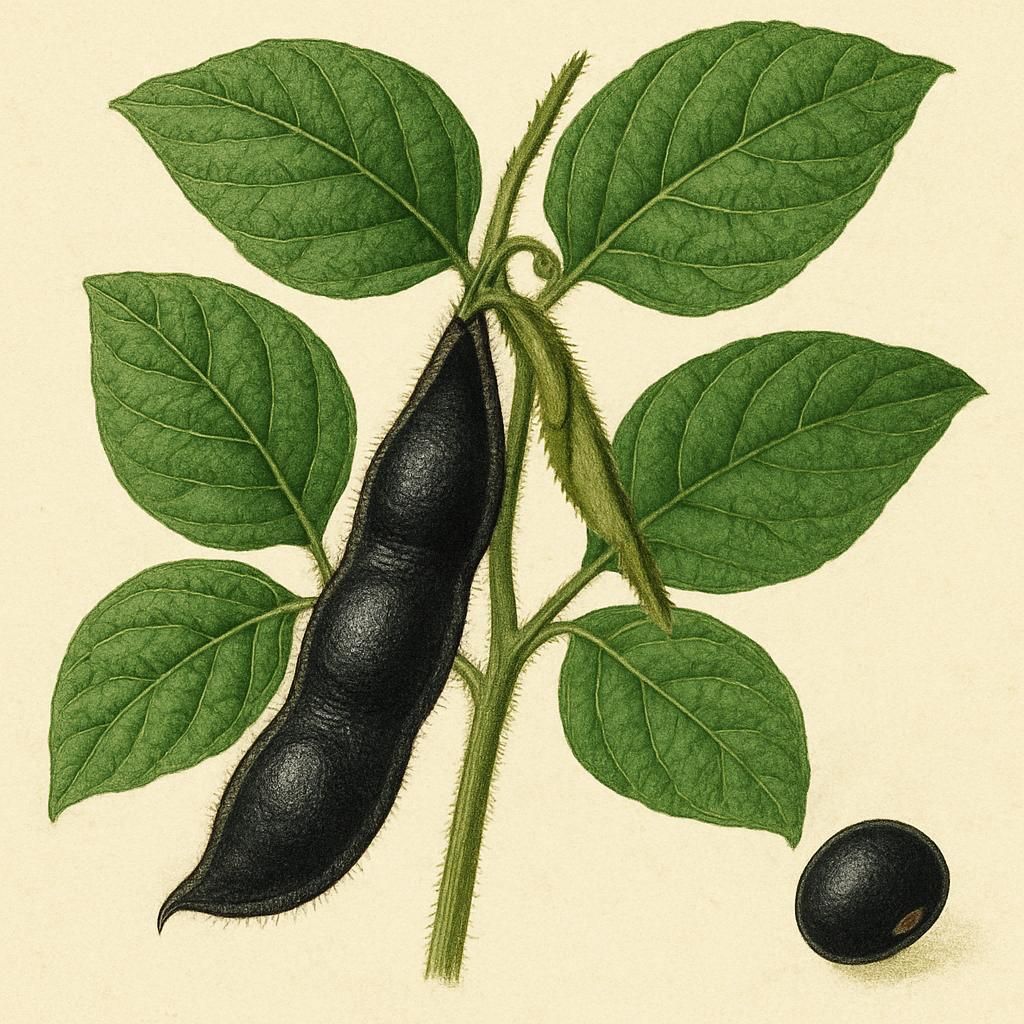
Introduction to Soy Bean (Black Jet)
Soy Bean (Black Jet) is a highly sought-after variety of soybean celebrated for its distinctive dark seed coat and rich nutritional profile. Renowned for its high protein content, this variety is increasingly favored in both traditional and modern culinary applications. As an integral crop, Black Jet soybeans are valuable for their contribution to soil health when used in crop rotations and their adaptability to various climates, making them accessible to growers worldwide.
Botanical Profile of Soy Bean (Black Jet)
The Soy Bean (Black Jet) belongs to the Leguminosae family and is scientifically classified as Glycine max. This annual plant can reach heights of 20-100 cm depending on cultivation practices and environmental conditions. The species is characterized by trifoliate leaves, small flowers that can be white, pink, or purple, and pods containing approximately 2-4 seeds each. The seeds are round, smooth, and possess a notable black outer coat.
Soil, pH, and Climate Requirements for Soy Bean (Black Jet)
To cultivate Soy Bean (Black Jet) successfully, understanding its soil and climatic preferences is essential. The crop is relatively hardy but prefers specific conditions for optimal growth.
| Requirement | Ideal Condition |
|---|---|
| Soil Type | Well-drained, loamy or sandy |
| Soil pH | 6.0 to 7.0 |
| Temperature Range | 15°C to 25°C |
| Rainfall | 300-500 mm during growth |
| Sunlight | Full sun |
Step-by-Step Planting & Propagation
- Seed Selection: Choose certified seeds of Soy Bean (Black Jet) to ensure high germination rates and disease resistance.
- Site Preparation: Prepare the soil by tilling to a depth of 15-20 cm and ensure the area is free from weeds and debris. Amend the soil with organic compost if needed.
- Sowing: Sow seeds directly into the soil at a depth of approximately 3-5 cm and spacing of 10-15 cm apart in rows.
- Watering: Provide sufficient moisture without waterlogging. Drip irrigation is recommended for optimal moisture control.
- Germination: Expect seed germination within 7-10 days, contingent on temperature and soil conditions.
- Thinning: Thin seedlings to maintain adequate spacing and improve air circulation, reducing disease susceptibility.
Care & Maintenance Regimes for Soy Bean (Black Jet)
Proper care and maintenance are critical to ensuring a healthy Soy Bean (Black Jet) crop.
| Care Aspect | Schedule |
|---|---|
| Watering | Regular intervals; 25-30 mm/week |
| Fertilization | Apply balanced NPK monthly |
| Pruning | Not typically required |
Pests, Diseases & Organic Management
Soy Bean (Black Jet) is susceptible to several pests and diseases, requiring proactive management strategies:
- Pests: Soybean aphid, Spider mites
- Diseases: Frogeye leaf spot, Sclerotinia stem rot
Management Strategies:
- Regular monitoring and sanitization practices.
- Employ organic pesticides like neem oil.
- Rotate crops to reduce disease pressure.
Harvesting, Curing & Optimal Storage
Harvest soybeans when pods are dry and the seeds rattle inside. Cut the plants and hang them to dry if moisture levels exceed 13%. Store in a moisture-free environment at temperatures below 10°C to maintain seed viability and prevent spoilage.
Companion Planting for Soy Bean (Black Jet)
Soy Bean (Black Jet) thrives when planted alongside Corn or Cucumbers, which can provide structural support and enhance nitrogen fixation. Avoid planting near Allium species as they may impede growth.
Explore our guide on Crop Rotation Realities: 6 Organic Patterns That Deliver for Small Farms to optimize your farming practices and enhance resilience.