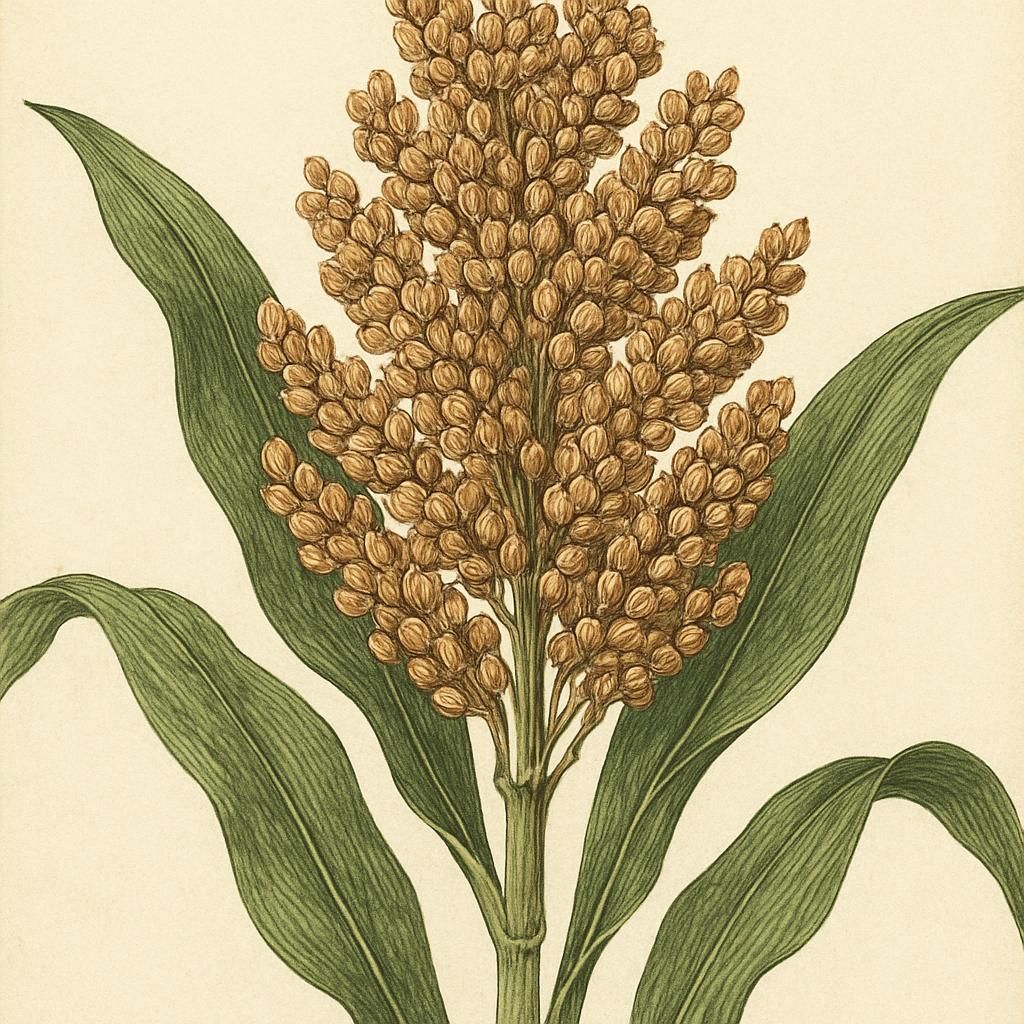
Introduction to Sorghum (Shallu)
Sorghum, particularly the Shallu variety, is a globally important cereal crop. Known for its adaptability to harsh climates, Shallu is predominantly grown in semi-arid regions where other grain crops struggle. Its fast growth and low water requirements make it an invaluable resource, providing both food and biofuel.
Botanical Profile of Sorghum (Shallu)
Sorghum (Sorghum bicolor), belonging to the Poaceae family, is a grass species with a rich history of cultivation. It grows in tall stalks, typically between 2 to 4 meters in height, with the grain clusters at the top. Shallu has a deep root system, aiding in nutrient uptake and drought resistance.
Soil, pH, and Climate Requirements for Sorghum (Shallu)
Sorghum thrives in a wide range of soils but prefers well-drained, fertile loams. Here's an overview of its ideal conditions:
| Factor | Ideal Conditions |
|---|---|
| Soil Type | Well-drained, sandy-loam to clay-loam |
| pH Range | 5.8-7.0 |
| Temperature | 25-35°C (optimal), can tolerate up to 40°C |
| Rainfall | 300-700 mm annually |
Step-by-Step Planting & Propagation
Planting sorghum involves direct seeding and requires careful planning:
- Timing: Sow seeds in late spring when temperatures consistently exceed 15°C.
- Spacing: Maintain a spacing of 20-30 cm between plants and 60-90 cm between rows.
- Seeding Depth: Plant seeds 2-4 cm deep.
- Thinning: Thin seedlings to prevent overcrowding, usually when they reach 10 cm tall.
Care & Maintenance Regimes for Sorghum (Shallu)
Maintaining a healthy sorghum crop involves water management, nutrient provision, and pest control.
| Care Factor | Recommended Practice |
|---|---|
| Watering | 40-50 mm before flowering, reduced after, avoiding waterlogging |
| Fertilization | Nitrogen: 80-100 kg/ha, Phosphorus: 20-30 kg/ha, applied before sowing |
| Pruning | No pruning required; remove dead leaves to improve air circulation |
Pests, Diseases & Organic Management
Sorghum faces threats from several pests and diseases. Key ones include shoot fly, sorghum midge, and charcoal rot. Organic management tips:
- Companion Planting: Use Yarrow to deter pests.
- Natural Predators: Introduce ladybugs to control aphids.
- Fungal Control: Apply neem oil for disease prevention.
Harvesting, Curing & Optimal Storage
- Harvesting: Harvest when grains are hard and dry, typically 4-5 months post-sowing.
- Curing: Dry grains in the sun for 3-5 days to reduce moisture to 12-14%.
- Storage: Store in cool, dry, airtight containers to prevent pest infestations.
Companion Planting for Sorghum (Shallu)
Sorghum benefits from strategic companion planting. Suitable pairs include legumes like Peas for nitrogen fixation and Sunflower for pest control.
For in-depth insights on soil and crop resilience, explore the blog on The Truth About Fall Garden Transitions for Small Farm Resilience.
Discover more about sorghum in our Sorghum wiki entry.