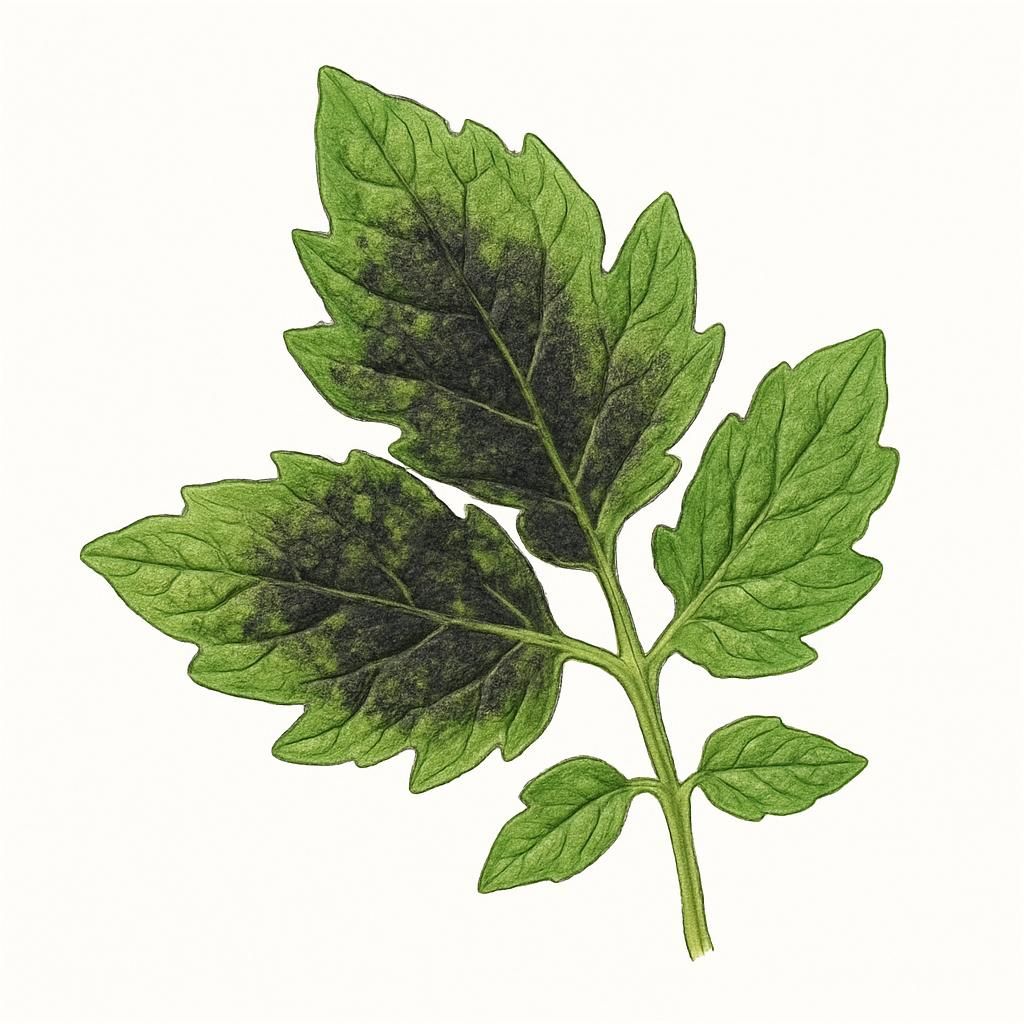
Introduction to smudge
Smudge, caused by the fungus Cladosporium fuligineum, is a common sooty mold that forms a charcoal-black coating on plant surfaces. Although it does not directly invade living tissue, the dense mycelial mat blocks sunlight and can lower yields by 10-25% in heavily infested crops. The fungus colonizes honeydew excreted by insects such as aphids, whiteflies, and mealybugs, turning an otherwise minor pest issue into a visible and economically damaging problem. Professional growers treat smudge as a secondary indicator of poor pest management rather than a primary pathogen.
Identifying Symptoms & Damage
Early signs appear as small, soot-like specks on upper leaf surfaces that rapidly coalesce into a continuous black film. The coating feels velvety or powdery to the touch and can be partially rubbed off, revealing green tissue underneath. On fruit such as Tomato or Bell Pepper, the mold reduces visual quality and may require post-harvest washing. Severe cases cause premature leaf senescence and reduced fruit size due to diminished photosynthesis.
Lifecycle and Progression of smudge (MUST INCLUDE A MARKDOWN TABLE OF LIFECYCLE STAGES)
The fungus overwinters as mycelium or conidia on plant debris and insect exuviae. In spring, conidia are splashed or wind-dispersed onto new growth where they germinate in the presence of honeydew. Repeated cycles of sporulation occur every 5–7 days under favorable conditions.
| Stage | Description | Duration | Environmental Optimum |
|---|---|---|---|
| Spore Dispersal | Conidia released from old colonies by wind or rain splash | 1–2 days | 18–28 °C, moderate wind |
| Germination | Conidia germinate on honeydew deposits | 6–12 hours | RH > 80 %, free water present |
| Mycelial Growth | Dark septate hyphae colonize surface | 3–5 days | 20–30 °C, pH 5.5–7.0 |
| Sporulation | New conidiophores produce chains of conidia | 2–4 days | High humidity, still air |
| Overwintering | Mycelium and conidia survive in debris | 4–6 months | Cool, dry conditions |
Environmental Triggers & Risk Factors
High relative humidity (>75 %) combined with temperatures of 20–30 °C accelerates colony expansion. Dense planting, poor pruning, and overhead irrigation prolong leaf wetness and favor both insect honeydew accumulation and fungal growth. Excess nitrogen fertilization promotes succulent growth attractive to aphids and whiteflies, indirectly increasing smudge incidence.
| Factor | Optimal Range for Smudge | Management Target |
|---|---|---|
| Air Temperature | 20–30 °C | Maintain <28 °C with ventilation |
| Relative Humidity | 75–95 % | Reduce to <70 % via spacing and fans |
| Leaf Wetness Duration | >6 hours | Limit to <4 hours with drip irrigation |
| Soil pH | 5.8–7.2 | Adjust to crop optimum |
| Nitrogen Rate | >150 kg N/ha | Split applications, use slow-release forms |
Organic Control & Treatment Plans (MUST INCLUDE A MARKDOWN TABLE OF TREATMENT OPTIONS AND FREQUENCIES)
Organic management integrates cultural, mechanical, and biological tactics. The primary goal is elimination of honeydew-producing insects; once insect pressure drops, existing mold gradually weathers away. Horticultural oils and insecticidal soaps are the foundation of an organic spray program.
| Treatment Option | Active Ingredient | Application Frequency | Rate per 100 L water | Notes |
|---|---|---|---|---|
| Horticultural Oil | 1–2 % neem or paraffinic oil | Every 7–10 days until insects controlled | 1–2 L | Apply early morning; avoid >30 °C |
| Insecticidal Soap | Potassium salts of fatty acids | Every 5–7 days | 2–3 L | Thorough coverage of undersides |
| Bacillus thuringiensis (Bt) | Bt kurstaki | Weekly during caterpillar flush | 0.5–1 kg | Targets lepidopteran honeydew producers |
| Beneficial Insects | Chrysoperla carnea, Encarsia formosa | Release at first sign of aphids/whiteflies | 1–2 per m² | Repeat every 2 weeks if needed |
| Cultural Sanitation | Removal of infested leaves | As needed | N/A | Bag and destroy debris off-site |
Preventing smudge in the Future
Prevention begins with proactive insect monitoring using yellow sticky traps placed at canopy height. Implement a strict 3–4 year crop rotation that excludes host plants of common honeydew producers. Prune interior branches to improve light penetration and air movement, targeting 30–40 % canopy openness. Use reflective mulches to deter aphids and reduce canopy humidity. Maintain balanced fertility with emphasis on potassium and micronutrients that strengthen cell walls against insect feeding.
Crops Most Affected by smudge
Smudge is reported on a wide range of vegetable, fruit, and ornamental crops whenever sap-feeding insects are present. High-value greenhouse crops such as Tomato, Cucumber, and Bell Pepper suffer the greatest economic losses due to cosmetic downgrading. Field crops including Eggplant, Zucchini, and various Brassica species also experience significant incidence under warm, humid conditions. Ornamentals such as roses and citrus are frequently affected in home gardens and commercial landscapes.