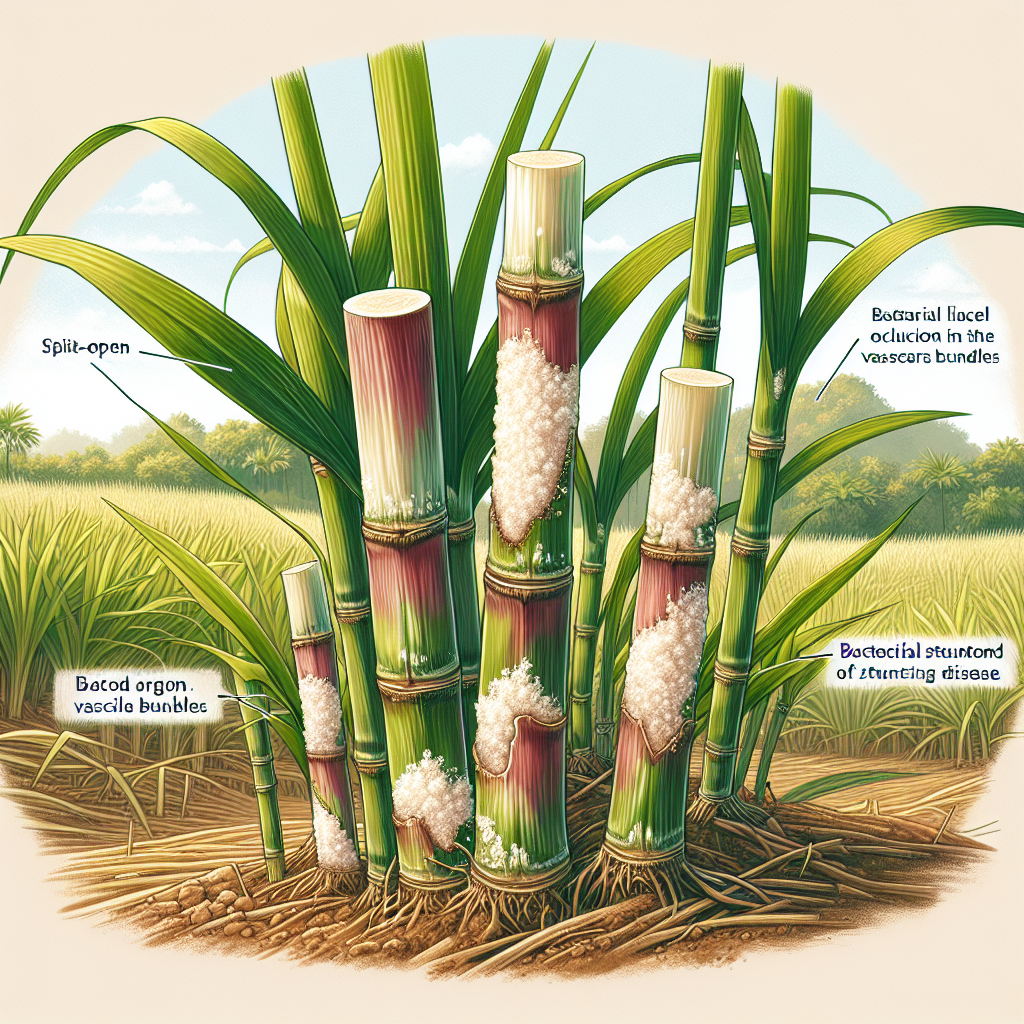
Introduction to ratoon stunting disease
Ratoon stunting disease (RSD), caused by the bacterium Leifsonia xyli subsp. xyli, represents one of the most significant bacterial diseases affecting sugarcane production worldwide. This insidious pathogen primarily targets ratoon crops—the regrowth from stubble after the initial harvest—leading to progressive stunting, reduced tillering, and substantial yield losses of up to 25-30% in successive ratoons. First identified in the 1960s, RSD has spread globally through infected planting material, thriving in tropical and subtropical regions where sugarcane is a staple crop.
Unlike many foliar diseases, RSD is systemic, colonizing the vascular bundles of sugarcane stalks, which disrupts water and nutrient transport. Symptoms often remain latent in plant cane but explode in ratoons, making early detection challenging. Farmers in major producers like Brazil, India, and Australia report RSD as a key factor in shortening ratoon life from 5-7 cycles to just 2-3. Economic impacts are profound, with global losses estimated in billions annually. This guide provides definitive diagnostic criteria, lifecycle insights, and proven organic management strategies to safeguard yields. For small farms, integrating AI-driven monitoring can transform RSD from a silent killer to a manageable issue, as explored in Why Misidentifying Plants Costs Small Farms Thousands - And How AI Camera Diagnosis Fixes It Fast.
Understanding RSD is crucial for sustainable sugarcane farming. The disease's stealthy nature demands vigilance, especially in ratooning systems that dominate 60-70% of global production. By mastering identification and prevention, growers can extend ratoon productivity and maintain profitability.
Identifying Symptoms & Damage
Diagnosing RSD requires keen observation, as symptoms mimic nutrient deficiencies or drought stress. In early ratoons, affected stools show stunted shoots with fewer tillers—often 20-50% less than healthy plants. Stalks appear thinner, shorter (by 15-30 cm), and yellowish, with poor leaf erection leading to a 'bunchy top' appearance.
Advanced symptoms include reddening or browning of internal vascular bundles, visible upon splitting stalks longitudinally. White streaks or 'pencil lines' of bacterial occlusion in the xylem are hallmark signs, often accompanied by reduced juice quality—lower Brix and polarity. Yield damage escalates: first ratoon losses at 10-15%, second at 20-25%, and beyond that, up to 50% in severe cases.
Field diagnosis involves the stalk borer assay: split 10-20 cm sections from mid-stalk, soak in water, and check for bacterial ooze after 24-48 hours. Lab confirmation uses ELISA or PCR for L. xyli subsp. xyli. Differentiate from Fusarium stalk rots (which show rot and cavities) or root-knot nematodes (external galls). Damage extends to millable cane reduction and poor sugar recovery, compounding losses in sorghum intercropping systems.
Scout weekly during tillering and grand growth phases. Use a 10x hand lens for vascular inspection. Early detection prevents spread, preserving ratoon viability.
Lifecycle and Progression of ratoon stunting disease
L. xyli subsp. xyli is a Gram-positive, xylem-limited bacterium without a free-living phase. It enters sugarcane via wounds during cutting or planting, multiplying in xylem vessels. Latency in plant cane (6-12 months) allows silent spread; symptoms manifest post-harvest in ratoons as vascular blockages impede growth.
Progression follows ratoon cycles: Year 1 (plant cane)—asymptomatic; Ratoon 1—mild stunting; Ratoon 2—severe tiller reduction; Ratoon 3+—economic abandonment. Bacteria overwinter in stubble, spreading mechanically via knives (up to 80% transmission per cut) or sap contact. No insect vectors confirmed, though sugarcane aphids may aid indirectly.
Optimal multiplication occurs at 25-30°C, slowing below 15°C. In flooded fields, progression accelerates due to wounds. Lifecycle lacks spores; survival depends on infected cane. Hot-water treatment (52°C for 2 hours) kills 99% bacteria, halting progression.
Environmental Triggers & Risk Factors
Warm, humid tropics (25-35°C, >70% RH) favor RSD, with rainfall >1500 mm/year exacerbating spread via splash and wounds. Poor drainage creates anaerobic conditions, stressing plants and promoting entry. Risk spikes with mechanical harvesting—blunt blades cause micro-wounds transmitting bacteria to 70% of cut surfaces.
Key factors: infected seedcane (90% cases), ratooning >3 cycles, monocropping without rotation, and contaminated tools. Acidic soils (pH <5.5) compound stress, mimicking symptoms. Drought triggers expression by amplifying vascular limitations. In corn-sugarcane rotations, residue harbors bacteria.
Climate change intensifies risks: erratic rains increase wounding events. High plant density (>50,000 stools/ha) accelerates spread.
Organic Control & Treatment Plans
No curative organic treatments exist; focus on sanitation and resistant varieties. Core strategy: plant certified hot-water-treated seedcane, slashing infection to <1%. Implement knife dipping in 1% sodium hypochlorite between stools—reduces transmission 95%.
Organic plan:
- Pre-plant: Hot-water dip (50°C, 2h) or tissue culture propagation.
- Cultural: Rogue infected stools at 3 months post-ratoon; rotate with cowpeas or clover every 3 years.
- Biological: Apply Trichoderma-enriched compost (5 t/ha) to boost xylem health.
- Ratooning hygiene: Sharpen blades daily; disinfect with 2% bleach.
Field trials show 20-30% yield recovery in treated fields. For organics, integrate marigold borders to deter vectors. Monitor via AI apps for symptom alerts. Abandon ratoons after 3 cycles if >10% infection.
Preventing ratoon stunting disease in the Future
Prevention hinges on seedcane certification programs—aim for <0.5% infection. Quarantine new varieties; test via PCR. Farm-level: tool sterilization, worker training, and GPS-mapped rogueing. Breed resistant hybrids like 'Co 0238' or 'VSI 0805'.
Long-term: diversify with sweet sorghum ratooning, less susceptible. Soil solarization (6 weeks summer) reduces soil inoculum. Policy: regional certification labs. Track via Why 80% of Small Farms Battle Weather Disasters - And How Hyper-Local AI Forecasts Can Save Your Harvest for optimal timing.
Integrated systems yield 15-20% higher over 5 years.
Crops Most Affected by ratoon stunting disease
Sugarcane dominates RSD impacts, with noble varieties (Saccharum officinarum) most vulnerable. Commercial hybrids like 'CP 77-400' suffer 25% losses. Minor hosts: some sorghums and barley, but negligible. Energy canes (high-fiber) show tolerance. Global hotspots: India (30% fields), Brazil (15%), Australia (20%).