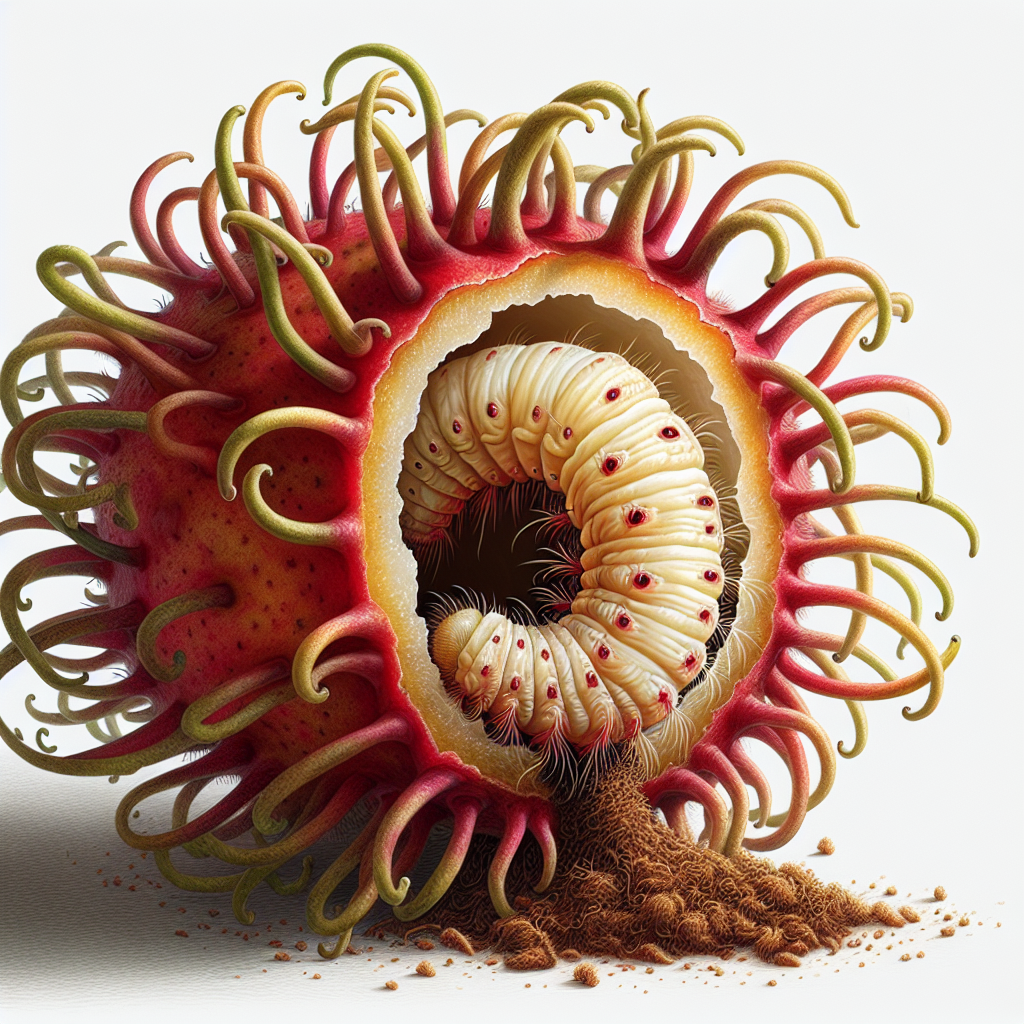
Introduction to rambutan
Rambutan fruit borer, scientifically known as Conopomorpha sinensis, is a major pest affecting rambutan (Nephelium lappaceum) cultivation, particularly in tropical regions like Southeast Asia, including Malaysia, Indonesia, Thailand, and the Philippines. This small moth species belongs to the family Gracillariidae and poses a severe threat to commercial and small-scale rambutan farms by infesting developing fruits, leading to premature fruit drop, deformed produce, and up to 80% yield reduction in unmanaged orchards. First identified in the early 20th century, the pest has spread widely due to its high reproductive rate and ability to thrive in humid, warm climates ideal for rambutan growth.
Farmers often confuse rambutan fruit borer damage with other fruit pests like fruit flies or fruit and shoot borers, but distinctive larval tunneling sets it apart. Effective management requires understanding its biology and implementing timely interventions. This definitive guide equips agricultural professionals, smallholders, and botanists with diagnostic tools, lifecycle insights, and proven organic strategies to protect rambutan crops. By integrating cultural, biological, and minimal chemical controls, growers can sustain healthy yields while maintaining organic certification. For small farms battling multiple invaders, check out this Spring Pest Patrol blog post for broader organic tactics.
Rambutan, prized for its juicy, sweet flesh encased in spiny red or yellow skin, is a high-value export crop. However, unchecked infestations can render fruits unmarketable, impacting farmer incomes significantly. Proactive scouting and IPM (Integrated Pest Management) are key to long-term success.
Identifying Symptoms & Damage
Diagnosing rambutan fruit borer infestations starts with recognizing subtle early signs that progress to severe damage. Adult moths are tiny (wingspan 8-12 mm), silver-white with dark markings, active at dusk. However, damage is primarily caused by larvae.
Early Symptoms (1-2 weeks post-infestation):
- Small entry holes (0.5-1 mm) on young fruits, often near the peduncle.
- Slight discoloration or resinous exudate around holes.
- Fruits appear healthy externally but feel soft when squeezed.
Advanced Symptoms (3-6 weeks):
- Larval tunnels inside fruit, filled with frass (sawdust-like excrement).
- Premature fruit drop; affected fruits turn yellow-brown and shrivel.
- Deformed, split, or cracked rambutan skin, exposing white larvae.
- Secondary infections by fungi or bacteria, causing rot.
Severe Damage Indicators:
- Cluster infestation: Up to 70% of fruits in a panicle affected.
- Reduced fruit size and quality; edible aril (flesh) becomes tough and discolored.
- Branch dieback if multiple generations overlap.
Differentiate from similar pests: Unlike mealybugs, no waxy secretions; unlike anthracnose, no sunken lesions. Use a hand lens to confirm larvae (cream-colored, 5-10 mm long, flattened). Economic threshold: 5-10% infested fruits triggers action. Regular monitoring with sticky traps helps quantify populations.
Lifecycle and Progression of rambutan
Understanding the rambutan fruit borer's lifecycle is crucial for timing controls. It completes 6-10 generations per year in tropical climates, with each cycle lasting 25-40 days.
Egg Stage (2-3 days): Females lay 50-100 eggs singly on young fruits or tender shoots. Eggs are flat, white, 0.3 mm, hatching in humid conditions (>80% RH).
Larval Stage (10-15 days): Four instars; neonate larvae mine into fruit skin, creating galleries. Mature larvae (3rd-4th instar) bore to the seed, feeding on aril. They exit to pupate.
Pupal Stage (7-10 days): Pupae (4-6 mm, reddish-brown) form in leaf litter, cracks, or silk cocoons on trunks.
Adult Stage (3-5 days): Moths emerge, mate, and oviposit within 24 hours. Peak activity coincides with fruit set (March-June, September-November).
Progression accelerates in temperatures 25-32°C and high humidity. Overwintering occurs as diapausing pupae in dry seasons. Monitoring flight peaks with pheromone traps predicts egg-laying surges.
Environmental Triggers & Risk Factors
Rambutan fruit borer thrives in conditions mirroring rambutan preferences: 24-30°C, 80-90% RH, and poor airflow. Key triggers include:
- Climate: Rainy seasons boost populations; drought stresses trees, increasing susceptibility.
- Orchard Practices: Dense planting (<6m spacing), excessive nitrogen fertilizer promotes tender growth attractive to oviposition.
- Weed Management: Uncontrolled ground cover harbors pupae.
- Varietal Susceptibility: 'Rongrien' and 'R15' varieties more prone than 'Sitiawan'.
Risk factors: Nearby unmanaged orchards, volunteer rambutan seedlings, and monsoon winds dispersing adults. Similar to pests on mango or durian, humidity spikes post-rain trigger outbreaks. Soil pH >6.5 and waterlogged roots weaken defenses.
Organic Control & Treatment Plans
Organic management emphasizes prevention and biologicals over chemicals. Implement IPM with these steps:
Cultural Controls:
- Prune for canopy openness; remove infested fruits weekly.
- Mulch to suppress pupae; interplant with marigold as trap crop.
Biological Controls:
- Release Trichogramma wasps (egg parasitoids) at 20,000/ha every 10 days.
- Apply Bacillus thuringiensis (Bt) sprays on young larvae (LC50 effective at 10^8 spores/ml).
- Encourage predators like ants and spiders.
Organic Treatments:
- Neem oil (2-5 ml/L) + soap weekly; disrupts feeding and mating.
- Pheromone traps (1-2/ha) for monitoring/mass trapping.
- Kaolin clay barrier sprays to deter oviposition.
Treatment Plan:
- Scout weekly; act at 5% infestation.
- Remove/destroy fallen fruits.
- Apply Bt + neem at dusk.
- Deploy traps; release parasitoids.
- Reassess after 14 days.
Efficacy: 70-90% reduction in organic systems. Avoid broad-spectrum sprays to preserve beneficials.
Preventing rambutan in the Future
Long-term prevention builds resilient orchards:
- Site Selection: Well-drained loamy soils, windbreaks.
- Resistant Varieties: Plant 'Rongrien hybrids' or grafted stock.
- Sanitation: Calendar-based fruit removal; deep plow in off-season.
- Monitoring Tech: Pheromone lures, AI apps for early detection (see Why Misidentifying Plants Costs Small Farms Thousands).
- Crop Rotation/Borders: Alternate with non-hosts like banana; border rows of repellents.
- Soil Health: Balanced nutrition; mycorrhizae enhance vigor.
Annual programs reduce incidence by 90%. Quarantine infested materials.
Crops Most Affected by rambutan
Primarily rambutan, but polyphagous on related Sapindaceae:
Tropical fruits in mixed orchards at risk. Rambutan hit hardest due to synchronized phenology.