Introduction to Pine Resin
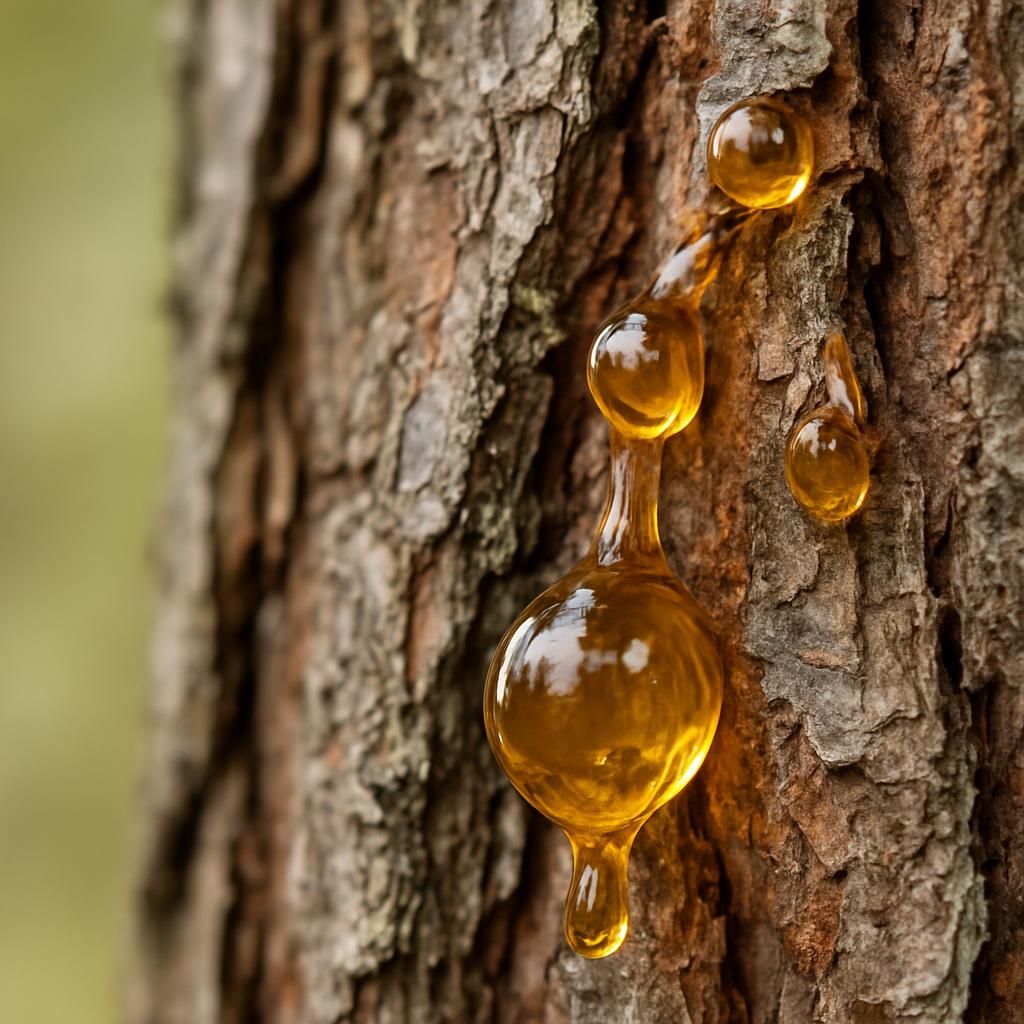
Pine resin, also known as pine oleoresin or pitch, is a natural exudate produced by pine trees (genus Pinus) as a defensive response to injury. It consists primarily of terpenes and resin acids and has been harvested for centuries for use in adhesives, varnishes, medicines, and incense. Commercial resin tapping is practiced in many temperate and subtropical regions where pine plantations are established specifically for oleoresin yield.
Sustainable resin harvesting requires careful management of tree health to avoid long-term damage while maximizing economic returns. Resin tapping is typically integrated into multi-use forestry systems that also provide timber, pulp, and ecosystem services.
Botanical Profile of Pine Resin
Pine resin is produced in the resin ducts of the secondary xylem and phloem of Pinus species. The resin is a complex mixture of monoterpenes, sesquiterpenes, and diterpene resin acids. Major commercial species include Pinus palustris (longleaf pine), Pinus elliottii (slash pine), Pinus pinaster (maritime pine), and Pinus massoniana (Chinese red pine).
Resin production is highest in mature trees with well-developed vascular systems. Genetic selection and silvicultural practices can significantly influence resin yield per tree.
Soil, pH, and Climate Requirements for Pine Resin
| Parameter | Ideal Range | Notes |
|---|---|---|
| Soil Type | Sandy loam to well-drained loam | Avoid heavy clays and waterlogged soils |
| Soil pH | 5.0 – 6.5 | Slightly acidic conditions preferred |
| Annual Rainfall | 800 – 1500 mm | Even distribution supports steady growth |
| Temperature Range | 10 – 30 °C (growing season) | Frost tolerance varies by species |
| Altitude | 0 – 1500 m | Lower altitudes often yield higher resin |
| Sunlight | Full sun (minimum 6 hours daily) | Essential for photosynthesis and resin synthesis |
Step-by-Step Planting & Propagation
- Site selection: Choose well-drained, south-facing slopes with deep, sandy-loam soils.
- Soil preparation: Clear competing vegetation and incorporate organic matter if soil organic carbon is below 1.5%.
- Seed or seedling selection: Use certified seed or grafted seedlings of high-resin-yielding cultivars.
- Planting density: Establish at 3 m × 3 m spacing (approximately 1100 stems/ha) for resin-focused plantations.
- Planting time: Plant bare-root or container seedlings in early spring or at the onset of the rainy season.
- Initial irrigation: Provide supplemental water for the first two growing seasons until root systems are established.
Care & Maintenance regimes for Pine Resin
| Activity | Frequency | Details |
|---|---|---|
| Watering | First 2 years: weekly if rainfall <25 mm/week; mature trees: rainfed | Deep watering encourages deep root development and resin duct formation |
| Fertilizer | Year 1–3: 50 g NPK 10-20-10 per tree at planting and 6 months later; mature: 100–150 g/tree annually in early spring | Use slow-release formulations; avoid excess nitrogen which reduces resin quality |
| Pruning | Formative pruning at year 2–3; light crown thinning every 5–7 years | Remove lower branches to improve air circulation and facilitate tapping |
Pests, Diseases & Organic Management
Common threats include Aphids, Pine weevils (new), and fungal pathogens such as Fusarium and Phytophthora. Monitor for resin flow reduction as an early sign of stress.
Organic management relies on maintaining tree vigor through proper spacing, mulching, and biological controls. Introduce predatory insects and apply neem-based sprays when pest thresholds are exceeded. Remove and destroy heavily infested branches to limit spread.
Harvesting, Curing & Optimal Storage
Resin tapping begins when trees reach 20–25 cm diameter at breast height. Use the “bark streak” or “cup and gutter” method, making shallow incisions that do not penetrate the cambium. Collect resin every 7–14 days during the active growing season.
Fresh resin is strained to remove debris and stored in airtight, dark containers at 10–15 °C. Curing for 4–6 weeks improves viscosity and terpene profile for industrial use. Avoid prolonged exposure to direct sunlight to prevent oxidation.
Companion Planting for Pine Resin
Compatible understory species include Clover for nitrogen fixation and Thyme for pest deterrence. Avoid planting heavy feeders such as Corn or Tomato that compete for nutrients and water.
Stop Treating Tomato Blight Like a Spray Problem: Here Is What Works Better offers insights into disease management strategies that can be adapted for pine health monitoring.