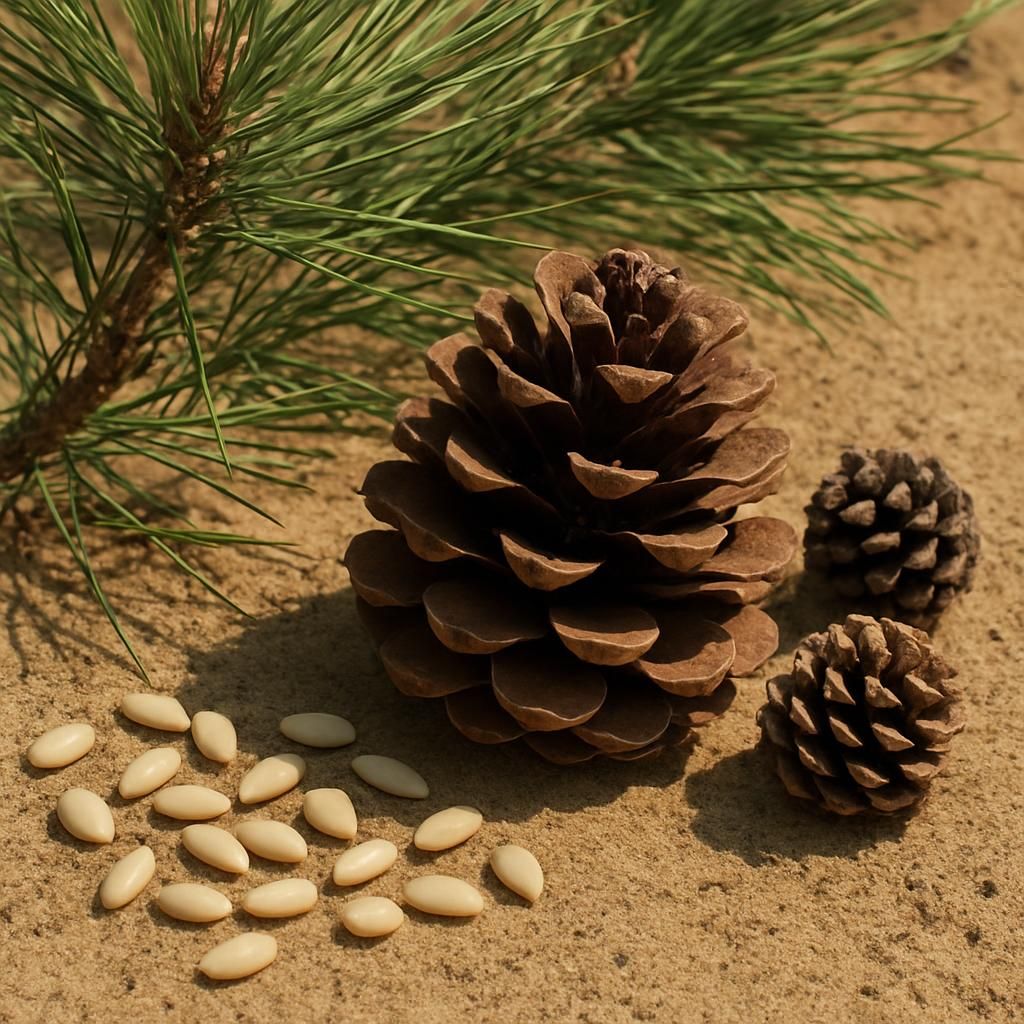
Introduction to Pine Nut (Pinus pinea - Italian Stone)
Pinus pinea, the Italian stone pine, produces the highly valued pine nuts used in pesto, baking, and gourmet cuisine worldwide. Native to the Mediterranean basin, this evergreen conifer can live for over 200 years and reach 40–60 feet (12–18 m) in height with a broad, umbrella-shaped canopy. Commercial production is concentrated in Spain, Italy, Portugal, and Turkey, where the nuts command premium prices due to labor-intensive harvesting. For growers outside traditional regions, success depends on replicating warm, dry summers and mild winters while providing excellent drainage. The crop is considered challenging due to the 3–7 year wait until first cone production and the 18-month cone maturation cycle. Despite the long timeline, established orchards deliver reliable annual yields of 10–20 kg of kernels per mature tree with proper management. This guide covers every stage from site selection through storage to help serious growers establish productive, long-term pine nut plantations.
Botanical Profile of Pine Nut (Pinus pinea - Italian Stone)
Pinus pinea belongs to the Pinaceae family and is distinguished by its thick, fissured gray-brown bark and paired needles 10–20 cm long. The tree produces large, ovoid cones 8–15 cm in length that take two full growing seasons to mature. Each cone contains 80–120 edible seeds (pine nuts) encased in a hard, woody shell. The seeds are approximately 1.5–2 cm long and rich in protein and healthy fats. Unlike many pine species, P. pinea is monoecious, bearing both male pollen cones and female seed cones on the same tree. Pollination occurs in spring of the first year, with fertilization delayed until the following spring. Cone development spans roughly 18 months from pollination to harvest. The species exhibits strong apical dominance in youth but develops its signature umbrella shape after 15–20 years. Root systems are deep and extensive, providing excellent drought tolerance once established.
Soil, pH, and Climate Requirements for Pine Nut (Pinus pinea - Italian Stone)
Pinus pinea demands well-drained, sandy or loamy soils with low fertility. Heavy clay or waterlogged conditions cause rapid decline. The species performs best in slightly acidic to neutral soils.
| Parameter | Ideal Range | Notes |
|---|---|---|
| Soil Type | Sandy loam to loamy sand | Excellent drainage essential |
| Soil pH | 5.5 – 7.5 | Tolerates mild alkalinity |
| Annual Rainfall | 400 – 700 mm | Supplemental irrigation in drier areas |
| Summer Temperature | 25 – 35 °C | Critical for cone development |
| Winter Temperature | 0 – 10 °C | Frost tolerance to –10 °C once established |
| USDA Hardiness Zones | 7b – 10b | Mediterranean climates preferred |
| Elevation | 0 – 800 m | Avoid high-altitude frost pockets |
Choose south- or southwest-facing slopes for maximum solar exposure and heat accumulation. Avoid sites with shallow water tables or seasonal flooding.
Step-by-Step Planting & Propagation
- Site Preparation: Clear competing vegetation and rip soil to 60 cm depth. Incorporate 5–10 cm of coarse sand or gravel if drainage is marginal.
- Propagation Method: Use stratified seeds or 2–3-year-old grafted seedlings for faster production. Stratify seeds at 4 °C for 60–90 days before sowing.
- Planting Window: Plant bare-root or container stock in late winter to early spring when soil temperatures exceed 10 °C.
- Spacing: Establish at 6–8 m between trees in rows 8–10 m apart to allow full canopy development.
- Planting Depth: Set trees at the same depth as the nursery container; backfill with native soil amended with 10 % compost.
- Initial Watering: Apply 20 L per tree immediately after planting and maintain consistent moisture for the first two seasons.
- Mulching: Apply 8–10 cm of organic mulch in a 1 m radius, keeping mulch 10 cm from the trunk.
Grafted trees begin producing cones in 4–6 years versus 7–10 years from seed. Source scion wood from high-yielding, disease-free mother trees.
Care & Maintenance regimes for Pine Nut (Pinus pinea - Italian Stone)
Mature trees require minimal intervention but benefit from scheduled irrigation, balanced nutrition, and selective pruning.
| Season | Watering Schedule | Fertilizer Application | Pruning Activity |
|---|---|---|---|
| Spring | 30–40 L/tree every 10–14 days | 200 g NPK 10-10-10 + micronutrients | Remove dead or crossing branches |
| Summer | 50–60 L/tree every 7–10 days | None (avoid late nitrogen) | Light thinning for light penetration |
| Autumn | Reduce to 20 L/tree every 3 weeks | 150 g potassium sulfate | Remove low branches for equipment access |
| Winter | Minimal unless drought persists | None | Structural pruning on young trees |
Monitor leaf color and needle length; pale needles indicate nitrogen deficiency. Avoid over-fertilization, which promotes vegetative growth at the expense of cone production.
Pests, Diseases & Organic Management
The primary pests affecting Pinus pinea include scale insects, spider mites, and cone-infesting insects. Diseases are relatively rare in well-drained sites but can include root rots in poorly drained soils. Implement integrated pest management with regular scouting and horticultural oil sprays during dormant periods. Introduce predatory mites and beneficial insects for biological control. Maintain orchard sanitation by removing fallen cones and debris that harbor overwintering pests. For fungal issues such as root rot, improve drainage and avoid over-irrigation. In Mediterranean climates, natural enemies usually keep pest populations below economic thresholds.
Harvesting, Curing & Optimal Storage
Cones are harvested when they turn from green to brown and begin to open, typically between September and November depending on latitude. Use long-handled picking poles or mechanical shakers to dislodge mature cones. Collect cones promptly to prevent seed loss to birds and rodents. Air-dry cones in single layers for 2–3 weeks at 25–30 °C until scales fully open. Extract seeds by gentle mechanical tumbling or hand threshing. Remove the hard seed coat using specialized pine nut shelling equipment. Store kernels in airtight containers at 0–4 °C with low humidity (<60 % RH) for up to 12 months. Vacuum-sealed frozen storage extends shelf life to 24 months while preserving flavor and oil quality.
Companion Planting for Pine Nut (Pinus pinea - Italian Stone)
Young pine nut orchards benefit from understory legumes such as clover or hairy vetch that fix nitrogen and suppress weeds. Aromatic herbs including rosemary and thyme deter certain insects while providing additional income from essential oil production. Avoid planting shallow-rooted crops that compete for surface moisture during establishment. In mature orchards, interplant with shade-tolerant species such as olive or low-growing strawberry to maximize land use without compromising pine nut yields.