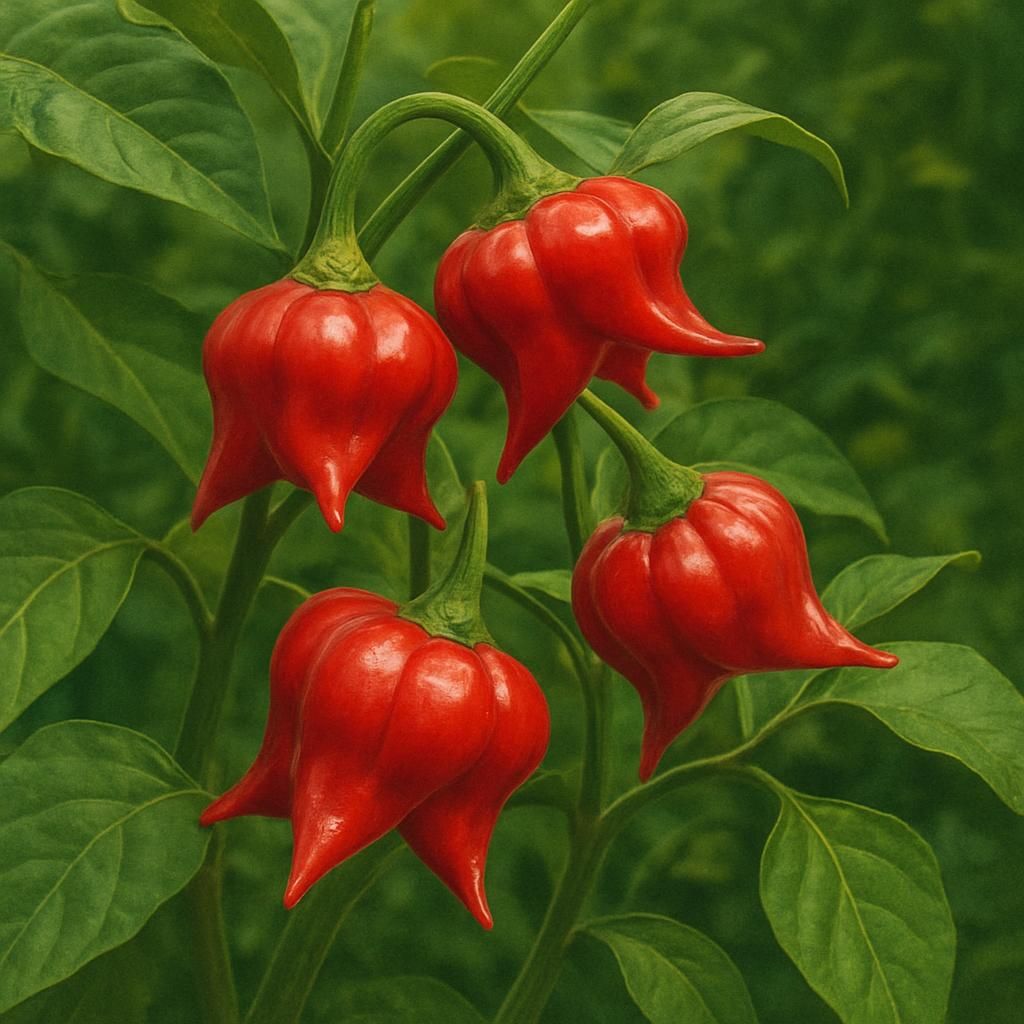
Introduction to Pimento do Bico
Pimento do Bico, commonly known as Bishop's Crown or Christmas Bell, is a unique pepper species cherished for its mild heat and fruity undertones. Native to the Caribbean, this pepper has gained international popularity, both for its culinary versatility and its ornamental appeal. Easily recognizable by its distinct three-sided shape, Pimento do Bico peppers bring a touch of the exotic to gardens and plates alike.
Botanical Profile of Pimento do Bico
Belonging to the species Capsicum chinense, Pimento do Bico is renowned for its unusual, three-winged shape and vibrant red color when ripe. Unlike its much hotter relatives in the species, such as the Ghost Pepper, this pepper is milder, offering a combination of sweet and tangy flavors with only a slight heat, typically measuring 5,000 to 30,000 SHU on the Scoville scale.
Soil, pH, and Climate Requirements for Pimento do Bico
To thrive, Pimento do Bico requires specific growing conditions which include the correct type of soil, pH level, and environmental climate.
| Factor | Ideal Condition |
|---|---|
| Soil Type | Well-draining, loamy |
| Soil pH | 6.0 - 6.8 |
| Temperature | 18°C - 30°C (64°F - 86°F) |
| Sunlight | Full sun, 6-8 hours daily |
| Watering | Moderate, avoid soggy soil |
Step-by-Step Planting & Propagation
Seed Selection: Start with high-quality seeds from a reputable source. Consider heirloom varieties if available for a more robust flavor profile.
Propagation: Begin seeds indoors about 8-10 weeks before the last expected frost. Use seed trays filled with rich, organic starting mix and lightly cover them with soil.
Transplanting: Once seedlings are about 5 inches tall and the threat of frost has passed, transplant them to the garden. Ensure a spacing of 18-24 inches between plants to allow proper airflow and growth.
Initial Watering: After planting, water thoroughly to help plants establish. Maintain a consistent watering schedule to avoid stress.
Mulching: Apply organic mulch to suppress weeds and retain soil moisture.
Care & Maintenance Regimes for Pimento do Bico
Pimento do Bico requires moderate care to flourish. Below is a schedule to guide your watering, fertilizing, and pruning practices.
| Activity | Schedule |
|---|---|
| Watering | Once or twice weekly, more in dry periods |
| Fertilizing | Every 4-6 weeks with balanced fertilizer |
| Pruning | Regularly to promote air circulation |
Pests, Diseases & Organic Management
Pimento do Bico is susceptible to several pests and diseases. Key threats include Spider Mites, Aphids, and Powdery Mildew. An integrated approach combining monitoring and organic treatments like neem oil or insecticidal soap can effectively manage these problems. Crop rotations and introducing beneficial insects like ladybugs can also serve in pest control.
Harvesting, Curing & Optimal Storage
Harvesting: Peppers are best harvested when fully mature and vibrant in color, typically 100-120 days after planting.
Curing: If desired, peppers can be left to cure in a dry, well-ventilated area away from direct sunlight to deepen their flavor and extend shelf life.
Storage: Once harvested, store peppers in a cool, dry location. If necessary, they can be refrigerated for up to two weeks or frozen for long-term storage.
Companion Planting for Pimento do Bico
Companion planting can enhance the growth and health of Pimento do Bico. Suitable companions include Basil, Marigold, and Lychee which can deter pests and promote a healthier growing environment.
For more integration and strategies, check out Summer Companion Planting: 10 Organic Pairings to Boost Small Farm Resilience.
By adhering to these guidelines, you can successfully cultivate Pimento do Bico, bringing a splash of vibrant color and exotic flavor to your garden and kitchen.