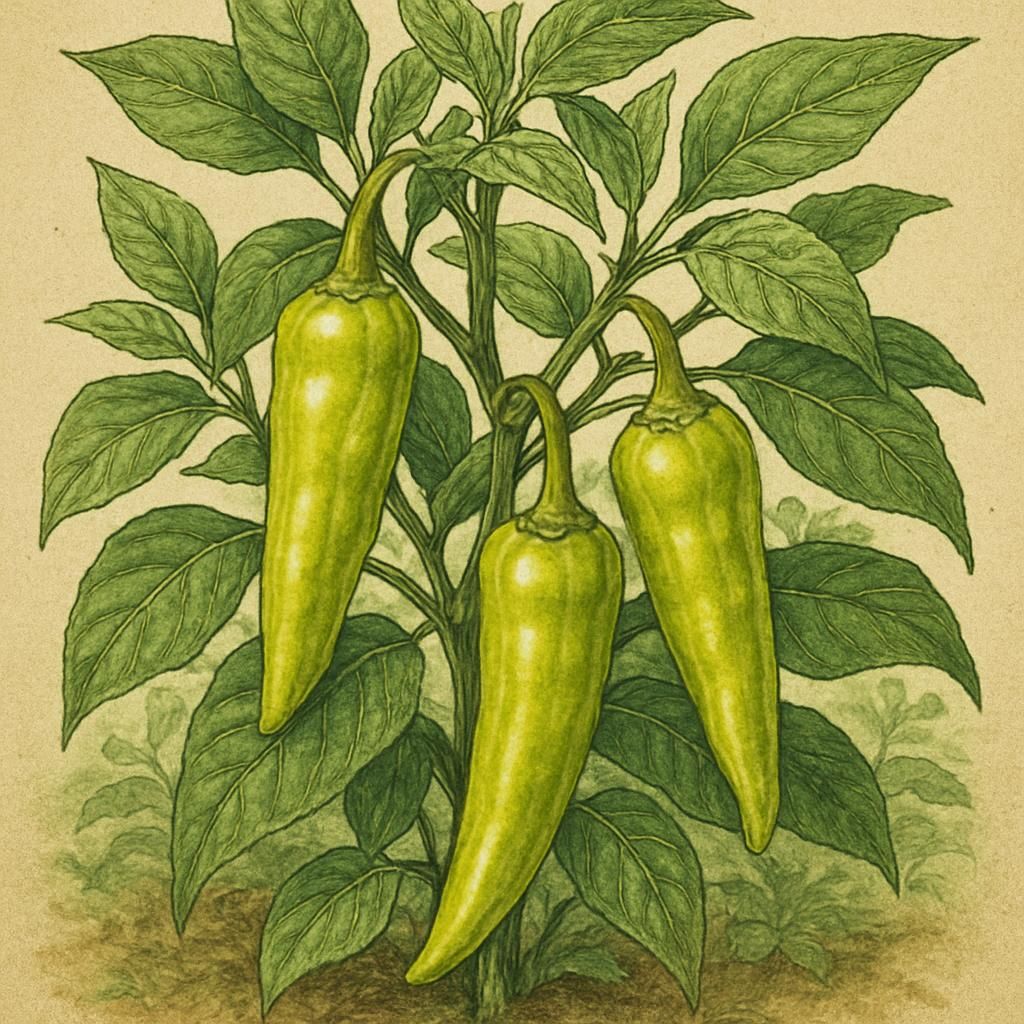
Introduction to Pepperoncini (Italian)
Pepperoncini peppers, also known as Italian peppers, are a member of the chili pepper family under the species Capsicum annuum. Renowned for their tangy flavor and mild heat, these peppers are a staple in Mediterranean cooking and are often pickled for use in salads, sandwiches, and antipasto platters.
Botanical Profile of Pepperoncini (Italian)
The Pepperoncini plant is a herbaceous perennial that can grow up to 1 to 3 feet tall. The peppers are typically harvested at 2-3 inches long, and they ripen from green to a vibrant red. They are thin-walled with a wrinkled texture, making them ideal for pickling. This plant is closely related to other chili peppers like the Chili Pepper, but it is known for its distinct mildly spicy taste.
Soil, pH, and Climate Requirements for Pepperoncini (Italian)
Pepperoncini plants thrive in warm climates with plenty of sunlight. They are adaptable but prefer well-drained soil with a slightly acidic pH.
| Requirement | Ideal Condition |
|---|---|
| Soil Type | Well-drained, sandy loam |
| pH Level | 6.0 - 7.0 |
| Temperature | 70-85°F (21-29°C) |
| Sunlight | Full sun |
Step-by-Step Planting & Propagation
- Seed Selection: Start with high-quality seeds or seedlings from a reputable nursery.
- Soil Preparation: Ensure the soil is well loosened, enriched with compost, and has adequate drainage.
- Sowing: Sow the seeds 1/4 inch deep. Space them about 18-24 inches apart.
- Watering: Water gently but consistently to keep the soil moist until germination.
- Germination: Expect germination in 7-14 days. Maintain optimal warmth through the germination phase.
- Transplantation: Once seedlings have at least 4 true leaves, transplant them outdoors after the last frost.
Care & Maintenance Regimes for Pepperoncini (Italian)
Pepperoncini require regular care to ensure healthy growth and productivity.
| Aspect | Details |
|---|---|
| Watering | 1-2 inches per week, more in hot climates |
| Fertilizer | Balanced 10-10-10 fertilizer every 6-8 weeks |
| Pruning | Remove bottom leaves and any sick or wilted parts when needed |
Pests, Diseases & Organic Management
Pepperoncini can be affected by various pests such as Aphids and diseases like Powdery Mildew. Regular inspection and early detection are key to management.
- Aphids: Can cause distorted growth. Control with neem oil.
- Powdery Mildew: Ensure good air circulation and use organic fungicides.
- Spider Mites: Keep humidity high and use insecticidal soap.
For more on organic management, check out the blog post on 7 Summer Pest Traps That Sabotage Small Farm Harvests.
Harvesting, Curing & Optimal Storage
Pepperoncini can be harvested once they reach 2-3 inches in length and are light green. For curing, let them sit in a warm, dry place until they soften or dry completely if planning to preserve them.
- Optimal Storage: Store fresh peppers in the fridge for up to two weeks. Cured peppers can be stored in jars with vinegar for several months.
Companion Planting for Pepperoncini (Italian)
Pepperoncini plants can benefit from companion planting alongside crops that can enhance their growth and deter pests.
For additional guidance, consider the blog post on Summer Companion Planting: 10 Organic Pairings to Boost Small Farm Resilience.