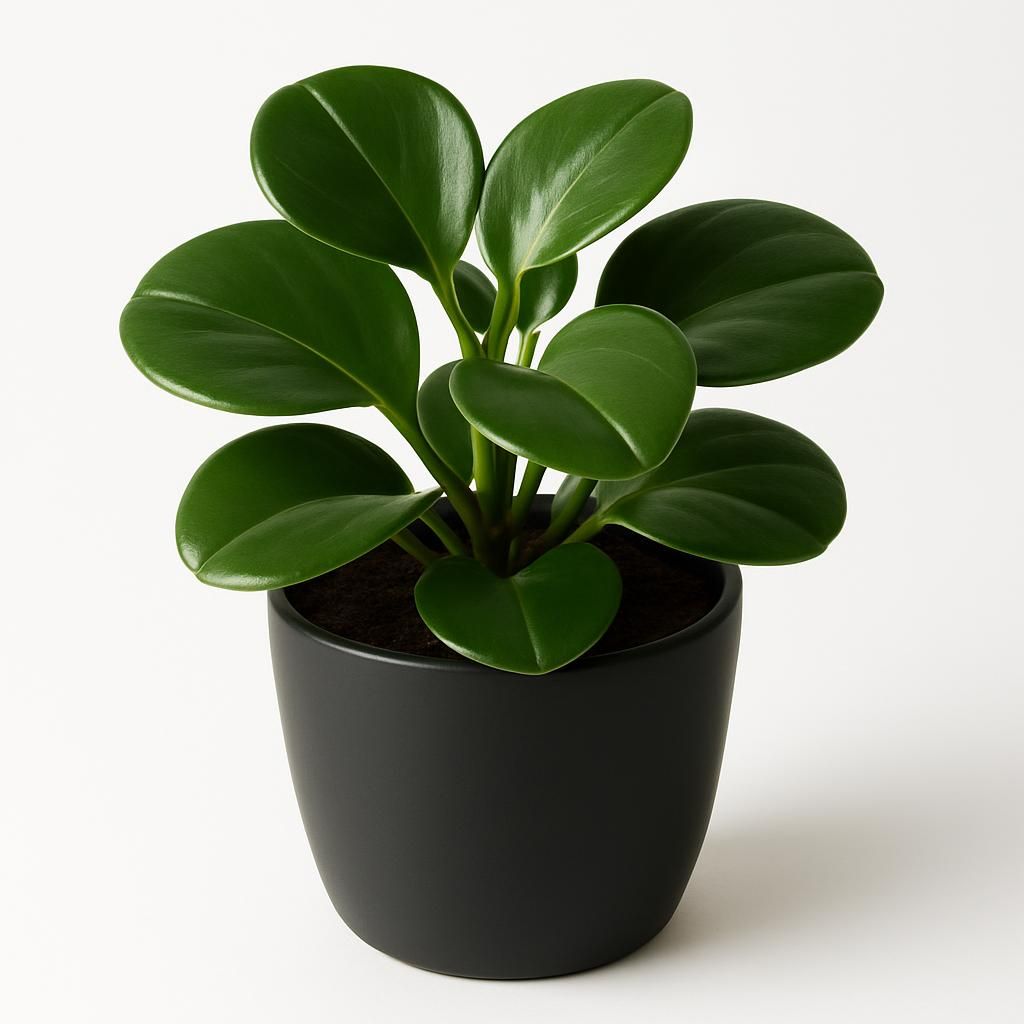
Introduction to Peperomia
Peperomia comprises over 1,500 species of succulent-like herbaceous perennials native to tropical and subtropical regions of Central and South America. As an ornamental foliage crop, Peperomia is valued for its compact habit, diverse leaf textures, and year-round production potential under controlled conditions. Commercial growers cultivate Peperomia for both retail potted-plant markets and cut-foliage arrangements, capitalizing on its tolerance of indoor lighting and minimal space requirements.
The crop's rapid vegetative growth and ability to regenerate from stem or leaf cuttings enable short production cycles and high turnover in greenhouse benches. Peperomia is increasingly adopted in urban vertical farms and hydroponic systems where space efficiency and visual appeal drive premium pricing. Its resilience to common indoor pests when cultural practices are optimized further supports sustainable production.
Botanical Profile of Peperomia
Peperomia species belong to the Piperaceae family and exhibit a range of growth forms from rosette-forming succulents to trailing vines. Most commercial cultivars feature thick, fleshy leaves with prominent venation and waxy cuticles that reduce transpiration. Stems are typically succulent and jointed, allowing efficient water storage during brief dry periods.
Reproductive structures consist of slender, spike-like inflorescences bearing minute, apetalous flowers. While flowering is rarely encouraged in ornamental production, seed propagation is possible for breeding programs. The genus displays remarkable morphological diversity, with cultivars such as Peperomia obtusifolia, Peperomia caperata, and Peperomia argyreia dominating commercial inventories.
Soil, pH, and Climate Requirements for Peperomia (MUST INCLUDE A MARKDOWN TABLE OF IDEAL CONDITIONS)
Successful Peperomia cultivation depends on a well-draining, aerated substrate that prevents waterlogging while maintaining consistent moisture around the root zone. A slightly acidic pH range optimizes nutrient uptake and minimizes the incidence of root pathogens. Temperature stability between 18–26 °C supports vigorous growth, while relative humidity of 50–70 % reduces leaf-edge necrosis.
| Parameter | Ideal Range | Notes |
|---|---|---|
| Soil Type | Peat-perlite-coco coir mix | 50:30:20 ratio ensures aeration and drainage |
| pH | 5.8–6.5 | Avoid alkaline conditions that induce chlorosis |
| Temperature (Day) | 21–26 °C | Maintain consistent warmth for metabolic activity |
| Temperature (Night) | 18–21 °C | Prevents cold stress and leaf drop |
| Relative Humidity | 50–70 % | Supplemental misting in arid climates |
| Light Intensity | 10,000–20,000 lux | Bright indirect light; avoid direct sun |
| Spacing (Pots) | 15–20 cm centers | Allows airflow and prevents overcrowding |
Step-by-Step Planting & Propagation
- Select healthy mother plants free of visible pests or disease symptoms.
- Prepare sterile propagation trays with a 50:50 mix of perlite and sphagnum moss.
- Take 5–8 cm stem cuttings with two nodes; remove lower leaves to reduce transpiration.
- Dip cut ends in 0.1 % IBA rooting hormone and insert 2 cm deep into the medium.
- Maintain bottom heat at 24 °C and high humidity under a clear dome for 14–21 days.
- Once roots reach 3 cm, transplant into 10 cm pots with the recommended soil mix.
- Acclimate young plants under 50 % shade cloth for one week before moving to production benches.
Care & Maintenance regimes for Peperomia (MUST INCLUDE A MARKDOWN TABLE OF WATER, FERTILIZER, AND PRUNING SCHEDULES)
Consistent cultural practices ensure compact, high-value foliage. Overwatering is the leading cause of root decline, so irrigation must be calibrated to substrate moisture and seasonal light levels. Balanced liquid fertilization supports leaf color without promoting excessive elongation. Regular pruning maintains shape and encourages lateral branching.
| Task | Frequency | Details |
|---|---|---|
| Watering | Every 7–10 days | Allow top 2 cm to dry; use room-temperature water |
| Fertilizer | Every 4 weeks (growing season) | 10-10-10 NPK at 150 ppm; reduce to 75 ppm in winter |
| Pruning | Every 8–12 weeks | Pinch growing tips to promote bushiness; remove yellow leaves |
| Repotting | Every 18–24 months | Upgrade one pot size when roots circle the container |
Pests, Diseases & Organic Management
Common pests include mealybugs, spider mites, and fungus gnats. Early detection through weekly scouting allows targeted interventions such as insecticidal soap or neem oil drenches. Overly wet substrates promote Pythium and Phytophthora root rots; improve drainage and apply beneficial microbes to suppress pathogens.
Organic management integrates cultural, biological, and minimal-input chemical controls. Sticky traps reduce adult fungus gnat populations, while predatory mites (Phytoseiulus persimilis) suppress spider mite outbreaks. Maintaining leaf surfaces dry during evening hours minimizes Botrytis incidence.
Harvesting, Curing & Optimal Storage
Harvest mature leaves or whole rosettes when foliage reaches peak color and turgidity. Use clean, sharp shears to make angled cuts just above a node to encourage regrowth. Immediately place harvested material in perforated plastic sleeves to prevent condensation and fungal growth.
Curing involves holding plants at 18 °C and 60 % RH for 24 hours to harden cut surfaces. Store finished pots at 15–18 °C under low light for up to 14 days without quality loss. For cut foliage, hydrate stems in 5 °C water with floral preservative for 48 hours before packing.
Companion Planting for Peperomia
Peperomia pairs effectively with humidity-loving foliage plants such as Thai Basil and Mini Monstera in mixed interior displays. These combinations improve microclimate humidity and provide visual contrast. Avoid proximity to heavy feeders like Tomato that may compete for shared irrigation resources.
In greenhouse benches, interplanting Peperomia with aromatic herbs such as Rosemary can deter certain soft-bodied insects through volatile compounds. Monitor spacing to ensure adequate airflow and prevent overcrowding that favors disease spread.