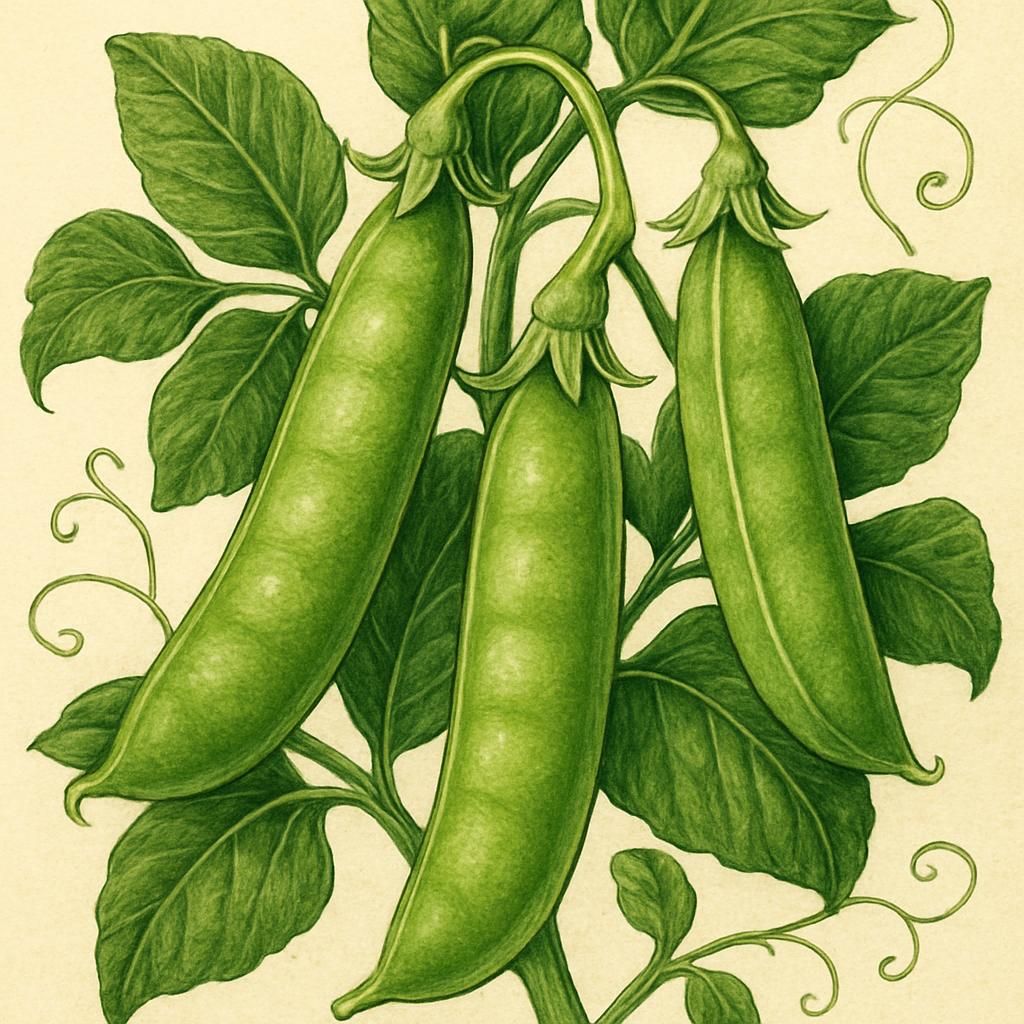
Introduction to Pea (Sugar Snap - Cascadia)
Sugar Snap Pea 'Cascadia' is a cultivar known for its resilience and high productivity. It is especially prized for sweet, crunchy pods that can be eaten whole, making it a favorite for fresh eating and salads. As a cool-season crop, this variety thrives in mild weather, making it ideal for spring and fall plantings.
Botanical Profile of Pea (Sugar Snap - Cascadia)
Pisum sativum var. macrocarpon, commonly known as sugar snap peas, belong to the legume family, Fabaceae. The 'Cascadia' variety is a vigorous plant that produces medium-sized vines, typically growing to around 2-3 feet in height. It bears small, delicate white flowers that turn into plump, edible pods.
Soil, pH, and Climate Requirements for Pea (Sugar Snap - Cascadia)
Ideal Growing Conditions
| Parameter | Ideal Range |
|---|---|
| Soil Type | Well-drained, loamy soil |
| Soil pH | 6.0 - 7.5 |
| Temperature | 45-75°F (7-24°C) |
| Sunlight | Full sun to partial shade |
'Sugar Snap – Cascadia' peas prefer well-drained, loamy soils with a neutral to slightly acidic pH. These plants thrive in temperatures ranging from 45 to 75°F, making them well-suited to spring or fall gardens. Excessive heat can impair flower development, impacting yield.
Step-by-Step Planting & Propagation
- Site Selection: Choose a site with full sun exposure and good air circulation. Avoid areas where other legumes were recently grown to prevent disease buildup.
- Soil Preparation: Till the soil to a depth of 6 inches and incorporate organic matter such as compost to improve fertility and drainage.
- Sowing: Direct seed sugar snap peas one inch deep and 2 inches apart, in rows spaced about 18 inches apart. For continuous harvests, plant successive crops every two weeks.
- Germination: Peas germinate at temperatures between 40 and 75°F. Typically, germination occurs within 8-12 days.
- Spacing: Thin seedlings to 4 inches apart once they are sturdy enough, ensuring enough space for healthy growth.
Care & Maintenance Regimes for Pea (Sugar Snap - Cascadia)
Maintenance Schedule
| Task | Frequency |
|---|---|
| Watering | 1-2 inches per week |
| Fertilization | None after initial soil prep |
| Pruning | Remove diseased foliage as needed |
- Watering: Ensure consistent moisture, especially during pod formation. Water at the soil level to prevent diseases.
- Fertilization: Usually unnecessary if soil is appropriately prepared, but a side dressing of aged compost can be beneficial.
- Support: Provide a support system such as trellises to help vines climb and prevent the pods from contacting the soil, which can lead to rot.
Pests, Diseases & Organic Management
Sugar Snack 'Cascadia' is generally resistant to Powdery mildew, but is susceptible to pests like Aphids and Spider Mites. Combat aphids with organic insecticidal soap or neem oil and introduce beneficial insects like ladybugs. To ward off spider mites, ensure plants received adequate water, and predatory mites can also be introduced.
Harvesting, Curing & Optimal Storage
Harvest sugar snap peas when pods are full and rounded but before the peas inside become too large. Use clean, sharp scissors or garden shears to avoid damaging plants. After harvest, peas can be stored in a refrigerator for up to a week, maintaining crispness and sweetness.
Companion Planting for Pea (Sugar Snap - Cascadia)
Companion planting enhances the health and productivity of sugar snap peas. Beneficial companions include Lettuce, which can utilize the space between pea plants, and Carrots, which grow well in similar conditions.
For more information on organic strategies including companion planting, read our post on Summer Companion Planting: 10 Organic Pairings to Boost Small Farm Resilience.
Learn more general information on Peas.