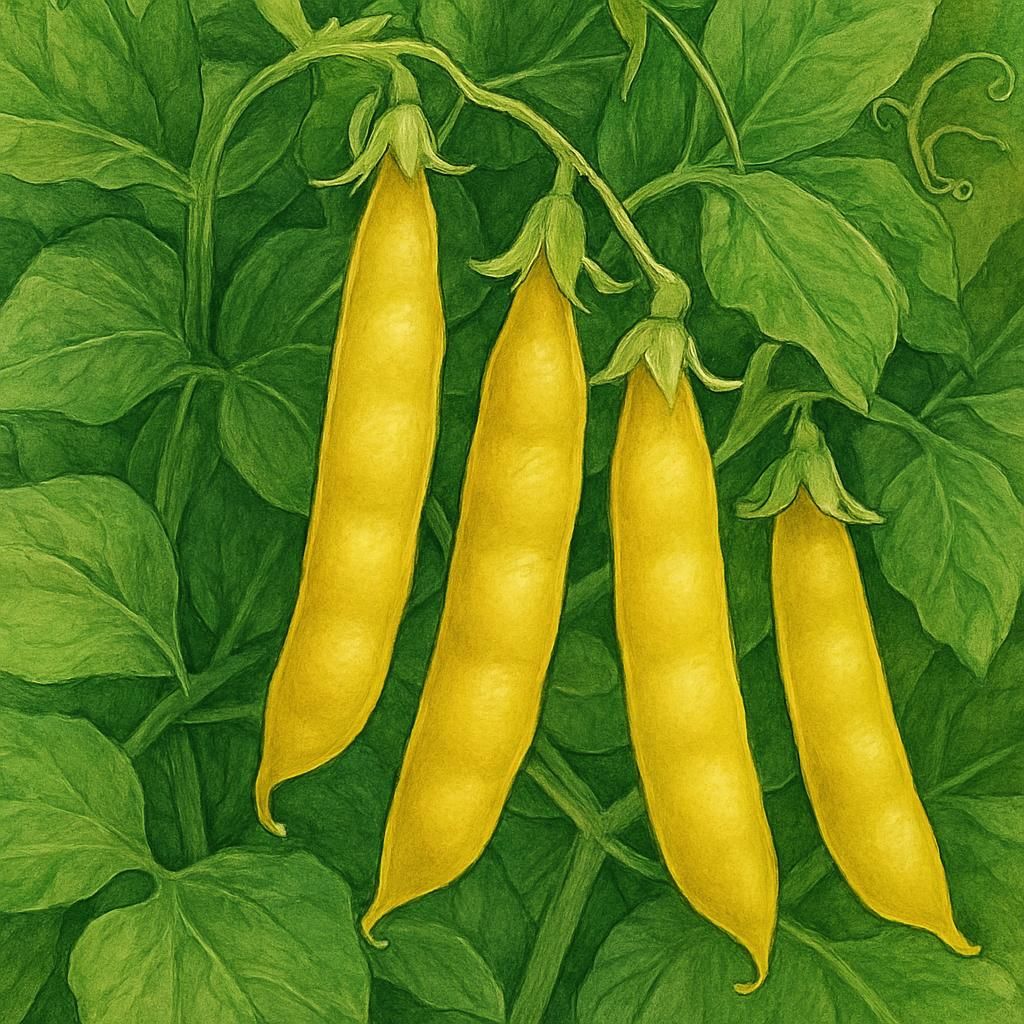
Introduction to Pea (Golden Sweet Snow)
Golden Sweet Snow pea (Pisum sativum) offers not only a delightful crunch and sweetness to culinary dishes but also a visual appeal with its vibrant yellow pods. This variety is well-suited for cooler climates and can be a charming addition to home gardens due to its ease of cultivation and high nutritional value.
Botanical Profile of Pea (Golden Sweet Snow)
Golden Sweet Snow peas belong to the Fabaceae family. These annual plants typically grow to a height of 24-30 inches, with winged stems supporting a series of compound leaves. The yellow pods are small, flat, and can be harvested young for maximum tenderness.
Soil, pH, and Climate Requirements for Pea (Golden Sweet Snow)
Golden Sweet Snow peas flourish in well-drained soils, preferring moderately fertile, sandy loams. Adequate soil preparation, which includes the integration of well-rotted compost or organic matter, is essential. For optimal growth conditions:
| Soil Type | Ideal pH Range | Temperature Range | Sunlight Exposure |
|---|---|---|---|
| Loamy, Sandy | 6.0 - 7.0 | 55°F - 70°F | Full to Partial |
Step-by-Step Planting & Propagation
- Site Selection: Choose a sun-rich area with well-drained soil. Avoid areas prone to waterlogging or those having grown Soybeans or Peas recently to minimize disease carryover.
- Preparation: Till the soil to a depth of 6-8 inches. Amend the soil with compost and ensure proper drainage.
- Sowing Seeds: Plant seeds 1 inch deep and 2 inches apart. Rows should be spaced 18-24 inches apart. Direct sowing is recommended, as peas dislike transplanting.
- Propagation Timing: Sow in early spring, 4-6 weeks before the last expected frost date, or in late summer for a fall harvest.
Care & Maintenance Regimes for Pea (Golden Sweet Snow)
Pea plants demand consistent moisture, especially during flowering and pod development.
| Care Aspect | Watering | Fertilizer | Pruning |
|---|---|---|---|
| Frequency | Weekly | Low nitrogen, before planting | Remove damaged/ill stems |
| Amount | 1-inch per week | Compost or 5-10-10 NPK formula | Trim excess growth |
Pests, Diseases & Organic Management
Golden Sweet Snow peas face pest pressures from aphids and Spider Mites, among others. Common diseases include powdery mildew and Fusarium wilt. Organic management practices such as companion planting, crop rotation, and the use of neem oil or insecticidal soaps are effective.
Harvesting, Curing & Optimal Storage
Harvest when pods are fully colored and filled but before the pea seeds inside mature. Best done in the morning when pods are at their crispest. Store unwashed peas in an airtight container in the refrigerator to prolong freshness for up to a week.
Companion Planting for Pea (Golden Sweet Snow)
Deploy companion planting strategies to naturally deter pests and improve yield. Beneficial companions include Carrots, Radishes, and Onions. Avoid planting near members of the Fabaceae family that have been affected by similar diseases.
For more on strategic planning for small farm success, explore our blog post on A Season of Strategic Planning for Small Farm Success.