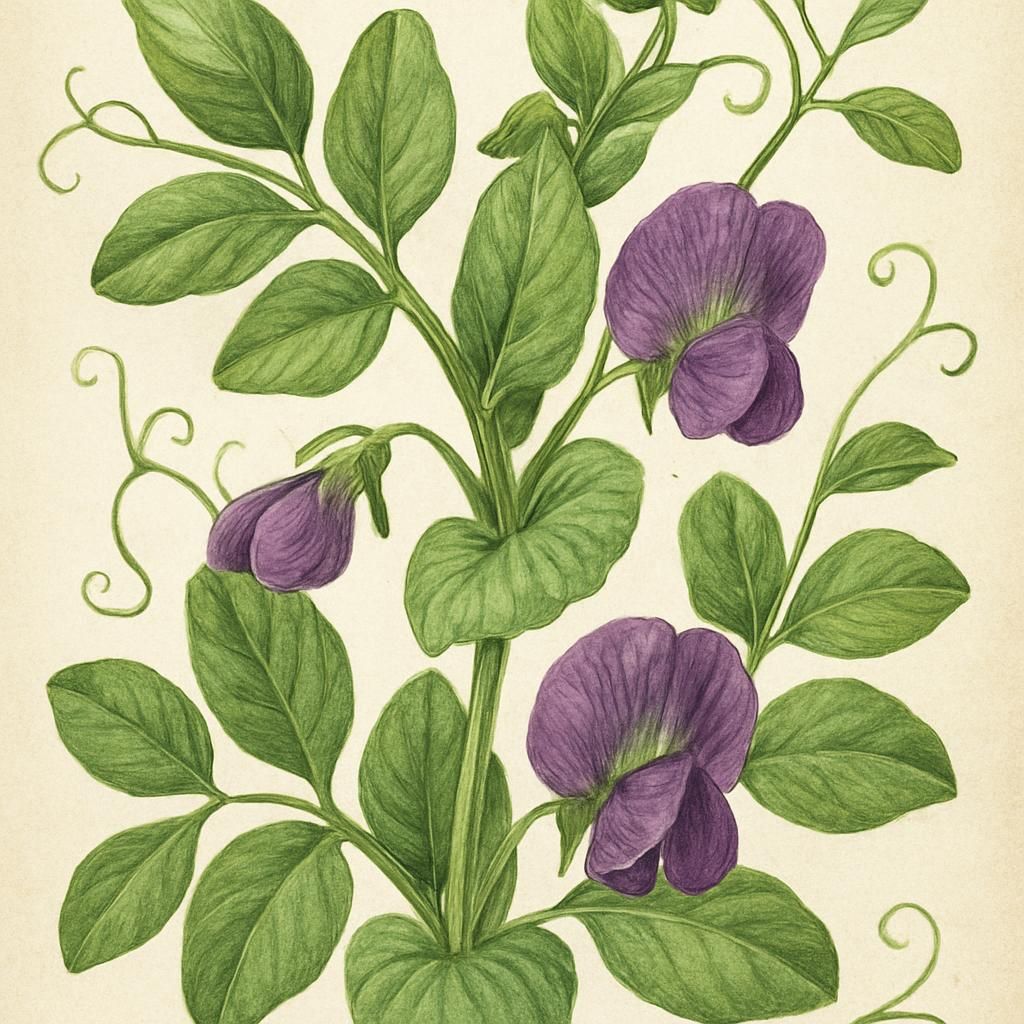
Introduction to Pea (Austrian Winter)
The Austrian Winter Pea, a subspecies of the common pea (Pisum sativum), is a versatile crop renowned for its ability to thrive in cooler climates. Used primarily as a cover crop, it enhances soil fertility through nitrogen fixation, improves soil structure, and provides excellent forage for livestock. Its cold-hardiness makes it an ideal choice for winter planting in temperate regions.
Botanical Profile of Pea (Austrian Winter)
Belonging to the Fabaceae family, the Austrian Winter Pea is an annual legume with a sprawling growth habit. The plant features compound leaves, tendrils for climbing, and delicate purple flowers. It is primarily grown for its seeds and the ability to fix atmospheric nitrogen into the soil, benefiting subsequent crops.
Soil, pH, and Climate Requirements for Pea (Austrian Winter)
Austrian Winter Peas are adaptable but thrive under specific conditions. They prefer cool temperatures and are tolerant of mild frosts. Here's a breakdown of their ideal growing conditions:
| Condition | Ideal Range |
|---|---|
| Soil Type | Loamy, well-drained |
| Soil pH | 6.0 - 7.5 |
| Temperature | 40°F (4°C) to 70°F (21°C) |
| Rainfall | 18 - 22 inches annually |
Step-by-Step Planting & Propagation
- Site Selection: Choose a well-drained area that receives full sunlight.
- Soil Preparation: Till the soil to a depth of 6-8 inches, ensuring a fine tilth. Incorporate organic matter if necessary to improve soil structure.
- Seed Sowing: Sow seeds directly in the soil 1-2 inches deep, spaced 2-3 inches apart. Rows should be 12-18 inches apart.
- Timing: Plant in late summer or early fall to establish before winter.
- Irrigation: Ensure soil is kept moist but not waterlogged during germination.
Care & Maintenance Regimes for Pea (Austrian Winter)
Proper care ensures robust growth and high nitrogen fixation rates. Below is a suggested schedule:
| Task | Schedule |
|---|---|
| Watering | Once a week, more in dry spells |
| Fertilizing | Use a balanced legume inoculant at planting |
| Pruning | Not typically required |
Pests, Diseases & Organic Management
Austrian Winter Peas are relatively resistant to many common pests and diseases but can be affected by pests like Aphids and diseases such as Powdery Mildew. Implementing crop rotations and introducing beneficial insects like ladybugs can help manage aphid populations organically. Regular monitoring and preventive measures, such as maintaining proper spacing for air circulation, can reduce disease incidence.
Harvesting, Curing & Optimal Storage
- Harvesting: Forage is best harvested when plants are in bloom for optimal nutritional content. For seeds, harvest once pods are dry.
- Curing: Allow time for any harvested forage to dry partially to prevent mold during storage.
- Storage: Store seeds in a cool, dry place in breathable bags to maintain longevity and viability.
Companion Planting for Pea (Austrian Winter)
Austrian Winter Peas work effectively as companion plants, particularly with Cereal Rye and Oats, forming synergistic relationships that enhance nitrogen fixation and suppress weeds. They can also improve soil structure for future Corn and Wheat crops.
For more detailed insights into the strategic ways Austrian Winter Pea can bolster your small farm investments, visit our deep-dive into Crop Diseases Under the Microscope: 9 Organic Fixes for Small Farm Resilience.
Explore comprehensive crop-specific details, including Austrian Winter Pea's role as a nitrogen-fixing legume, in the comprehensive Peas crop entry.