Introduction to Pasmo
Pasmo, also known as Isariopsis leaf spot, is a fungal disease that poses a serious threat to sunflower production worldwide, particularly in regions with high humidity and moderate temperatures. Caused primarily by the fungus Mycosphaerella tassiana (synonym Isariopsis personata), Pasmo thrives in dense crop canopies where moisture persists on foliage. This disease can lead to defoliation, stem girdling, and yield reductions of up to 50% or more in severe outbreaks, making it a critical concern for commercial sunflower growers and small-scale farmers alike.
First reported in North America in the early 20th century, Pasmo has become more prevalent due to intensified sunflower monocropping and changing climate patterns that favor fungal proliferation. The pathogen overwinters in crop residue, releasing spores that infect new plantings in spring. Understanding Pasmo's biology is essential for implementing integrated management strategies that combine cultural, organic, and biological controls. For detailed insights into sunflower cultivation challenges, growers can explore proven techniques to boost resilience.
This guide provides professional-grade diagnostic tools, symptom identification, lifecycle details, risk factors, organic treatments, prevention methods, and lists the primary crops affected. By following these evidence-based recommendations, farmers can safeguard their harvests and maintain soil health without relying on synthetic chemicals.
Identifying Symptoms & Damage
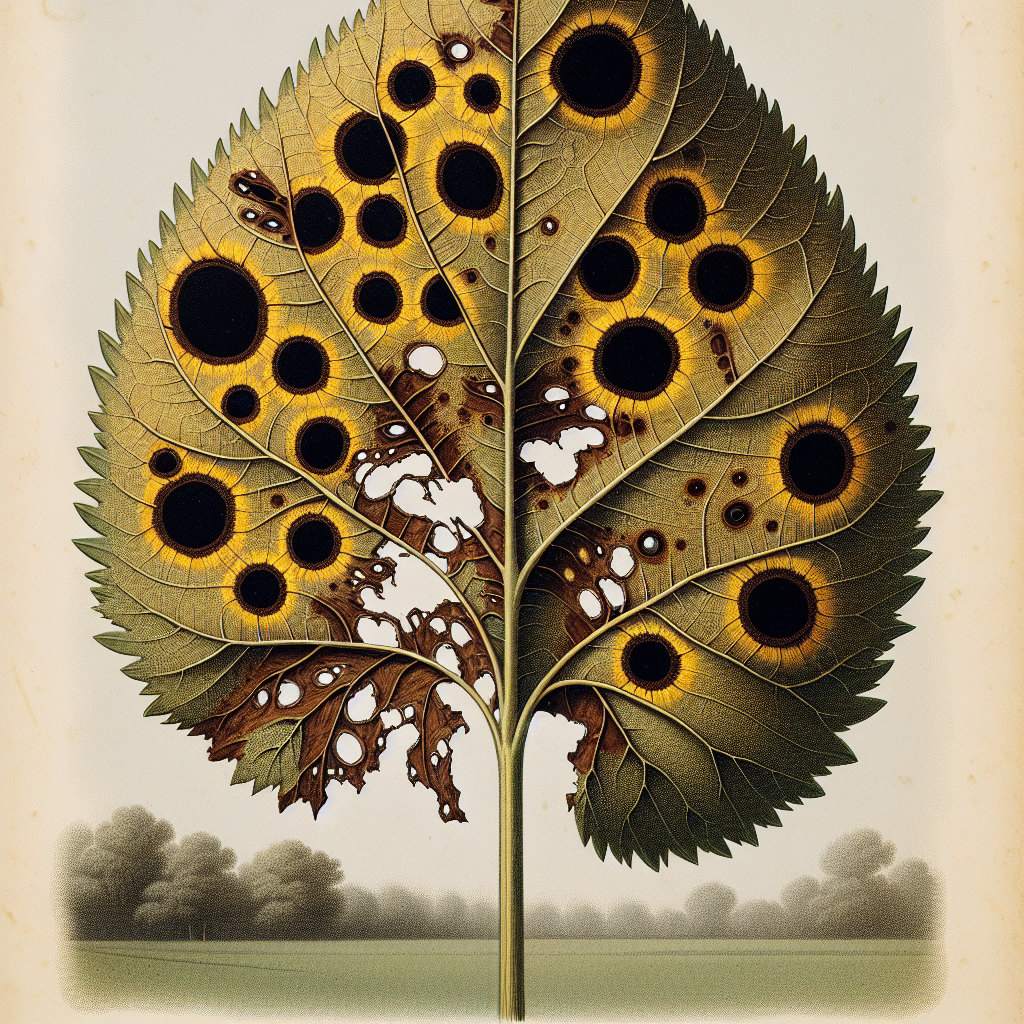
Accurate diagnosis of Pasmo begins with recognizing its distinct symptoms, which typically appear mid-season on sunflower leaves and stems. Initial signs include small, circular to irregular brown spots (1-5 mm in diameter) on lower leaves, often surrounded by a yellow halo. These spots expand and coalesce, turning dark brown to black with a leathery texture. Under humid conditions, the spots develop a characteristic 'shot-hole' appearance as centers fall out, creating tattered foliage.
As the disease progresses, symptoms move upward to upper leaves, petioles, and stems. Stem lesions appear as long, dark brown streaks with black pycnidia (fruiting bodies) embedded, resembling raised black dots. Severe infections cause premature defoliation, exposing heads to birds and sunburn, while weakened stems may lodge, complicating harvest. Heads themselves are rarely directly affected, but overall plant vigor declines, reducing seed fill and oil content by 20-40%.
Damage assessment involves scouting fields at the R5 growth stage (flowering to seed fill). Count lesions per leaf: 10-20 spots indicate moderate infection; over 50 signals severe risk. Differentiate Pasmo from similar diseases like Alternaria leaf spot (larger spots, zonate patterns) or rusts (orange pustules). Lab confirmation via pycnidia microscopy ensures precise identification, preventing misdiagnosis that could exacerbate losses.
Economic impact is profound: in the U.S. Northern Plains, Pasmo causes annual losses exceeding $50 million. Small farms suffer disproportionately due to limited rotation options. Early detection via weekly patrols, especially after rain, allows intervention before irreversible damage.
Lifecycle and Progression of Pasmo
Pasmo's lifecycle is polycyclic, with multiple infection cycles per season driven by abundant spore production. The primary inoculum source is pycnidia in overwintered sunflower residue, which release conidia during spring rains (April-May). These splash-dispersed spores infect emerging seedlings or lower leaves when films of water persist for 6-12 hours at 20-25°C (68-77°F).
Germination occurs within 4-6 hours, with hyphae penetrating stomata or wounds. Incubation lasts 7-14 days, producing new leaf spots. Under favorable conditions, pseudothecia form, releasing ascospores for secondary spread via wind and rain. Peak sporulation aligns with canopy closure (V8-R2 stages), amplifying epidemics.
Disease progression follows a sigmoidal curve: slow initial buildup, rapid mid-season spread, and plateau as foliage senesces. Latent infections on senesced leaves sustain inoculum for 2-3 years. Temperature optima (22-28°C) and leaf wetness duration (>8 hours) dictate severity. In diverse rotations, residue decomposition reduces viability by 90% within 18 months.
Understanding this cycle informs timing: destroy residue post-harvest to break primary inoculum. Monitor with weather stations tracking leaf wetness and humidity for predictive modeling.
Environmental Triggers & Risk Factors
Pasmo epidemics are triggered by specific environmental cues and agronomic practices. Prolonged leaf wetness from frequent rains, dew, or overhead irrigation (>48 hours cumulative weekly) is the primary driver, coupled with daytime highs of 24-30°C and nighttime lows above 15°C. High relative humidity (>85%) in dense canopies exacerbates spread.
Key risk factors include continuous sunflower cropping, narrow row spacing (<76 cm), high plant density (>60,000 plants/ha), and excessive nitrogen favoring lush foliage. Susceptible hybrids (non-resteds) amplify vulnerability. Poor air circulation in low-lying fields or windbreaks traps moisture, while clay soils retain humidity longer.
Climate change intensifies risks: warmer springs advance spore release, and intensified storms splash inoculum farther. Integrate with downy mildew monitoring, as co-infections compound damage. Soil pH >7.0 limits calcium uptake, weakening cell walls against penetration.
Organic Control & Treatment Plans
Organic management of Pasmo emphasizes prevention but includes curative options for outbreaks. Start with sanitation: shred and bury residue immediately post-harvest, incorporating deep tillage (15-20 cm) to accelerate decomposition. Crop rotation with non-hosts like corn or soybeans (3-4 years minimum) starves inoculum.
Select resistant hybrids (e.g., those with stay-green traits) and plant early to evade peak spore periods. Maintain 76-91 cm rows for airflow. Apply OMRI-listed biocontrols: Trichoderma harzianum or Bacillus subtilis sprays (every 7-10 days from V6) suppress sporulation by 60-70%. Potassium phosphite (3-5 L/ha foliar) boosts defenses via induced systemic resistance.
Neem oil or potassium bicarbonate (preventive, 3 applications at 10-day intervals) reduce lesion expansion. For severe cases, prune infected lower leaves and destroy. Check out Spring Pest Patrol: Organic AI Strategies to Shield Your Crops from Common Invaders for tech-enhanced scouting tips.
Integrated plans: scout weekly, apply biocontrols if >5 spots/leaf, rotate religiously. Yields recover 25-40% with timely action.
Preventing Pasmo in the Future
Long-term prevention hinges on cultural practices and monitoring. Implement 4-year rotations with cereals or brassicas. Use certified disease-free seed and treat with hot water (50°C, 25 min) or biofungicides. Optimize fertility: balanced NPK avoids excess nitrogen; foliar calcium strengthens tissues.
Enhance field drainage and avoid overhead irrigation, favoring drip systems. Plant windbreaks sparingly to preserve airflow. Scout using 20-30 sites/field, rating disease incidence. Threshold: 10% severity at R1 triggers rotation exit.
Resistant varieties like 'Pioneer 63M80' offer partial protection. Cover crops (clover) suppress residue pathogens. Annual soil tests guide amendments. Hyper-local weather data predicts outbreaks, enabling preemptive sprays. Sustainable practices ensure Pasmo remains minor.
Crops Most Affected by Pasmo
Pasmo primarily targets sunflowers (Helianthus annuus), with all growth stages susceptible but mid-season most vulnerable. Wild sunflowers serve as reservoirs. Minor reports on related species like Jerusalem artichoke, but commercial impact centers on oilseed and confectionery sunflowers. No significant cross-infection to wheat, corn, or other crops noted.