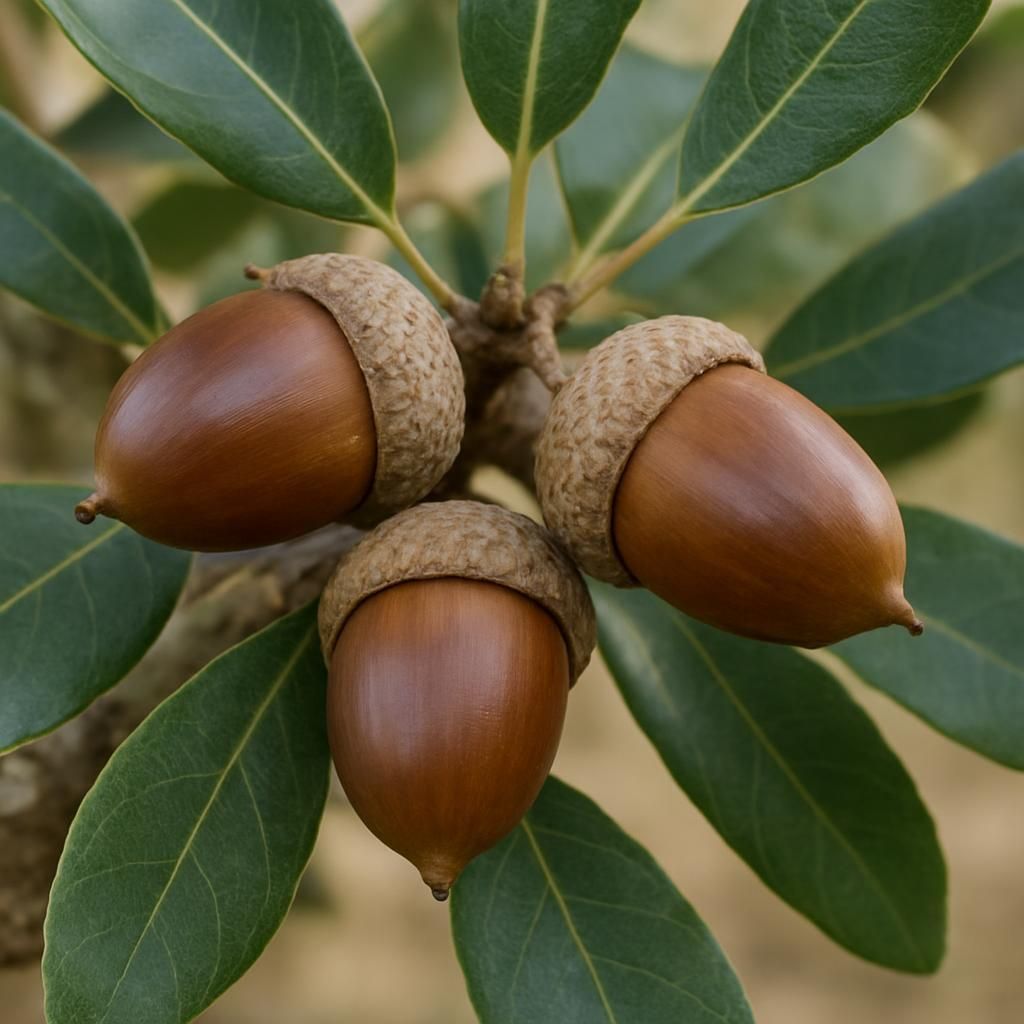
Introduction to Oak Acorn (Live Oak)
The Live Oak (Quercus virginiana) is a majestic evergreen species native to the coastal plains of the southeastern United States. Known for its sprawling canopy, longevity exceeding 500 years, and production of sweet, edible acorns, this tree serves both ornamental and practical agricultural purposes. Farmers and land managers value Live Oak for shade, wildlife habitat, soil stabilization, and sustainable acorn harvests used in livestock feed and human culinary applications.
Live Oak acorns are larger and milder in tannin content compared to many other oak species, making them suitable for direct processing into flour or livestock rations. The tree's deep root system improves soil structure and water infiltration while its evergreen foliage provides year-round microclimate benefits. Cultivation requires patience, as significant acorn production typically begins between 20–30 years of age, but the long-term returns in ecosystem services and nut yield are substantial.
This guide delivers professional-grade, field-tested protocols for establishing and managing Live Oak orchards or agroforestry systems, focusing on soil science, propagation, integrated pest management, and harvest techniques optimized for both commercial and small-scale operations.
Botanical Profile of Oak Acorn (Live Oak)
Live Oak belongs to the Fagaceae family and is classified as a white oak group member despite its evergreen habit. Mature specimens reach 40–80 feet in height with equally wide or wider canopies supported by massive, often horizontal limbs. The bark is dark brown to nearly black with irregular furrows, while leaves are leathery, oblong, and dark green above with pale, finely pubescent undersides.
Acorns mature in a single season, measuring 0.75–1.25 inches long with a shallow, bowl-shaped cup covering approximately one-third of the nut. The kernel is sweet with relatively low tannin levels, allowing simpler leaching processes than many deciduous oaks. Flowers are wind-pollinated catkins appearing in early spring, with female flowers developing into acorns by late summer or early fall.
The species exhibits strong resprouting ability after fire or mechanical damage and demonstrates excellent salt tolerance, making it ideal for coastal agroforestry. Genetic variation exists across its range, with southern populations showing greater cold sensitivity compared to northern ecotypes.
Soil, pH, and Climate Requirements for Oak Acorn (Live Oak)
Live Oak thrives across a wide range of soil textures provided drainage is adequate. It performs best in sandy loam to loam soils with good organic matter content but tolerates heavy clays if not persistently waterlogged. The species is highly adaptable to coastal conditions including salt spray and occasional flooding.
| Parameter | Ideal Range/Value | Notes |
|---|---|---|
| Soil Texture | Sandy loam to loam | Tolerates clay with improved drainage |
| Soil pH | 5.5–7.0 | Slightly acidic to neutral preferred |
| Annual Rainfall | 40–60 inches | Supplemental irrigation for first 3 years |
| USDA Hardiness Zones | 8a–10b | Protect young trees in marginal zone 8a |
| Temperature Range | 15°F minimum; 95°F maximum | Established trees tolerate brief freezes |
| Sun Exposure | Full sun to partial shade | Full sun maximizes acorn production |
| Soil Depth | Minimum 3 feet | Deep taproot requires unrestricted profile |
| Salinity Tolerance | Moderate to high | Suitable for coastal plantings |
Step-by-Step Planting & Propagation
Successful establishment begins with high-quality seed or nursery stock. Collect ripe acorns in fall from healthy, productive parent trees. Float-test acorns in water; viable seeds sink while damaged or empty ones float. Store viable acorns in moist sand or peat at 35–40°F for 60–90 days to satisfy cold stratification requirements.
Direct seeding is the most cost-effective method for large plantings. Sow acorns 1–2 inches deep in prepared rows spaced 20–30 feet apart, or in individual planting holes for specimen trees. Protect seeds from rodents using hardware cloth cages until germination occurs in spring.
Container-grown seedlings offer faster initial growth and higher survival rates. Plant 1–2-year-old nursery stock in late fall or early winter when soil moisture is adequate. Dig holes twice the width of the root ball and backfill with native soil amended only with compost if organic matter is below 2%. Water deeply after planting and apply 3–4 inches of organic mulch, keeping it 6 inches from the trunk.
Care & Maintenance regimes for Oak Acorn (Live Oak)
Young Live Oaks require consistent care for the first five years to develop strong root systems and structural integrity. Focus on weed suppression, moisture management, and formative pruning to establish a central leader with well-spaced scaffold branches.
| Year/Stage | Water Schedule | Fertilizer Application | Pruning Schedule |
|---|---|---|---|
| Establishment (Yr 1-3) | 1 inch/week during dry periods | 0.5 lb 10-10-10 per tree in spring; compost top-dress | Remove lower limbs and crossing branches annually |
| Juvenile (Yr 4-10) | Supplemental only during drought | 1–2 lbs balanced NPK every 2–3 years | Structural pruning every 2–3 years |
| Mature (Yr 10+) | Natural rainfall sufficient | Minimal; leaf litter recycling adequate | Deadwood removal and canopy thinning as needed |
Monitor soil moisture at 6–12 inch depth during the first three summers. Avoid over-fertilization which promotes weak growth susceptible to pests. Maintain a 3–4 foot weed-free zone around each tree using organic mulch or shallow cultivation.
Pests, Diseases & Organic Management
Live Oak faces relatively few serious pests compared to other tree crops, but several organisms can impact health and acorn production. Aphids and scale insects occasionally colonize new growth, producing honeydew that supports sooty mold. Monitor populations and release lady beetles or apply insecticidal soap when thresholds are exceeded.
Oak wilt and Phytophthora root rot represent the primary disease concerns in poorly drained or compacted soils. Prevent these issues through proper site selection, avoiding soil compaction, and maintaining healthy soil biology with compost applications.
Deer and squirrels can strip foliage and consume developing acorns. Use 4-foot woven wire fencing for the first 5–7 years and consider motion-activated deterrents or sacrificial buffer plantings for mature orchards. Regular sanitation—removing fallen leaves and acorn debris—reduces overwintering pest populations.
Harvesting, Curing & Optimal Storage
Acorn harvest occurs from late September through November depending on latitude and weather. Collect fallen acorns daily or use mechanical shakers on larger plantings to minimize exposure to moisture and rodents. Sort immediately, discarding any with exit holes, mold, or insect damage.
Curing improves flavor and storability. Spread sound acorns in single layers on screens in a well-ventilated area at 60–70°F for 2–3 weeks, turning daily. For long-term storage, dry to 10–12% moisture content and store in breathable containers at 35–40°F. Properly cured acorns remain viable for 12–18 months.
Processing for human consumption involves shelling, leaching tannins with repeated water changes or cold leaching for 3–7 days, then drying and grinding into flour. Livestock operations often feed whole or cracked acorns directly after minimal processing.
Companion Planting for Oak Acorn (Live Oak)
Live Oak integrates well into silvopasture and agroforestry systems. Understory legumes such as Clover and Hairy vetch fix nitrogen and provide ground cover that reduces erosion while improving soil fertility. These species also attract beneficial insects that help control Aphids.
Native bunch grasses like switchgrass or little bluestem provide additional forage and wildlife habitat without competing excessively with tree roots. Avoid planting heavy feeders such as Corn or Tomato directly beneath the canopy, as shade and root competition will reduce yields.
Strategic placement of insectary plants including Yarrow and Nasturtium around orchard edges supports pollinators and predatory insects, enhancing overall system resilience. Maintain 15–20 foot buffers between Live Oak rows and annual vegetable crops to prevent shading conflicts.
Live Oak cultivation practices emphasize soil health and long-term ecosystem services that benefit both commercial and conservation plantings.