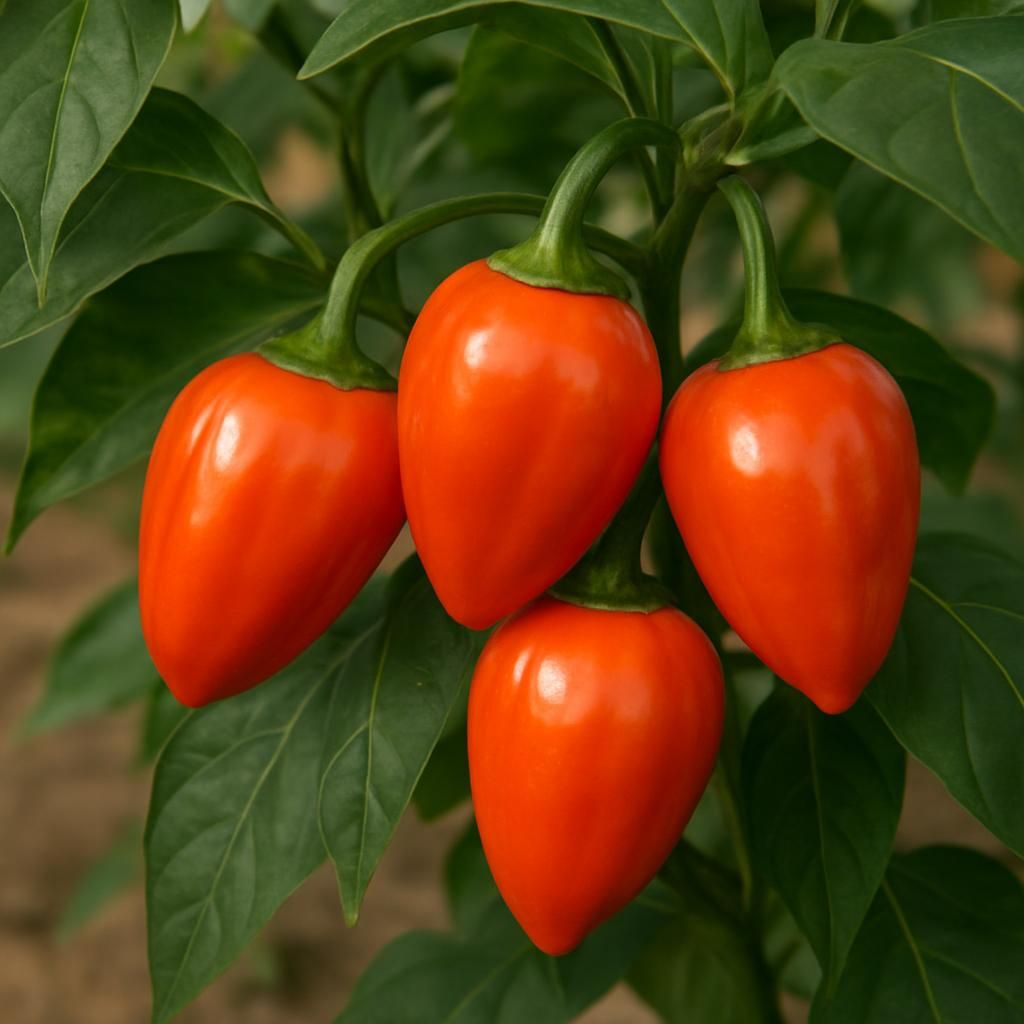
Introduction to Murupi Pepper
Murupi Pepper (Capsicum chinense 'Murupi') is a distinctive hot pepper native to the Amazon basin, celebrated for its intense fruity aroma and complex heat profile. Farmers and chefs value this variety for both fresh market sales and value-added products such as sauces and powders. Its compact plant habit and high fruit set make it an excellent choice for small-scale intensive production.
Growing Murupi Pepper successfully requires attention to tropical climate management, precise soil fertility, and integrated pest strategies. This guide delivers professional-grade agricultural advice for both new and experienced growers seeking reliable yields and premium quality.
Botanical Profile of Murupi Pepper
Murupi Pepper belongs to the species Chili Pepper within the Solanaceae family. Plants reach 60–90 cm in height with a bushy, semi-determinate growth habit. Leaves are dark green, ovate, and slightly wrinkled. Flowers are small, creamy-white, and typically self-pollinating, though insect activity can improve fruit set.
Fruits are small, elongated, and ripen from green to a vibrant orange-red. They measure 3–5 cm long and 1–1.5 cm wide, with thin walls and high capsaicin concentration. The flavor is distinctly fruity with citrus and floral notes, setting Murupi apart from standard habanero types.
Soil, pH, and Climate Requirements for Murupi Pepper
Murupi Pepper thrives in well-drained, fertile soils rich in organic matter. The crop performs best in tropical to subtropical climates with consistent warmth and moderate humidity.
| Parameter | Ideal Range | Notes |
|---|---|---|
| Soil Type | Sandy loam to loam | High organic content improves moisture retention |
| pH | 6.0–6.8 | Avoid acidic soils below 5.8 |
| Temperature (Day) | 24–30 °C | Optimal fruit set occurs within this range |
| Temperature (Night) | 18–22 °C | Below 15 °C slows growth |
| Annual Rainfall | 1200–1800 mm | Supplemental irrigation needed in dry spells |
| Relative Humidity | 60–80 % | High humidity increases disease pressure |
| Sunlight | Full sun (6–8 hours) | Partial shade reduces yield |
| Elevation | 0–800 m | Higher elevations may require season extension |
Step-by-Step Planting & Propagation
Start Murupi Pepper seeds indoors 8–10 weeks before the last frost or planned transplant date. Sow seeds 0.5 cm deep in sterile seed-starting mix at 26–28 °C. Germination occurs in 7–14 days. Harden off seedlings for 7–10 days before transplanting.
Transplant into prepared beds when soil temperature reaches 20 °C. Space plants 45 cm apart in rows 60–75 cm wide. Install drip irrigation at planting. Mulch immediately with 5–7 cm of organic material to suppress weeds and conserve moisture.
Care & Maintenance regimes for Murupi Pepper
Consistent water, balanced nutrition, and timely pruning are essential for high-quality fruit. Use the schedule below as a baseline and adjust according to local conditions and tissue testing.
| Growth Stage | Watering Schedule | Fertilizer Application | Pruning Action |
|---|---|---|---|
| Transplant–Flowering | 2–3 times/week, 25–30 mm/week | 10-10-10 NPK at 200 kg/ha split over 3 weeks | Remove lower leaves to 15 cm |
| Flowering–Fruit Set | Daily drip at 3–4 L/plant/day | Side-dress with 5-10-10 at first fruit set | Pinch growing tips at 40 cm height |
| Fruit Development | Maintain even moisture, avoid water stress | Foliar calcium every 10 days | Remove suckers and diseased tissue |
| Ripening–Harvest | Reduce to 2 L/plant/day | Stop nitrogen; apply potassium sulfate | Light cleanup only |
Pests, Diseases & Organic Management
Common challenges include Aphids, Spider Mites, and Whiteflies. Monitor weekly and release beneficial insects such as lady beetles and lacewings at the first sign of infestation. Neem oil and insecticidal soaps provide effective organic knockdowns.
Fungal issues such as Powdery Mildew and Anthracnose are managed through proper spacing, drip irrigation, and preventive copper or sulfur sprays. Rotate crops on a three-year cycle and remove crop debris after harvest to reduce overwintering inoculum.
Harvesting, Curing & Optimal Storage
Harvest Murupi Peppers at full color for fresh markets or when they begin to turn for drying. Pick every 3–4 days during peak production to encourage continued fruiting. Wear gloves to avoid capsaicin irritation.
Cure fruits on screens in a shaded, well-ventilated area at 25–28 °C for 5–7 days. For long-term storage, dehydrate at 50 °C until brittle, then vacuum-seal or freeze. Properly cured peppers retain flavor and heat for 12–18 months.
Companion Planting for Murupi Pepper
Pair Murupi Pepper with Thai Basil to repel pests and improve flavor. Marigold and Nasturtium provide additional pest deterrence while attracting pollinators. Avoid planting near Fennel or members of the Brassica family that may compete for nutrients or harbor shared diseases.
Companion Planting Realities: 6 Organic Patterns That Deliver for Small Farms offers further guidance on strategic pairings for maximum resilience.