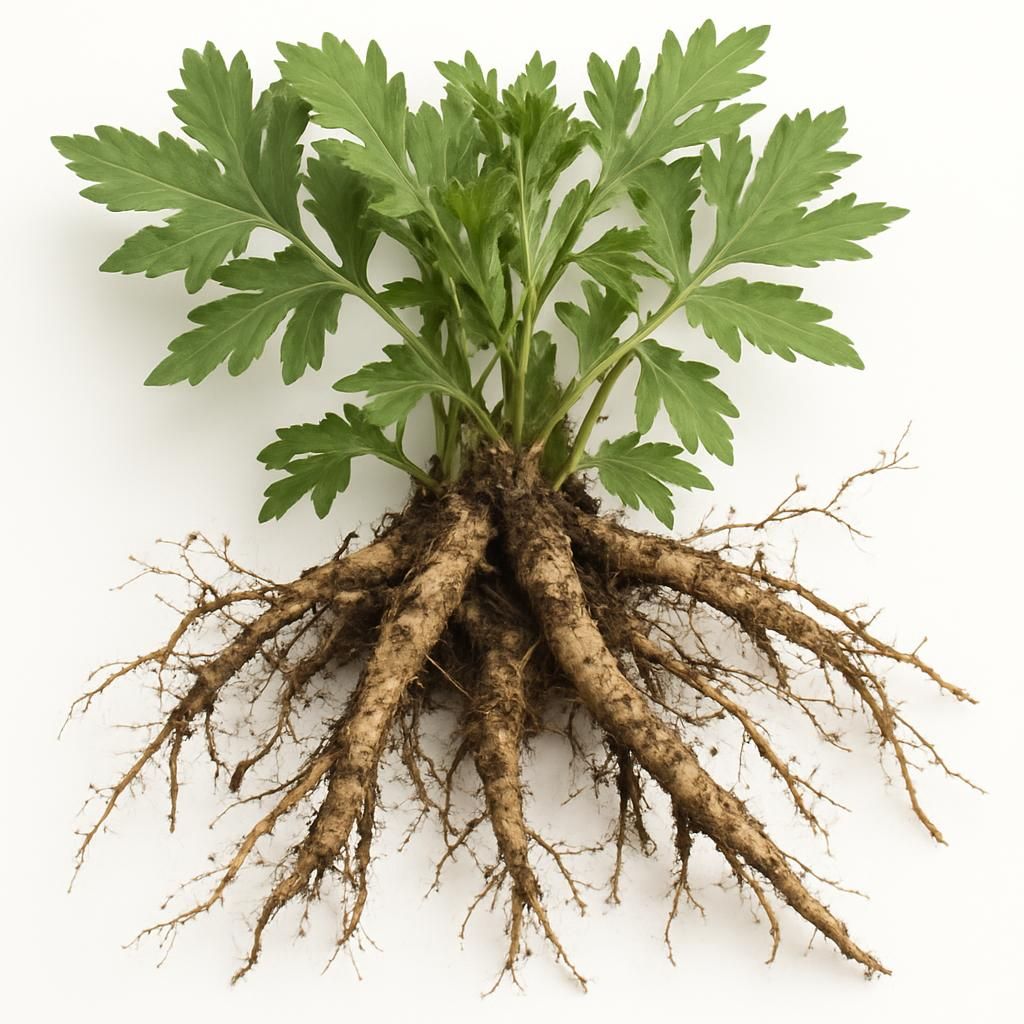
Introduction to Mugwort Root
Mugwort root (Artemisia vulgaris) is a vigorous perennial belonging to the Asteraceae family. The plant produces aromatic leaves and extensive underground rhizomes that have been harvested for centuries in traditional herbal systems. Modern growers value the crop for its adaptability, low input requirements, and steady demand in herbal markets.
The rhizomes contain essential oils, flavonoids, and sesquiterpene lactones that support digestive and immune-support products. Commercial cultivation focuses on both root quality and leaf biomass for dried herb sales. With proper site preparation and organic management, mugwort root can remain productive for five to eight seasons before replanting becomes necessary.
Botanical Profile of Mugwort Root
Artemisia vulgaris grows 60–150 cm tall with deeply lobed, dark-green leaves that are silvery-white underneath. The plant spreads via creeping rhizomes that can extend 30–50 cm annually, forming dense colonies when left unchecked. Small, inconspicuous flower heads appear in late summer and produce wind-dispersed seeds.
Rhizomes are the primary economic part; they are woody, aromatic, and range from 3–10 mm in diameter. New shoots emerge each spring from the previous season’s rhizome network. The species is highly adaptable and tolerates a wide range of soil textures provided drainage remains adequate.
Soil, pH, and Climate Requirements for Mugwort Root
Mugwort root thrives in well-drained loamy or sandy loam soils with moderate fertility. The plant prefers full sun exposure of at least six hours daily and performs best in USDA hardiness zones 3–9. Avoid heavy clay soils or low-lying areas prone to winter waterlogging.
| Parameter | Ideal Range | Notes |
|---|---|---|
| Soil Type | Loam to sandy loam | Good drainage prevents rhizome rot |
| Soil pH | 6.0 – 7.5 | Slightly acidic to neutral |
| Temperature Range | -25 °C to 30 °C | Fully hardy; tolerates frost |
| Annual Rainfall | 500 – 900 mm | Supplemental irrigation in dry spells |
| Spacing | 30 cm within rows, 60 cm between rows | Allows rhizome expansion without crowding |
| Sun Exposure | Full sun | Maximizes essential oil concentration |
Step-by-Step Planting & Propagation
Mugwort root is most reliably established from rhizome divisions rather than seed. Select healthy, disease-free rhizomes from two- to three-year-old plants in early spring before new shoots emerge.
- Prepare the bed by incorporating 5–7 cm of well-rotted compost and ensuring a fine tilth.
- Cut rhizomes into 8–10 cm sections, each containing at least two buds.
- Plant sections horizontally 5–8 cm deep and 30 cm apart within rows spaced 60 cm apart.
- Water thoroughly after planting and apply a 5 cm layer of organic mulch to conserve moisture.
- Maintain consistent moisture for the first four weeks until new shoots appear.
Seed propagation is possible but slower; sow in late winter under protection and transplant seedlings at the two-leaf stage. Germination occurs in 14–21 days at 18–22 °C.
Care & Maintenance regimes for Mugwort Root
Mugwort root requires minimal intervention once established. Focus on weed suppression, moisture management, and periodic division to maintain vigor.
| Season | Water Schedule | Fertilizer Schedule | Pruning Schedule |
|---|---|---|---|
| Spring | 25 mm per week until established | Apply 2–3 kg composted manure per m² | Remove winter-damaged stems at 10 cm |
| Summer | 15–20 mm per week; deep soak monthly | Side-dress with 1 kg fish emulsion per 10 m row | Cut back flowering stems to 30 cm to promote root growth |
| Autumn | Reduce to 10 mm per week | Light compost top-dress only | Remove all above-ground growth after frost |
| Winter | Natural rainfall sufficient | None | None; mulch crowns for insulation |
Monitor soil moisture at 10 cm depth; the plant tolerates short dry periods but benefits from supplemental irrigation during extreme heat.
Pests, Diseases & Organic Management
Mugwort root experiences few serious pest problems. Occasional infestations of Aphids and Spider Mites may appear on new growth. Use strong water sprays or insecticidal soap at the first sign of colonies. Slugs can damage young shoots in wet springs; apply iron-phosphate baits or diatomaceous earth around plant bases.
Rhizome rot caused by Pythium or Phytophthora occurs in poorly drained soils. Improve drainage and avoid overwatering. Powdery mildew occasionally develops in humid, shaded conditions; increase spacing and remove affected foliage. Crop rotation with non-host species every five to six years reduces disease pressure.
Harvesting, Curing & Optimal Storage
Harvest roots in the second or third autumn after planting when rhizomes have reached 8–10 mm diameter. Dig carefully with a fork to avoid breakage, then shake off soil. Wash rhizomes under running water and cut into 5 cm sections for drying.
Air-dry in a shaded, well-ventilated area at 25–30 °C for 7–10 days until brittle. Store dried root pieces in airtight glass or food-grade containers away from light and moisture. Properly cured roots retain potency for up to two years.
Companion Planting for Mugwort Root
Mugwort root benefits from aromatic companions that deter pests and improve soil structure. Pair with Thyme, Rosemary, and Yarrow to reduce aphid pressure. Avoid planting near Tomato or Potato because shared susceptibility to certain soil-borne pathogens can increase disease risk. Include Clover as a living mulch to fix nitrogen and suppress weeds between rows.