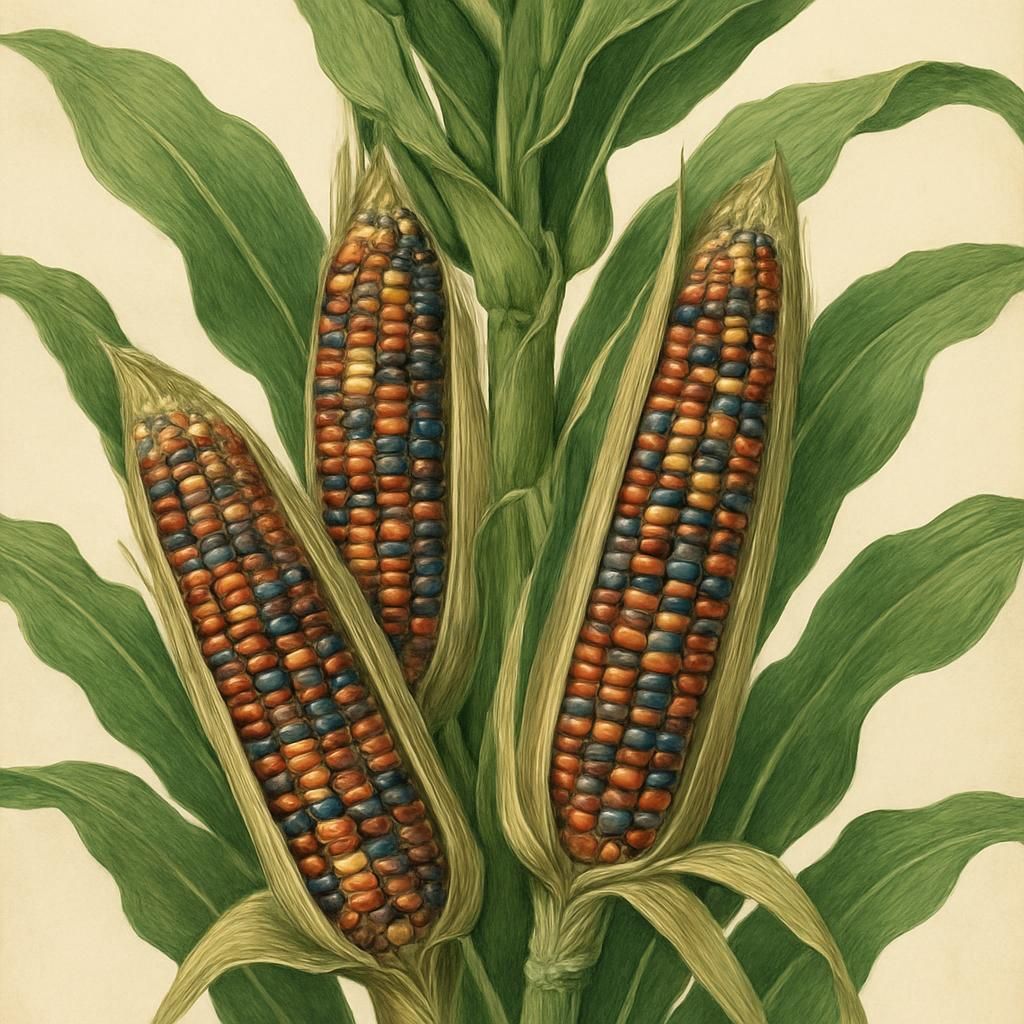
Introduction to Maize (Roy's Calais Flint)
Maize, also known as corn, plays a critical role in global agriculture. Roy's Calais Flint is a particular variety of flint corn cherished for its vibrant kernels and historical importance. Originating from the northeastern United States, this variety has been meticulously preserved for its rich flavor and resilience in diverse climates. As a staple of heritage gardening, it offers both culinary richness and cultural significance.
Botanical Profile of Maize (Roy's Calais Flint)
Botanically, Roy's Calais Flint is a part of the Poaceae family, recognized for its hard, glassy kernels that are tougher than other corn types. This structure contributes to its ability to withstand drought and other adverse conditions, making it a favorite among traditional and organic farmers who prioritize sustainability and crop resilience.
Soil, pH, and Climate Requirements for Maize (Roy's Calais Flint)
Roy's Calais Flint thrives in well-drained soil with moderate fertility. It performs best under conditions that mimic its native environment. Here's a detailed table of ideal growing conditions:
| Parameter | Ideal Conditions |
|---|---|
| Soil Type | Loamy, sandy loam |
| Soil pH | 6.0 - 6.8 |
| Temperature | 18°C - 30°C |
| Climate | Temperate |
| Sunlight | Full sun |
Step-by-Step Planting & Propagation
- Site Selection: Choose a location with full sun exposure to maximize photosynthesis.
- Soil Preparation: Perform soil tests to ensure pH and nutrient levels are within optimal ranges. Amend soil as necessary with organic compost.
- Planting: Plant seeds 2-4 weeks after the last frost date or when soil temperatures have consistently reached 15°C. Space seeds 25-30 cm apart in rows that are 75 cm apart to allow adequate growth room.
- Irrigation: Water immediately after planting to aid germination. Maintain consistent moisture without waterlogging.
Care & Maintenance Regimes for Maize (Roy's Calais Flint)
Careful attention to water, nutrients, and plant health can optimize yield:
| Care Aspect | Schedule/Notes |
|---|---|
| Watering | Weekly during dry periods, ensuring soil remains consistently moist |
| Fertilization | Use a balanced organic fertilizer at planting and as midseason boost |
| Pruning | Not typically required unless removing diseased or damaged leaves |
Pests, Diseases & Organic Management
Roy's Calais Flint is susceptible to common corn pests such as Corn Earworm and European Corn Borer. Diseases like Common Rust can also affect corn health. Implementing organic pest controls, like using neem oil or introducing beneficial insects like ladybugs, can mitigate these issues. Regularly inspect plants for signs of infestation or disease to apply timely interventions.
For more comprehensive strategies, see Crop Diseases Under the Microscope: 9 Organic Fixes for Small Farm Resilience.
Harvesting, Curing & Optimal Storage
Harvesting of Roy's Calais Flint is typically performed in late summer to early fall when the kernels are hard and vibrantly colored. After harvesting, dry the ears partially on the stalk, then fully indoors. Proper curing ensures longevity and flavor preservation. Store dried kernels in a cool, dry place. Seal in airtight containers to prevent moisture ingress and insect infestation.
Companion Planting for Maize (Roy's Calais Flint)
Companion planting can enhance corn's growth potential and pest resistance. Suitable companions include Pole Beans, which fix nitrogen in the soil, and Squash, which provides ground cover to deter weeds. Explore further in Summer Companion Planting: 10 Organic Pairings to Boost Small Farm Resilience.