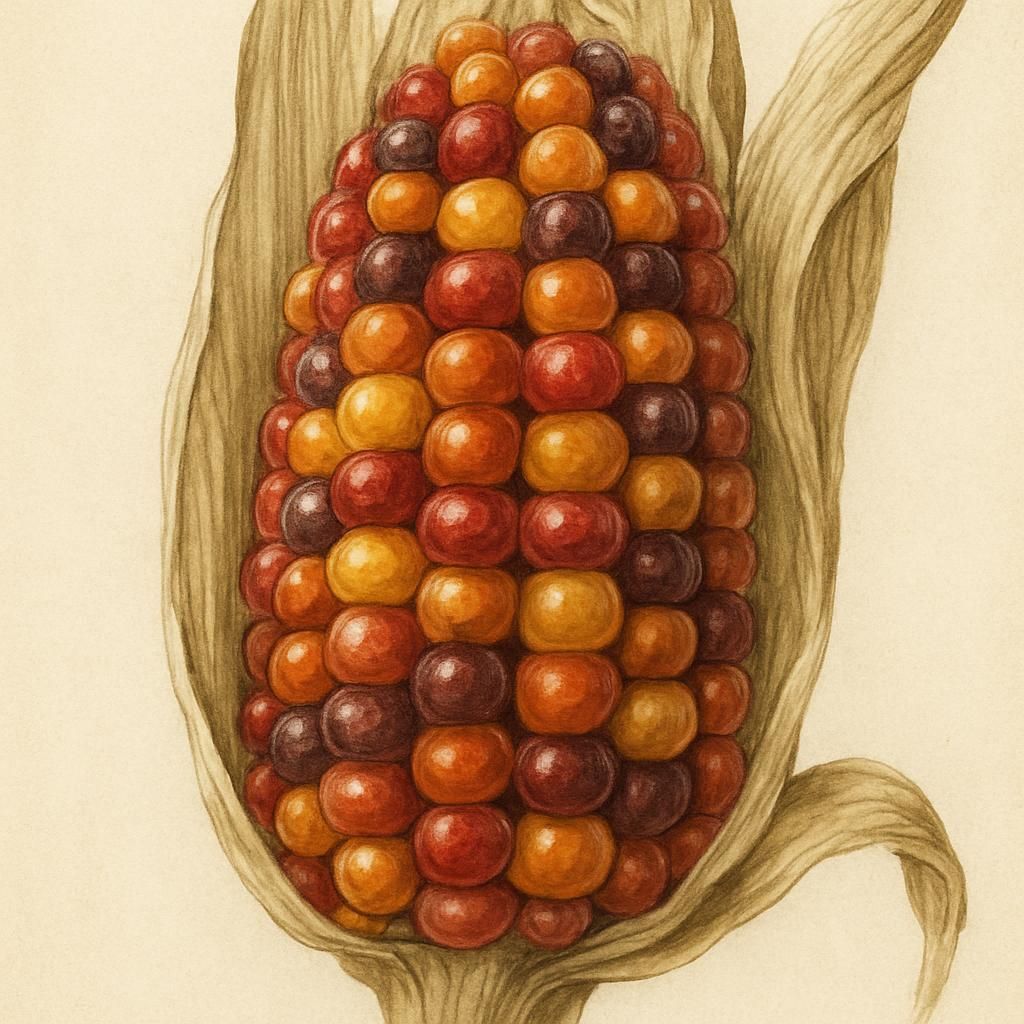
Introduction to Maize (Bolita)
Maize, commonly known as corn, is a vital cereal crop globally. Belonging to the species Zea mays, Maize (Bolita) represents a particular variety known for its robust growth and flavorful kernels. It's particularly popular in regions favoring traditional corn dishes.
Botanical Profile of Maize (Bolita)
Maize (Bolita) belongs to the Poaceae family, typically characterized by its tall, leafy stalk. Each plant produces several ears of corn that are sheathed in husks, containing kernels that vary in color from deep yellow to golden. The plant's structure allows it to thrive in open fields with plenty of space.
Soil, pH, and Climate Requirements for Maize (Bolita)
Growing Maize (Bolita) to its full potential requires specific soil and climate conditions. Here is a table outlining the ideal conditions:
| Requirement | Ideal Conditions |
|---|---|
| Soil Type | Loamy, well-drained |
| Soil pH | 5.8 - 7.0 |
| Temperature | 60°F - 95°F (16°C - 35°C) |
| Rainfall | 500 - 800 mm annually |
Step-by-Step Planting & Propagation
- Site Selection: Choose a sunny location with well-drained, fertile soil.
- Soil Preparation: Till the land to a depth of 8-10 inches and amend with organic matter.
- Seed Selection: Source high-quality Maize (Bolita) seeds to ensure good germination.
- Planting: Sow seeds 1-2 inches deep, spaced 6-8 inches apart, with 24-30 inches between rows.
- Watering: Maintain moist soil, especially during germination and seedling stages.
- Fertilization: Apply a balanced fertilizer at planting and a second application during the tasseling stage.
Care & Maintenance regimes for Maize (Bolita)
Proper care ensures healthy growth and optimal yields. Here's a schedule for watering, fertilizing, and pruning:
| Action | Schedule |
|---|---|
| Watering | Weekly, 1-1.5 inches |
| Fertilizing | At planting, mid-season |
| Pruning | Not typically required |
Pests, Diseases & Organic Management
Maize (Bolita) can be susceptible to pests like Corn Earworm and Spider Mites. Diseases such as Common Rust and Fusarium are common as well. To manage these organically:
- Rotate crops to prevent disease build-up.
- Introduce beneficial insects like ladybugs to control pest populations.
- Use neem oil or insecticidal soap sprays for pest management.
For further reading, explore the Corn Article on the intricacies of corn farming.
Harvesting, Curing & Optimal Storage
Maize (Bolita) is ready for harvest when the kernels feel firm, and cobs have browned silks:
- Harvesting: Typically, 90-100 days post-planting.
- Curing: Allow ears to dry naturally on the plant or post-harvest.
- Storage: Store dried kernels in cool, dry conditions to prevent mold.
Companion Planting for Maize (Bolita)
Companion planting enhances growth and pest resistance. Suitable companions for Maize (Bolita) include:
- Beans which fix nitrogen, enriching the soil.
- Squash, which shades the ground preventing weeds. For practical companion planting strategies, check Summer Companion Planting: 10 Organic Pairings to Boost Small Farm Resilience.
By following these guidelines, you can achieve successful cultivation of Maize (Bolita), contributing both to local agriculture and global maize production.