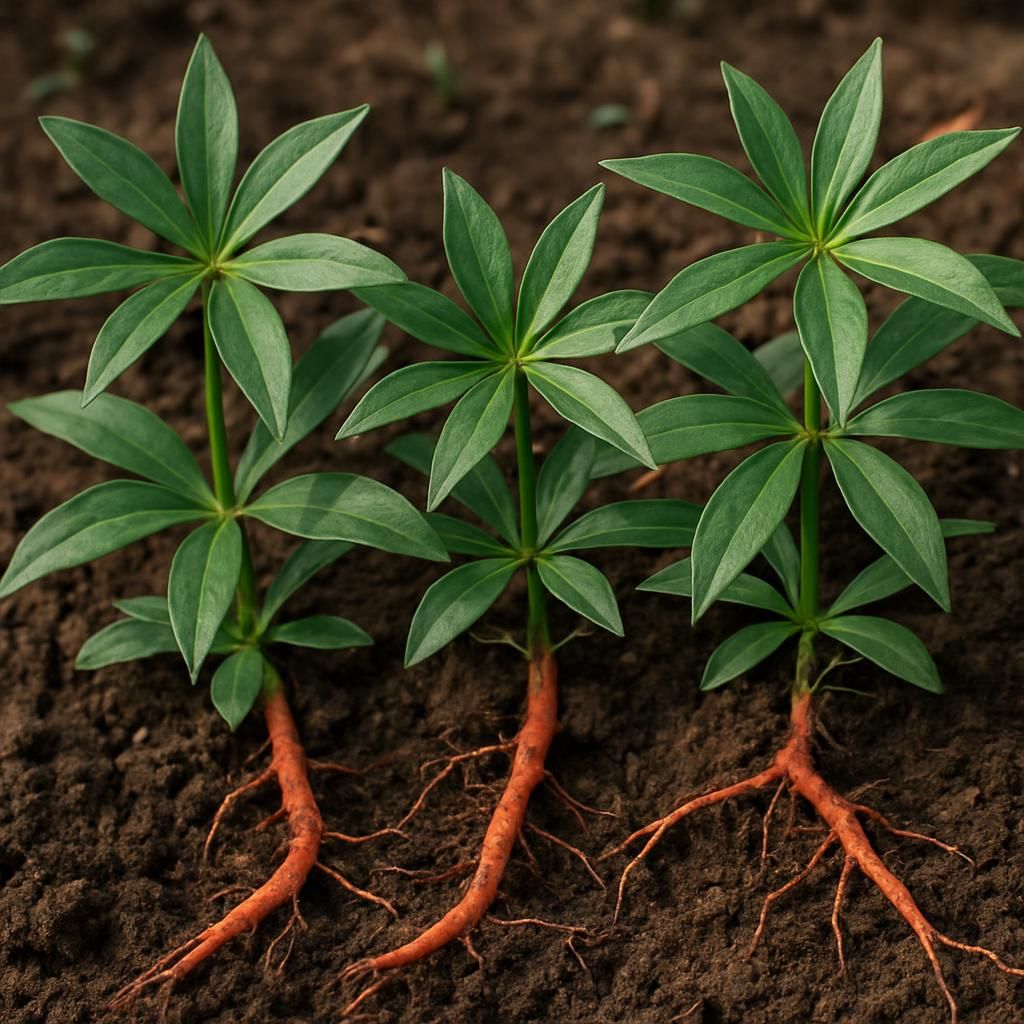
Introduction to Madder Root
Madder root (Rubia tinctorum) has been cultivated for thousands of years as the primary source of the natural red dye alizarin. The plant produces sprawling stems reaching 1–2 meters in length with whorls of four to six leaves and small yellow flowers. Professional growers value madder for its perennial nature, which allows multiple harvests from the same planting, and its resilience in Mediterranean-style climates. The roots contain valuable anthraquinone compounds that yield vibrant, lightfast dyes when properly extracted and processed.
Botanical Profile of Madder Root
Madder belongs to the Rubiaceae family and is native to the eastern Mediterranean and western Asia. It develops a deep, fleshy root system that can penetrate 60–90 cm into the soil, allowing access to nutrients unavailable to shallow-rooted crops. The plant is dioecious, producing separate male and female flowers on different individuals, though many commercial cultivars are propagated vegetatively. The square stems are covered in small, backward-facing prickles that help the plant climb over surrounding vegetation.
Soil, pH, and Climate Requirements for Madder Root
Successful madder cultivation begins with well-drained, fertile soil. The plant prefers deep, loamy soils with good structure that allow root expansion without waterlogging. Heavy clay soils should be amended with organic matter and grit to improve drainage. Madder performs best in full sun but tolerates partial shade in hotter regions.
| Parameter | Ideal Range | Notes |
|---|---|---|
| Soil Type | Deep sandy loam to loam | Avoid compacted or waterlogged soils |
| Soil pH | 6.0 – 7.5 | Slightly acidic to neutral |
| Temperature Range | 15–28°C daytime | Frost tolerant to -10°C when dormant |
| Annual Rainfall | 500–900 mm | Supplemental irrigation required in dry periods |
| Spacing | 30–40 cm between plants | Rows 60–75 cm apart |
| Sun Exposure | Full sun (6+ hours) | Partial shade acceptable in extreme heat |
Step-by-Step Planting & Propagation
Madder is most reliably propagated from root divisions or rhizome cuttings taken in early spring or autumn. Select healthy, pencil-thick roots from mature plants and cut them into 8–10 cm sections, ensuring each piece has at least one visible bud. Plant sections horizontally 5–8 cm deep in prepared beds. Seed propagation is possible but slower; fresh seed should be sown in spring at 1 cm depth after a 4-week cold stratification period. Germination typically occurs in 3–6 weeks at 18–22°C. Transplant seedlings or divisions once they have developed a strong root system and danger of frost has passed.
Care & Maintenance regimes for Madder Root
Madder requires consistent moisture during the first growing season to establish deep roots. Once established, the plant becomes moderately drought tolerant but benefits from supplemental water during prolonged dry spells. Mulching with straw or wood chips helps retain soil moisture and suppress weeds. Fertilization should focus on phosphorus and potassium to encourage root development rather than excessive vegetative growth.
| Activity | Schedule | Details |
|---|---|---|
| Watering | Weekly during establishment; every 10–14 days thereafter | Deep watering to encourage deep rooting |
| Fertilizer | Early spring and mid-summer | Balanced organic fertilizer (NPK 5-10-10) at 50 g/m² |
| Pruning | Late winter or early spring | Cut back dead stems to 5 cm above ground |
Pests, Diseases & Organic Management
Madder is relatively pest-resistant but can be affected by Aphids and Spider Mites during hot, dry periods. Regular monitoring and strong water sprays or insecticidal soap applications provide effective control. Root rot caused by Pythium or Phytophthora can occur in poorly drained soils; prevention through proper site selection and raised beds is the best strategy. Powdery mildew may appear in humid conditions; improve air circulation and remove affected foliage promptly.
Harvesting, Curing & Optimal Storage
Madder roots reach harvestable size after 2–3 years. Dig carefully with a garden fork in late autumn when foliage has died back. Wash roots thoroughly and dry them in a well-ventilated, shaded area for 7–10 days. Once fully dry, store in breathable paper bags or cloth sacks in a cool, dark location. Properly cured roots retain dye potency for several years. For maximum alizarin content, some growers ferment the roots for 2–3 weeks before drying.
Companion Planting for Madder Root
Madder pairs well with deep-rooted companions that do not compete for surface nutrients. Garlic and Onion planted nearby can help deter aphids. Low-growing herbs such as Thyme provide ground cover and reduce weed pressure. Avoid planting madder near shallow-rooted annuals that may disturb developing roots during cultivation.