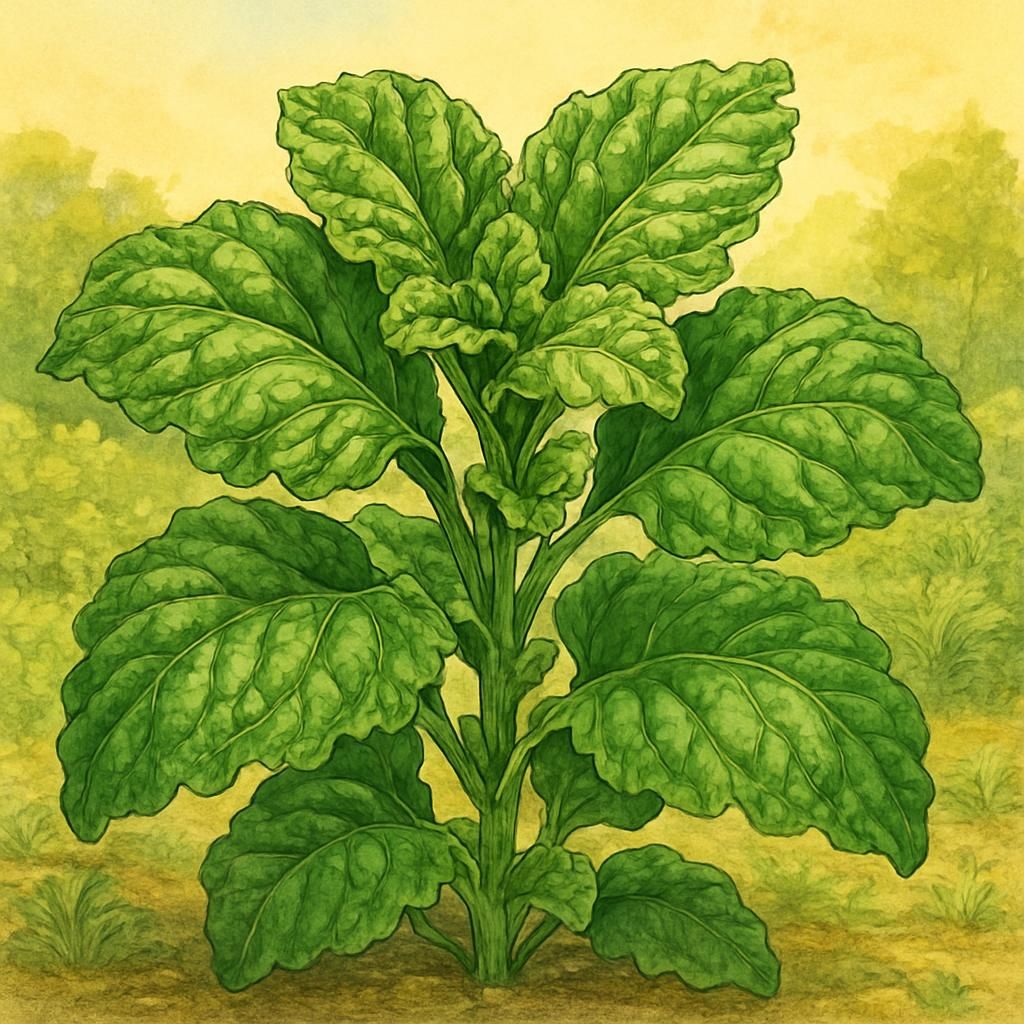
Introduction to Lettuce Leaf Basil
Lettuce Leaf Basil, a distinct cultivar of sweet basil, is celebrated for its broad, rippled leaves that can resemble lettuce in size. Native to India, this basil variety offers both culinary versatility and ornamental value in gardens. Its leaves are not only flavorful but also perfect for salads, sandwiches, and garnishes due to their size and texture.
Botanical Profile of Lettuce Leaf Basil
Lettuce Leaf Basil (Ocimum basilicum var. crispum) distinguishes itself from other basil varieties by its larger, wrinkled leaves. The plant typically grows 12 to 24 inches tall, forming a lush green presence in gardens. It flowers in late summer, producing white blooms that can attract pollinators like bees.
Soil, pH, and Climate Requirements for Lettuce Leaf Basil
Understanding the growing requirements is crucial for successful cultivation.
| Aspect | Optimal Conditions |
|---|---|
| Soil Type | Well-draining, sandy loam |
| Soil pH | 6.0 - 7.5 |
| Temperature | 70°F - 90°F (21°C - 32°C) |
| Sunlight | Full sun (6-8 hours daily) |
| Watering | Moderate, avoid waterlogging |
Step-by-Step Planting & Propagation
- Seed Selection: Choose organic, high-quality Lettuce Leaf Basil seeds.
- Start Indoors: Begin seeds indoors 6-8 weeks before the last frost.
- Transplant Outdoors: After the danger of frost has passed, transplant seedlings into the garden.
- Spacing: Space plants 12-18 inches apart to allow for their expansive growth.
- Propagation: Propagate through seeds or cuttings in late spring or early summer.
Care & Maintenance Regimes for Lettuce Leaf Basil
Proper care ensures robust plant health and optimal flavor.
| Care Aspect | Recommended Schedule |
|---|---|
| Watering | 1 inch per week, increase in dry spells |
| Fertilizer | General-purpose fertilizer every 4 weeks |
| Pruning | Regularly pinch stems to encourage bushiness |
Pests, Diseases & Organic Management
Lettuce Leaf Basil faces few pests and diseases but can be susceptible to Spider Mites and downy mildew. Organic management includes:
- Companion Planting: Use Marigold to deter pests.
- Neem Oil: Apply to control mites and fungal issues.
- Proper Drainage: Ensure the soil is well-draining to prevent root rot.
Harvesting, Curing & Optimal Storage
- Harvesting: Begin harvesting leaves once the plant is 6-8 inches tall. Regular harvesting encourages new growth.
- Curing: Dry leaves in a single layer indoors or use a dehydrator.
- Storage: Store dried basil in airtight containers, keep in a cool, dark place.
Companion Planting for Lettuce Leaf Basil
Lettuce Leaf Basil thrives alongside Tomato, Peppers, and Eggplant. Avoid planting near rue or sage as they can inhibit growth. Companion planting enhances pest control and improves yield.
For more detailed strategies on companion planting, check the blog post on Summer Companion Planting: 10 Organic Pairings to Boost Small Farm Resilience.
Further Reading
Learn more about basil economics and cultivation by exploring our guide The Economics of Basil: A Brutal Breakdown.