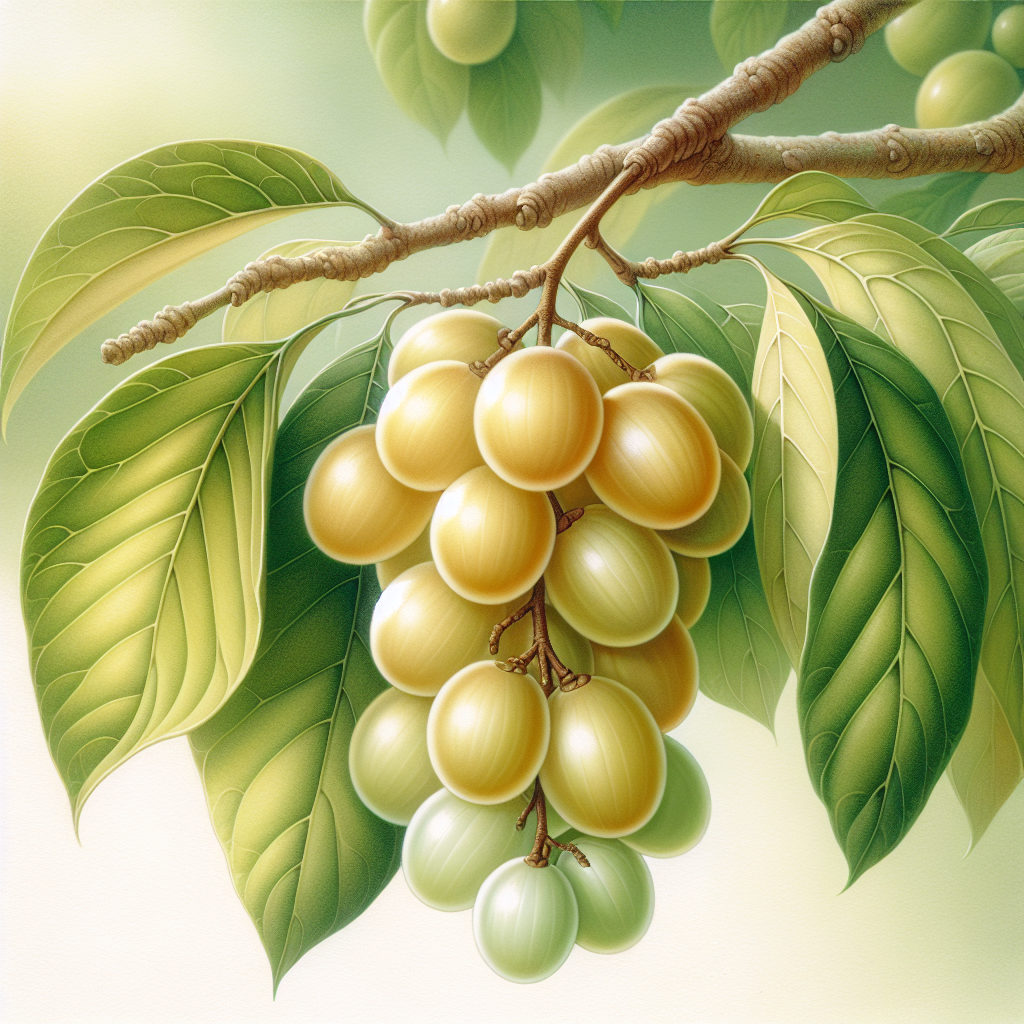
Introduction to Langsat (UT1)
Langsat (UT1), a select cultivar of Lansium domesticum, stands out in tropical agriculture for its exceptional fruit quality and vigor. Originating from Southeast Asian breeding programs, UT1 represents a breakthrough in langsat cultivation, offering fruits that are 20-30% larger than standard varieties, with a translucent white flesh that balances sweet-tart notes and minimal latex content. This makes it highly desirable for fresh markets, where premium pricing can yield significant returns for small-scale farmers.
Growing Langsat (UT1) requires understanding its tropical origins and specific needs, but rewards patient cultivators with trees that produce reliably for 20-30 years. Mature trees can yield 50-100 kg of fruit per season, with peak harvests in the rainy season. Success hinges on site selection, proper propagation, and vigilant care against common tropical pests. This deep-dive guide equips professional growers with evidence-based practices drawn from field trials in Malaysia, Indonesia, and Thailand, ensuring high yields and fruit quality. For those diversifying into tropical fruits, pairing with mango can optimize orchard layouts.
Botanical Profile of Langsat (UT1)
Langsat (UT1) belongs to the Meliaceae family, closely related to mahogany, and exhibits the characteristic compound leaves and cauliflorous flowering of its genus. Trees reach 10-20 meters in height at maturity, with a straight trunk and dense, evergreen canopy that provides excellent shade. Leaves are pinnate, 20-50 cm long, with 5-7 pairs of glossy, elliptical leaflets measuring 10-20 cm each.
Flowers emerge directly from older branches in dense racemes, small (1 cm), creamy-white, and fragrant, attracting pollinators like bees and flies. UT1's key botanical advantages include larger inflorescences (up to 30 cm) and higher fruit set rates (60-80% vs. 40-50% in wild types). Fruits are globular, 3-5 cm diameter, with thin, yellowish-brown skin containing 10-15 segments of juicy, seedless or small-seeded arils. The UT1 strain has reduced latex, minimizing post-harvest bitterness—a common issue in standard langsat.
Root systems are shallow and spreading (up to 3 times canopy width), sensitive to waterlogging, with mycorrhizal associations enhancing nutrient uptake. Phenology includes vegetative flush in dry periods, flowering post-rainy season (August-October in equatorial zones), and fruit maturation 10-12 weeks later. Genetic stability in UT1 ensures uniform performance, making it superior for commercial propagation.
Soil, pH, and Climate Requirements for Langsat (UT1)
Langsat (UT1) thrives in deep, well-drained loamy soils rich in organic matter, with ideal texture being 40-60% sand, 20-30% silt, and 20-30% clay. Avoid heavy clays or pure sands, as they impede root aeration. Optimal soil pH is 5.5-6.5; acidity below 5.0 causes aluminum toxicity, while alkalinity above 7.0 limits micronutrient availability. Conduct soil tests pre-planting and amend with lime (for pH <5.5) or sulfur (for pH >7.0) at 1-2 tons/ha.
Climate demands are strictly tropical: average temperatures 24-30°C, with no frost tolerance. UT1 handles brief dips to 15°C but suffers above 35°C without irrigation. Annual rainfall of 2000-3000 mm is ideal, evenly distributed; dry spells over 2 months trigger flowering but require supplemental water. High humidity (70-90%) aids fruit development, but wind speeds >10 m/s damage flowers. Elevations up to 800 m suit UT1, where cooler nights enhance flavor. For heatwave-prone areas, consult Why Summer Heatwaves Are Silently Killing Small Farm Yields - And 7 Organic Strategies to Fight Back for mitigation tactics.
Soil preparation involves deep tillage (50 cm) and incorporation of 20-30 tons/ha compost or green manure. Mulch with 10-15 cm organic material to retain moisture and suppress weeds. UT1's efficiency in low-fertility soils stems from robust mycorrhizae, but base applications of NPK 12-12-17 at 500 g/tree/year boost early growth.
Step-by-Step Planting & Propagation
Propagation: UT1 is primarily propagated by air-layering (marcotting) for true-to-type plants, achieving 90% success. Select 2-3 year-old branches (1-2 cm diameter), girdle 5 cm wide, apply rooting hormone (IBA 5000 ppm), wrap with moist sphagnum moss and black plastic. Roots form in 6-8 weeks. Seed propagation is viable but variable; stratify fresh seeds 24 hours, germinate in 50% shade (70% rate in 2-3 weeks).
Site Preparation: Clear land, plow to 50 cm, form raised beds (1x1 m, 30 cm high) spaced 8-10 m apart (100-150 trees/ha). Dig pits 60x60x60 cm, fill with topsoil + 10 kg compost + 500 g rock phosphate.
Planting: Plant air-layers during rainy season onset, at 30-40 cm depth. Stake immediately, prune top 1/3 to encourage branching. Initial spacing: 10x10 m, thin to 12x12 m after 5 years. Water deeply (50 L/tree) weekly first year.
Early Care: Apply 200 g NPK/month first year, increasing to 2 kg/year by year 5. Prune low branches annually for canopy shape.
Care & Maintenance regimes for Langsat (UT1)
Irrigation: Drip systems deliver 40-60 L/tree/week in dry periods; deficit irrigation (50% ETc) during flowering enhances quality.
Fertilization: Annual program: Year 1-3: 1-3 kg NPK 15-15-15/tree split 4x. Mature: 5-10 kg/tree (40% N, 30% P, 30% K) + 50 kg manure + foliar micronutrients (Zn, B, Mn). Soil tests guide adjustments.
Pruning: Annual post-harvest: Remove deadwood, watersprouts, maintain 3-4 m trunk height. Intercrop with legumes years 1-5 for nitrogen fixation.
Weed Control: Mulch + manual weeding; cover crops like clover suppress competition.
Monitor growth: Expect 1-1.5 m/year height gain first 5 years.
Pests, Diseases & Organic Management
Pests: Primary threats include fruit flies (Bactrocera spp.), capsule borers, and mealybugs. Deploy yellow sticky traps (20/ha), kaolin clay sprays, and neem oil (2-3 ml/L weekly). Introduce Trichogramma wasps for borers.
Diseases: Phytophthora root rot and anthracnose dominate. Prevent with raised beds, copper fungicide (pre-monsoon), and biofungicides (Trichoderma). For leaf spots, remove infected parts, apply Bacillus subtilis.
Integrated approach: Scout weekly, maintain sanitation. Reference Why 90% of Small Farms Fail at Pest Management - And 8 Organic Fixes That Actually Work for advanced IPM.
Harvesting, Curing & Optimal Storage
Harvest at 120-140 days post-anthesis when skin yellows, aril translucent (Brix 15-18°). Clip clusters with secateurs, yield 50-80 fruits/tree year 5+. Field sort, clip stems short.
Curing: Shade-dry 2-3 days at 25°C, 85% RH to reduce latex.
Storage: 10-13°C, 85-90% RH for 3-4 weeks; ethylene absorbers extend to 5 weeks. Market fresh or process into rambutan-like preserves.
Companion Planting for Langsat (UT1)
UT1 pairs well with partial shade providers like banana (nitrogen cycling) and pest-repellent marigolds. Avoid water-hungry crops; legumes (pigeon pea) fix N, suppress weeds. Interplant thyme for aphids deterrence. Read Why Companion Planting Feels Like Guesswork for Small Farms - And How AI Makes It Foolproof for optimization.