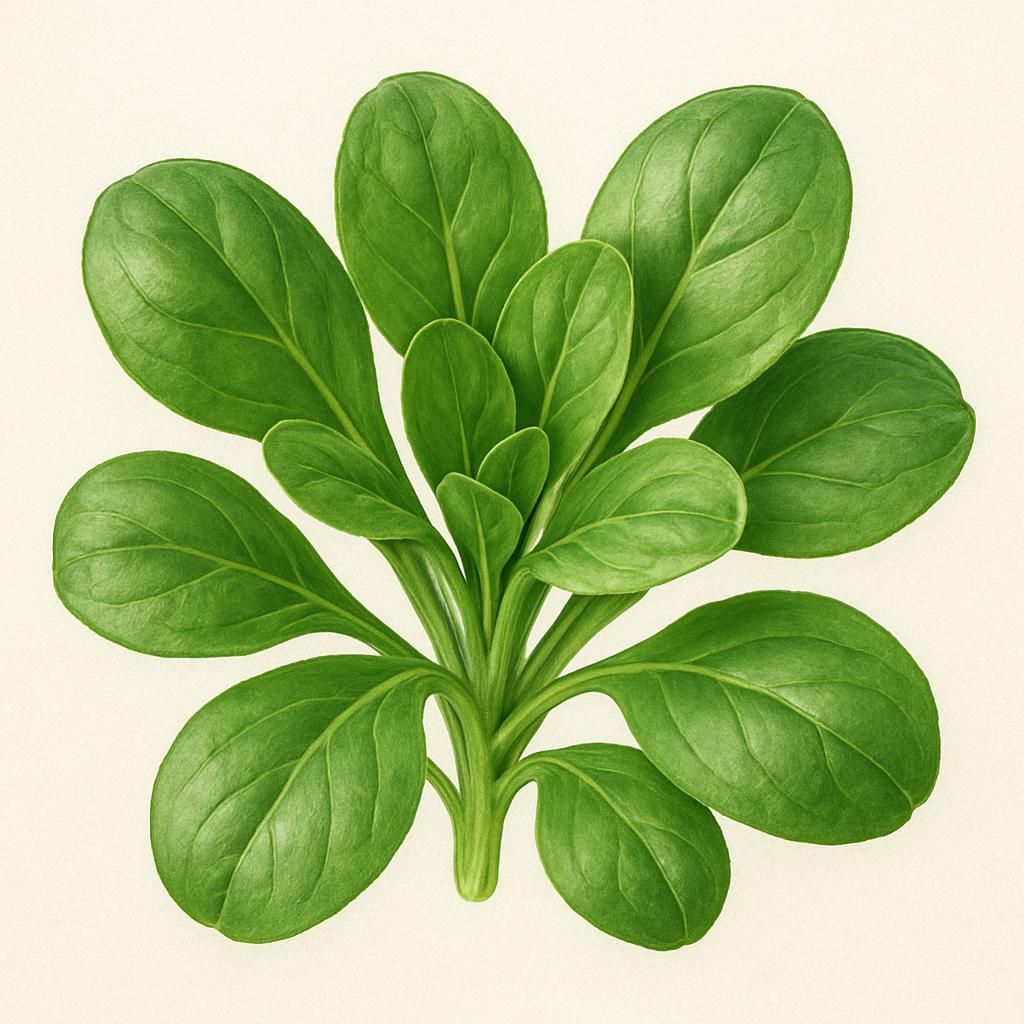
Introduction to Lamb’s Lettuce (Corn Salad)
Lamb's Lettuce, known scientifically as Valerianella locusta, is a cool-season leafy green originally cultivated in Europe. Prized for its tender leaves and nutty flavor, it’s a preferred choice for salads and gourmet dishes. As a hardy and resilient plant, Lamb's Lettuce can be grown in both gardens and containers, making it accessible for a variety of farming scales.
Botanical Profile of Lamb’s Lettuce (Corn Salad)
Lamb's Lettuce belongs to the Caprifoliaceae family. It's an annual plant that grows in small rosettes of smooth, spoon-shaped leaves. The plant typically matures to about 4 to 6 inches tall. It has a short lifecycle but thrives particularly in cool and mild climates, showing a preference for spring and fall growing seasons.
Soil, pH, and Climate Requirements for Lamb’s Lettuce (Corn Salad)
Lamb’s Lettuce prefers loamy, well-draining soil and can tolerate a variety of climate conditions although it thrives in cool weather. Here are the ideal conditions:
| Factor | Ideal Conditions |
|---|---|
| Soil Type | Loamy, well-draining |
| Soil pH | 6.0 - 7.5 |
| Temperature | 45°F - 65°F (7°C - 18°C) |
| Light Exposure | Full sun to partial shade |
Step-by-Step Planting & Propagation
- Seed Selection and Preparation: Choose high-quality seeds from a trusted supplier. Lamb's Lettuce does not require pre-soaking before planting.
- Timing: Sow seeds in early spring or late summer for a fall crop.
- Site Preparation: Prepare a well-aerated seedbed, eliminating rocks and clumps. Add organic compost to enrich soil.
- Sowing: Plant seeds 0.5 inches deep, spaced 4-6 inches apart within rows 12 inches apart.
- Watering: Ensure the soil remains moist but not waterlogged during germination.
- Thinning: Once seedlings emerge, thin them to ensure strong growth.
Care & Maintenance regimes for Lamb’s Lettuce (Corn Salad)
Lamb’s Lettuce requires minimal care but performs best with consistent moisture and protection from extreme heat.
| Task | Frequency |
|---|---|
| Watering | Maintain even moisture; 1-2 times weekly |
| Fertilizing | Use a balanced fertilizer at planting and midway through growing season |
| Pruning | Not necessary; remove damaged leaves |
Pests, Diseases & Organic Management
Lamb's Lettuce is generally pest-resistant but can be affected by Aphids and Spider Mites. Use neem oil or insecticidal soap for control. Diseases like downy mildew can strike, especially in overly humid conditions. Ensure proper air circulation and avoid overhead watering.
For managing crop health, consider organic practices that enhance soil and plant resilience, like companion planting and crop rotation as discussed in Crop Rotation Realities: 6 Organic Patterns That Deliver for Small Farms.
Harvesting, Curing & Optimal Storage
Harvest Lamb’s Lettuce when leaves are large enough to eat but before flowering. Snip close to the base with scissors. For optimal storage, keep the harvested leaves in a breathable bag in the refrigerator for up to a week.
Companion Planting for Lamb’s Lettuce (Corn Salad)
Companion plants like Red Leaf Lettuce, Radish, and Spinach can improve crop health and deter pests. To maximize yields, consult Spring Companion Planting: 8 Organic Pairings to Maximize Small Farm Yields.