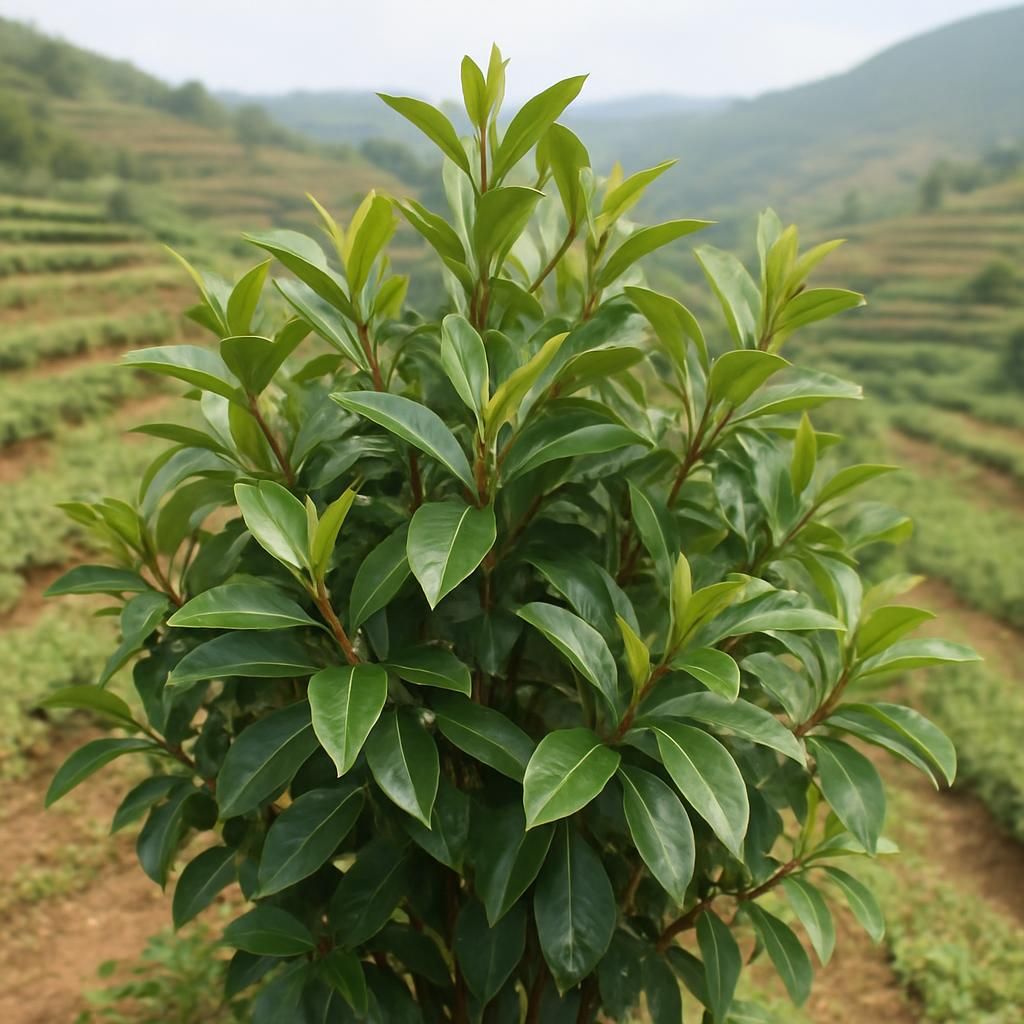
Introduction to Khat (Catha edulis)
Khat (Catha edulis) is a perennial evergreen shrub belonging to the Celastraceae family, traditionally cultivated in the highlands of East Africa and the Arabian Peninsula. The plant produces glossy, elliptical leaves that contain natural alkaloids such as cathinone and cathine, which have been used for centuries in social and cultural contexts. Commercial cultivation focuses on consistent leaf production while maintaining plant vigor through proper pruning, irrigation, and soil management.
Successful khat production demands attention to microclimate, soil fertility, and pest pressure because the crop is sensitive to both water stress and nutrient imbalances. Growers typically establish plantations on terraced slopes or well-drained upland sites where temperatures remain moderate throughout the year. With a productive lifespan exceeding 20–30 years under optimal management, khat represents a long-term investment that rewards precise horticultural practices.
Botanical Profile of Khat (Catha edulis)
Catha edulis develops into a multi-stemmed shrub or small tree reaching 2–5 meters in height when left unpruned. Young stems are reddish-brown and become gray with age, while the opposite leaves are bright green, lanceolate to elliptic, and 5–10 cm long. Small, white, five-petaled flowers appear in axillary cymes, followed by small, dehiscent capsules containing winged seeds.
The plant exhibits strong apical dominance, which is why regular pruning is essential to encourage lateral branching and dense foliage suitable for repeated harvesting. Root systems are fibrous and relatively shallow, making the crop susceptible to both drought and waterlogging. Leaf quality is directly influenced by light intensity, temperature fluctuations, and soil nutrient status, with the highest alkaloid concentrations typically found in young, tender growth.
Soil, pH, and Climate Requirements for Khat (Catha edulis)
Khat performs best on deep, well-drained loamy or sandy loam soils with high organic matter content. Heavy clay soils should be amended with coarse sand or raised beds to prevent root rot. The crop prefers slightly acidic to neutral conditions and shows reduced vigor outside the optimal pH range.
| Parameter | Ideal Range | Notes |
|---|---|---|
| Soil Type | Loam to sandy loam | Good drainage critical; avoid compacted clays |
| Soil pH | 5.8 – 6.8 | Maintain with organic amendments |
| Temperature | 15–28 °C daytime | Frost sensitive below 5 °C |
| Annual Rainfall | 800–1,200 mm | Supplemental irrigation required in dry seasons |
| Altitude | 1,500–2,500 m | Highland tropical/subtropical zones |
| Sunlight | Full sun to light shade | 6–8 hours direct light optimal |
Step-by-Step Planting & Propagation
Khat is most reliably propagated from semi-hardwood cuttings taken from healthy, disease-free mother plants. Select 15–20 cm cuttings with at least three nodes, remove lower leaves, and treat the basal end with a mild rooting hormone before inserting into a sterile, well-draining medium such as perlite and peat. Maintain high humidity under shade until roots develop, typically within 6–8 weeks.
Transplant rooted cuttings into nursery bags filled with a 2:1:1 mix of topsoil, compost, and sand. Harden off plants for two weeks before field planting at the start of the rainy season. Space plants 1.5–2 m apart in rows 2–2.5 m wide to allow air circulation and future pruning access. Dig planting holes 40 cm deep and wide, incorporate well-rotted manure, and backfill carefully to avoid air pockets.
Care & Maintenance regimes for Khat (Catha edulis)
Consistent moisture, balanced nutrition, and timely pruning are the pillars of productive khat cultivation. Mulch with organic materials to conserve soil moisture and suppress weeds. Monitor leaf color and growth rate to adjust fertilization schedules.
| Activity | Frequency / Schedule | Details |
|---|---|---|
| Irrigation | Every 7–10 days in dry season | Deep watering to 30 cm; avoid waterlogging |
| Fertilizer (NPK 10-10-10 or equivalent organic) | Apply 200–300 g/plant at planting; top-dress every 3 months | Split applications; supplement with compost tea |
| Pruning | Light tipping every 4–6 weeks; heavy prune 2× yearly | Remove 30–40 % of canopy to stimulate flush |
Pests, Diseases & Organic Management
Common pests include Aphids, Spider mites, and Thrips, which can distort new growth and reduce leaf marketability. Regular scouting and strong water sprays help dislodge early infestations. Neem oil or insecticidal soap provides effective organic control when applied at the first sign of damage.
Fungal issues such as Root rot and Powdery mildew arise under poor drainage or excessive humidity. Improve air circulation through proper spacing and pruning, and apply compost teas fortified with beneficial microbes. In regions where Fusarium wilt has been reported, use resistant rootstocks or rotate with non-host cover crops such as Clover.
Harvesting, Curing & Optimal Storage
Harvest young shoots when leaves reach full size but remain tender, usually 4–6 weeks after the previous prune. Cut branches in the early morning when alkaloid content is highest. Bundle leaves loosely and transport immediately to shade to prevent wilting and quality loss.
Curing involves brief wilting under shade for 2–4 hours followed by packing in breathable sacks or ventilated crates. Store at 10–15 °C with 70–80 % relative humidity to maintain freshness for up to 7–10 days. For longer storage, flash-freeze or dry leaves at low temperature (<40 °C) to preserve active compounds.
Companion Planting for Khat (Catha edulis)
Interplanting khat with nitrogen-fixing legumes such as Pigeon pea or Clover improves soil fertility and provides partial shade during establishment. Aromatic herbs including Rosemary and Thyme deter aphids and spider mites through volatile compounds. Avoid planting near solanaceous crops that may share common pests or pathogens.
Stop Treating Tomato Blight Like a Spray Problem: Here Is What Works Better