Introduction to Ilama (Genova Red)
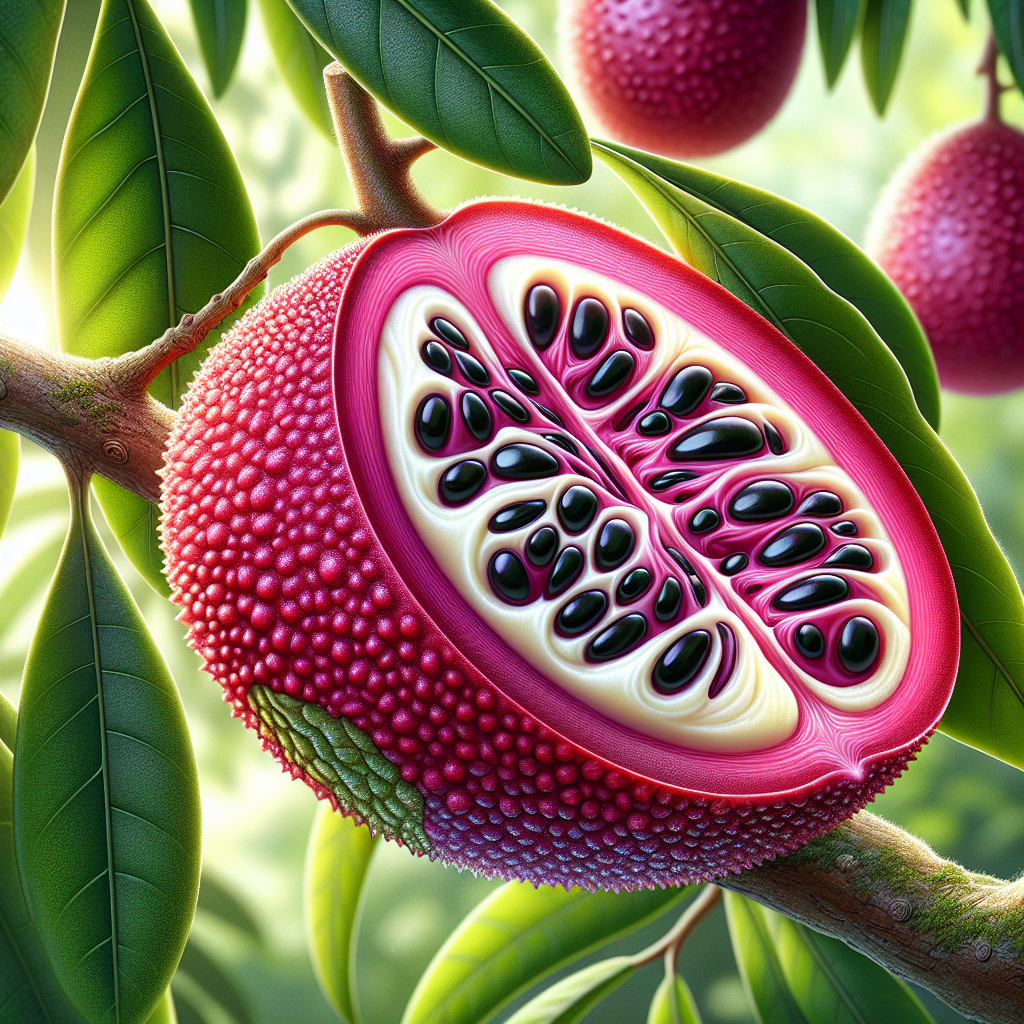
Ilama (Genova Red), a standout cultivar of Annona diversifolia, captivates growers with its vibrant red-purple skin and exceptionally sweet, creamy flesh reminiscent of strawberry ice cream blended with custard apple. Originating from select strains in Mexico and Central America, this variety stands out from standard green-skinned ilamas due to its eye-catching coloration and superior flavor profile, boasting Brix levels often exceeding 20°. Unlike its relative the cherimoya (not in provided list, but conceptually similar), Genova Red offers larger fruits (up to 3 lbs) with fewer seeds and a more forgiving growth habit.
This tropical-subtropical tree reaches 20-30 feet in height, making it suitable for both commercial orchards and backyard gardens in USDA zones 9-11. Fruiting typically begins 3-5 years from seed or 2-3 years from grafting, with peak production yielding 50-100 fruits per mature tree annually. Genova Red's resilience to brief dry spells and moderate winds enhances its appeal for small-scale farmers seeking premium, niche-market produce. Demand for this exotic fruit surges in gourmet markets, health food stores, and among Annonaceae enthusiasts, often fetching $5-10 per pound. Successful cultivation hinges on mimicking its native habitat: well-drained volcanic soils, consistent warmth, and strategic pollination management. Why Companion Planting Feels Like Guesswork for Small Farms - And How AI Makes It Foolproof explores synergies that boost ilama yields.
Botanical Profile of Ilama (Genova Red)
Annona diversifolia 'Genova Red' belongs to the Annonaceae family, closely related to soursop (Annona muricata) and sugar apple (Annona squamosa). This deciduous to semi-evergreen tree exhibits a spreading canopy with glossy, lanceolate leaves reaching 8 inches long. The tree's growth rate is moderate, adding 2-3 feet annually under optimal conditions. Distinctive features include reddish new growth, drooping branches, and large, fragrant cream-colored flowers (1-2 inches diameter) borne singly or in clusters.
Genova Red fruits are heart-shaped or oval, 4-6 inches in diameter, encased in thick, bumpy, red-purple skin that ripens from green. The flesh is white to pale yellow, granular-creamy, surrounding 10-30 large black seeds. Flavor peaks when fully ripened at room temperature, offering sweet-tart notes with vanilla undertones. Nutritionally, ilama provides vitamin C (50% DV per fruit), potassium, and antioxidants, positioning it as a superfruit contender. Pollen is shed in the morning by functional male flowers, requiring hand-pollination in low-bee-pollinator areas for 80-90% fruit set. Root system is shallow and wide-spreading, sensitive to waterlogging but efficient in nutrient uptake from loamy soils.
Soil, pH, and Climate Requirements for Ilama (Genova Red)
Genova Red ilama demands well-drained, fertile loam or sandy loam soils with pH 6.0-7.5. Avoid heavy clays prone to water retention, which trigger phytophthora root rot. Incorporate 20-30% organic matter (composted manure, leaf mold) during site prep to enhance aeration and microbial activity. Test soil annually; amend acidic soils with dolomite lime (1-2 lbs/100 sq ft) and alkaline ones with sulfur or peat moss.
Optimal climate mirrors coastal Mexico: 70-90°F (21-32°C) daytime averages, never below 32°F (-0°C). Survives brief dips to 28°F (-2°C) but suffers leaf drop below 50°F (10°C). Annual rainfall of 40-60 inches, evenly distributed, suits best; supplement with drip irrigation during 2-3 month dry spells. Full sun (8+ hours) essential; partial shade reduces fruit size by 30%. High humidity (60-80%) aids flowering, but excellent airflow prevents fungal issues. In marginal zones 9a, plant against south-facing walls for heat reflection. Mulch 4-6 inches deep with wood chips to regulate soil temps and retain moisture.
Step-by-Step Planting & Propagation
Propagation: Grafting onto seedling rootstock yields true-to-type Genova Red trees; cleft or whip grafts in late winter achieve 85% success. Seed propagation works but risks off-type seedlings (20-30% variability). Air-layering branches in spring produces rooted plants in 8-12 weeks.
- Site Selection: Choose elevated, frost-free spots with wind protection. Space trees 15-20 ft apart (12 ft for dwarfs).
- Hole Prep: Dig 3x3x3 ft holes; mix native soil 50/50 with compost.
- Planting (Spring): Position graft union 4-6 inches above soil. Water deeply; stake if needed.
- Initial Care: Apply 10-10-10 fertilizer (1 lb/tree); mulch. Irrigate weekly first year.
Expect first fruits year 3. For container growth, use 25-gal pots with citrus mix; root-prune every 2 years.
Care & Maintenance regimes for Ilama (Genova Red)
Watering: Deep soak biweekly (1-2 inches); reduce post-harvest. Drip systems prevent wet foliage.
Fertilization: Annual regime: Feb (high N: 16-8-12), May (balanced 10-10-10), Aug (high K: 8-4-16). Micronutrients quarterly via foliar spray (Fe, Zn, Mn critical). Mature trees: 1-2 lbs N/year.
Pruning: Annual winter dormant pruning shapes canopy, removes deadwood. Tip-prune to encourage fruiting spurs. Thin crowded clusters for larger fruits.
Pollination: Hand-pollinate evenings: collect pollen morning, apply to receptive stigmas. Boosts set from 40% to 90%.
Weed Control: Mulch suppresses; shallow cultivation first 3 years.
Monitor for nutrient deficiencies: yellow young leaves signal iron lack.
Pests, Diseases & Organic Management
Pests: Watch mealybugs on tender shoots (neem oil, 2% solution weekly); ants farming pests (Tanglefoot bands). Fruit flies deterred by protein baits. Aphids controlled via ladybugs.
Diseases: Primary threat phytophthora root rot (improve drainage, phosphonate drenches). Anthracnose managed with copper sprays pre-monsoon. Powdery mildew rare; sulfur if needed.
Organic IPM: Beneficial insects (lacewings), reflective mulches, sanitation. See Why 90% of Small Farms Fail at Pest Management - And 8 Organic Fixes That Actually Work.
Harvesting, Curing & Optimal Storage
Harvest when skin fully red-purple, gives to gentle thumb pressure (105-120 days post-bloom). Clip with 1-inch stem. Yield: 40-80 fruits/tree.
Curing: Room temp 3-5 days ripens evenly.
Storage: 45-50°F (7-10°C), 85-90% humidity; lasts 4 weeks. Refrigerate ripe fruit 1 week. Process into smoothies, ice cream; freeze pulp 6 months.
Companion Planting for Ilama (Genova Red)
Pair with guava for cross-pollination aid, nitrogen-fixers like pigeon pea. Avoid nightshades (disease carryover). Nasturtiums repel aphids; marigolds nematodes. Legumes (peas) improve soil. See Fall Companion Planting Guide: Boost Yields and Soil Health for Small Farms and Gardens.