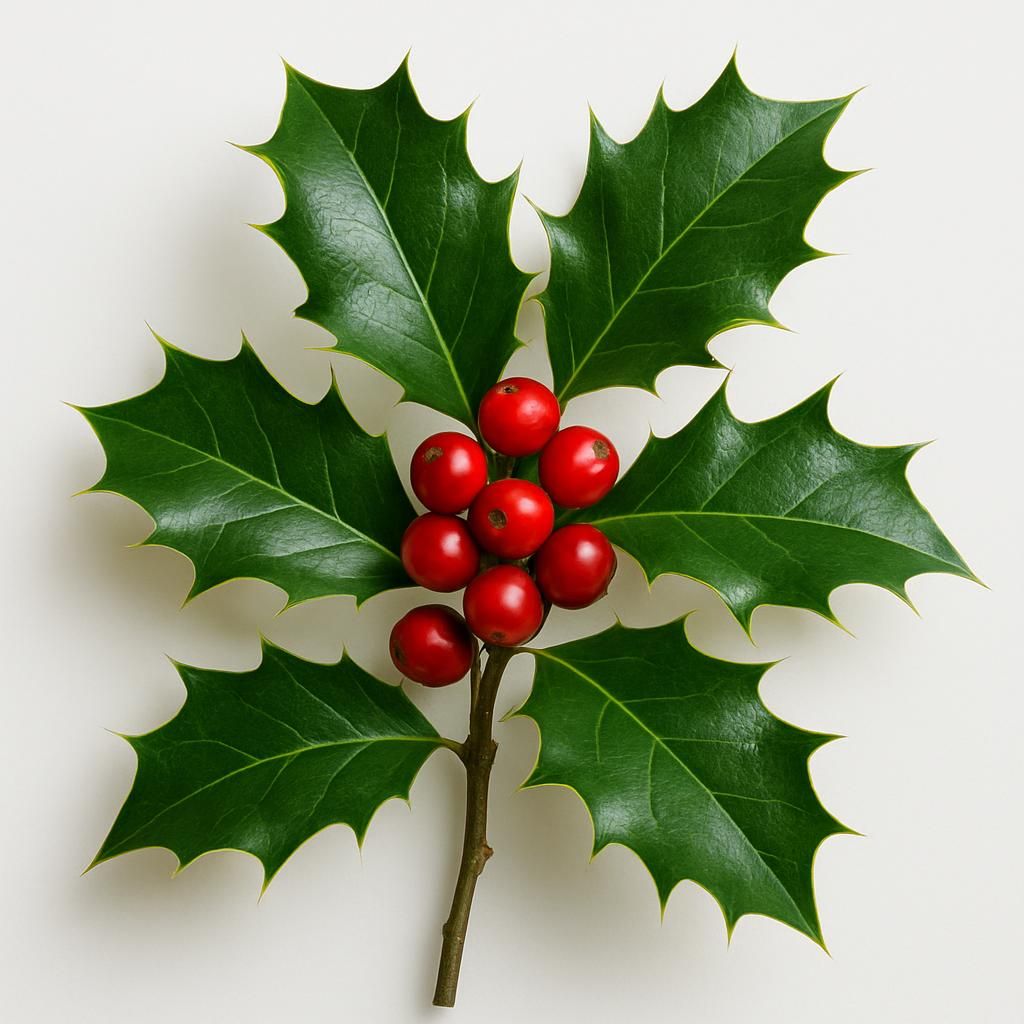
Introduction to Holly
Holly (Ilex spp.) represents one of horticulture’s most enduring evergreens, valued for its glossy leaves, striking winter berries, and adaptability across temperate landscapes. Whether grown for ornamental hedging, wildlife habitat, or seasonal décor, holly remains a cornerstone of professional and home landscapes alike. This guide delivers evidence-based cultivation protocols for commercial growers and serious gardeners seeking reliable, high-quality production.
Botanical Profile of Holly
The genus Ilex comprises over 400 species, ranging from compact shrubs to stately trees exceeding 15 meters. Most cultivated forms are dioecious, requiring separate male and female plants for berry set. Leaves are typically leathery, alternate, and often armed with spines. Flowers are small, white to greenish, and appear in spring. Female plants produce drupes that ripen from green to vivid red, orange, or black depending on cultivar. Ilex aquifolium and Ilex opaca dominate temperate commerce, while Ilex cornuta and Ilex crenata offer subtropical and compact alternatives.
Soil, pH, and Climate Requirements for Holly (MUST INCLUDE A MARKDOWN TABLE OF IDEAL CONDITIONS)
Holly thrives in fertile, well-drained soils with consistent moisture but tolerates a range of textures when drainage is adequate. Avoid heavy, waterlogged clays that promote root diseases. Most species prefer slightly acidic conditions and moderate humidity.
| Parameter | Ideal Range | Notes |
|---|---|---|
| Soil Type | Loamy to sandy loam | High organic matter improves fertility |
| Soil pH | 5.0 – 6.5 | Tolerates up to 7.0 with micronutrient management |
| Temperature Range | -15 °C to 30 °C (5 °F to 86 °F) | Protect young plants from extreme cold |
| USDA Hardiness Zones | 5–9 | Species-specific adjustments required |
| Annual Rainfall | 750–1500 mm | Supplemental irrigation in dry periods |
| Light Requirement | Full sun to partial shade | Berry production highest in full sun |
Step-by-Step Planting & Propagation
- Site Selection: Choose a sheltered location with good air circulation and protection from harsh winter winds.
- Soil Preparation: Incorporate 5–8 cm of well-rotted compost or aged manure to a depth of 30 cm. Conduct a soil test and adjust pH if below 5.0 with elemental sulfur.
- Planting Time: Early spring or early autumn when soil is workable. Container-grown plants transplant successfully year-round in mild climates.
- Spacing: 1.5–3 m between plants for hedging; 4–6 m for specimen trees. Provide at least one male plant per 5–8 females for pollination.
- Planting Depth: Set root ball level with surrounding soil; backfill and water thoroughly.
- Propagation: Take 10–15 cm semi-ripe cuttings in midsummer; treat with 0.3 % IBA rooting hormone and maintain high humidity. Seed requires 3–4 months cold stratification at 4 °C.
Care & Maintenance regimes for Holly (MUST INCLUDE A MARKDOWN TABLE OF WATER, FERTILIZER, AND PRUNING SCHEDULES)
Consistent moisture during the first two growing seasons establishes deep roots. Mature plants tolerate moderate drought but benefit from supplemental irrigation during prolonged dry spells. Fertilize in early spring with a balanced slow-release formulation; avoid high-nitrogen feeds after midsummer to prevent tender growth susceptible to winter injury.
| Season | Watering Schedule | Fertilizer Application | Pruning Schedule |
|---|---|---|---|
| Spring | 25–40 mm per week if rainfall insufficient | 10-10-10 NPK at 30–50 g/m²; apply once | Remove winter-damaged wood; shape lightly |
| Summer | Monitor soil moisture; irrigate deeply every 7–10 days | Side-dress with compost tea or fish emulsion monthly | Pinch or shear to maintain hedge density |
| Autumn | Reduce frequency; maintain even moisture | Apply 0-0-20 potassium sulfate at 20 g/m² | Light thinning for air circulation |
| Winter | Minimal unless soil dries out | None | Remove crossing or diseased branches |
Mulch annually with 5–7 cm of pine bark or wood chips to conserve moisture and suppress weeds. Monitor leaf color; interveinal chlorosis signals iron or manganese deficiency—correct with chelated foliar sprays.
Pests, Diseases & Organic Management
Holly is relatively pest-resistant but can host Aphids, scale insects, and spider mites under stress. Leafminers and holly leaf tier occasionally defoliate new growth. Root rot caused by Phytophthora species and Pythium occurs in poorly drained soils. Implement cultural controls first: maintain optimal spacing, avoid overhead irrigation, and remove fallen leaves. Beneficial insects such as lady beetles and lacewings provide natural aphid suppression. For scale, apply horticultural oil in late winter before bud break. Severe mite outbreaks respond to insecticidal soap or predatory mites. Fungicide drenches with phosphorous acid products manage Phytophthora when cultural measures prove insufficient.
Harvesting, Curing & Optimal Storage
Harvest holly branches for décor when berries reach full color but before winter storms. Cut 30–60 cm stems in early morning, removing lower foliage. Immediately place in buckets of cool water with floral preservative. For longer storage, wrap bunches in perforated plastic and hold at 1–4 °C with 85–90 % relative humidity for up to three weeks. Dried holly retains color for 6–12 months when stored away from direct sunlight. Berries contain ilicin and should not be ingested; handle with gloves if skin sensitivity occurs.
Companion Planting for Holly
Holly pairs well with acid-loving understory plants such as Blueberry and Rhododendron species. Interplanting with aromatic herbs like Rosemary and Thyme deters aphids through volatile compounds. Deep-rooted legumes including Clover improve soil nitrogen and provide living mulch. Avoid planting shallow-rooted annuals that compete for surface moisture. In mixed borders, position holly as a windbreak or privacy screen while allowing sufficient light for sun-loving companions.
Stop Treating Tomato Blight Like a Spray Problem: Here Is What Works Better