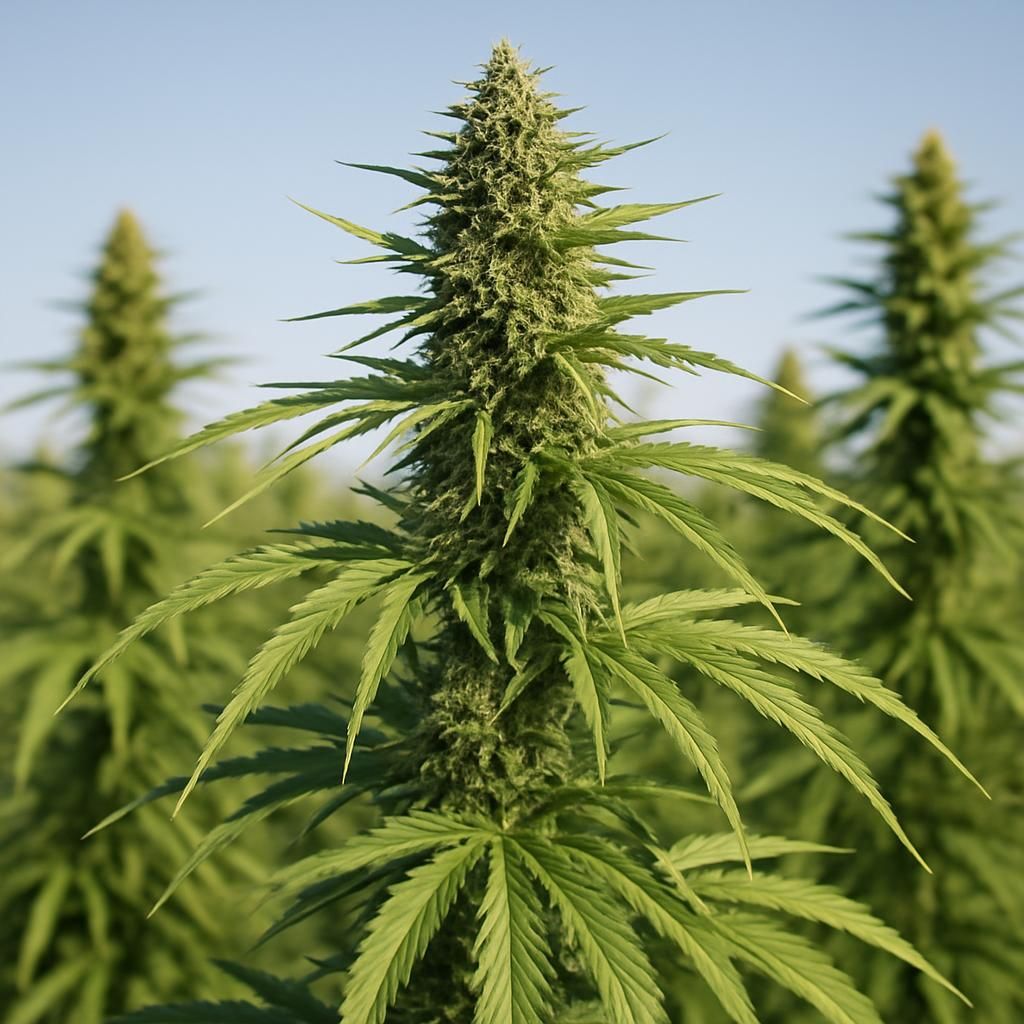
Introduction to Hemp Seed (CFX-2)
CFX-2 is a modern industrial Hemp cultivar developed for consistent grain yields and high-quality fiber. Bred for uniformity and resilience, it delivers reliable performance across temperate climates while meeting strict THC regulatory thresholds. Growers value CFX-2 for its strong stalk structure, high seed oil content, and adaptability to both conventional and organic systems.
This guide provides professional-grade, practical advice for commercial and serious home-scale production. Every section focuses on measurable outcomes and evidence-based practices.
Botanical Profile of Hemp Seed (CFX-2)
CFX-2 belongs to the species Cannabis sativa L. and exhibits typical dioecious flowering with occasional monoecious plants. Plants reach 1.8–3.0 m at maturity with a fibrous taproot system that improves soil structure. The cultivar produces medium-sized seeds (approximately 18–22 g per 1,000 seeds) with elevated omega-3 and omega-6 fatty acid profiles. CFX-2 flowers in 70–85 days under long-day conditions and matures for grain harvest in 100–120 days depending on latitude.
Soil, pH, and Climate Requirements for Hemp Seed (CFX-2)
CFX-2 performs best on well-drained loamy soils with good organic matter. It tolerates a range of textures provided drainage is adequate. The following table summarizes optimal growing conditions:
| Parameter | Ideal Range | Notes |
|---|---|---|
| Soil Type | Loam to sandy loam | Avoid heavy clay without amendment |
| Soil pH | 6.0–7.5 | Maintain near neutral for nutrient uptake |
| Temperature | 15–27 °C daytime | Minimum soil temp 10 °C for germination |
| Annual Rainfall | 400–750 mm | Supplemental irrigation may be required |
| Frost Tolerance | Sensitive to spring frost | Plant after last frost when soil warms |
| Day Length | 14–16 hours during veg | Photoperiod-sensitive flowering |
Step-by-Step Planting & Propagation
- Conduct soil tests 4–6 weeks before planting and amend based on results.
- Prepare a fine, firm seedbed free of weeds and large clods.
- Sow CFX-2 seed at 25–35 kg/ha for grain or 40–50 kg/ha for dual-purpose at 1–2 cm depth.
- Use row spacing of 15–20 cm for grain or 30–45 cm for fiber emphasis.
- Ensure soil moisture at planting; irrigate lightly if needed to achieve 60–70 % field capacity.
- Monitor emergence 3–7 days after sowing; target 250–350 plants/m² for optimal stands.
Care & Maintenance regimes for Hemp Seed (CFX-2)
Consistent moisture during establishment and flowering is critical. The table below outlines recommended schedules:
| Growth Stage | Water (mm/week) | Fertilizer (N-P-K kg/ha) | Pruning/Training |
|---|---|---|---|
| Establishment (0–3 wks) | 15–20 | 40-20-30 at planting | None |
| Vegetative (3–7 wks) | 20–25 | 60-15-40 side-dress at wk 4 | Scout and rogue males if required |
| Flowering (7–11 wks) | 25–30 | 20-10-30 at early bloom | Minimal; avoid stress |
| Maturation (11+ wks) | 10–15 | None | None |
Pests, Diseases & Organic Management
CFX-2 shows good resistance to many common issues but remains vulnerable to Aphids, Spider Mites, and Fusarium wilt. Implement weekly scouting from emergence. Use neem oil or insecticidal soaps for soft-bodied insects and rotate Bacillus thuringiensis products for lepidopteran larvae. Maintain 3–4 year rotations and incorporate cover crops such as Clover to suppress soil-borne pathogens.
Harvesting, Curing & Optimal Storage
Harvest grain when 70–80 % of seeds have turned dark and moisture content reaches 12–15 %. Use a combine with appropriate settings to minimize seed damage. Dry seed to 8–10 % moisture within 24 hours using forced air at 32 °C or lower. Store in cool, dark, airtight containers with less than 65 % relative humidity. Monitor for Storage Beetles monthly.
Companion Planting for Hemp Seed (CFX-2)
Pair CFX-2 with Sunflower for pollinator support and Marigold to deter nematodes. Avoid planting near Tomato due to shared pest pressures. Intercrop with Clover or Peas to improve nitrogen fixation and soil health. Maintain 1 m buffer strips between hemp and sensitive crops to prevent cross-pollination issues.