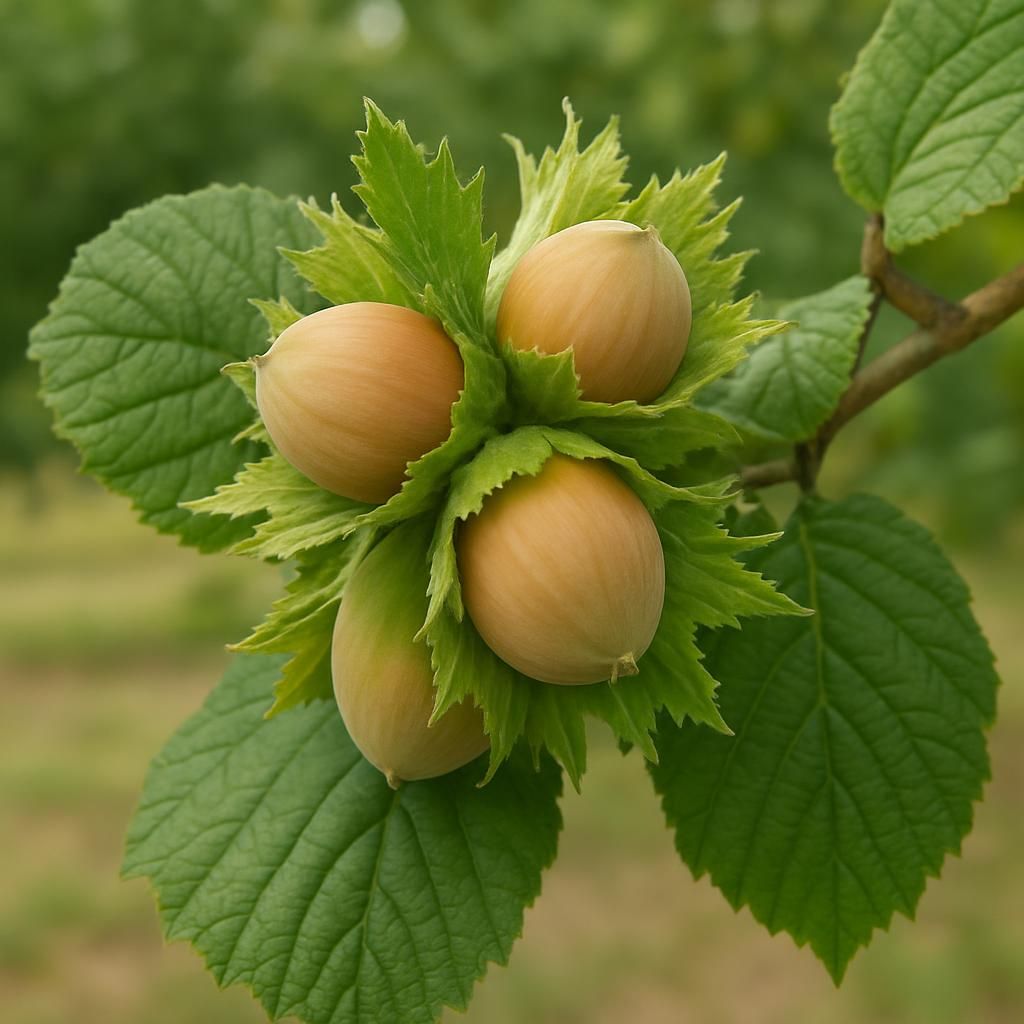
Introduction to Hazelnut (Yamhill)
Hazelnut (Yamhill) is a compact, high-productivity cultivar of the European hazelnut developed by Oregon State University. It produces medium to large nuts with excellent kernel fill and flavor, making it a top choice for both commercial orchards and backyard growers seeking reliable yields. The variety shows strong resistance to Eastern Filbert Blight and performs well in regions with mild winters and cool summers.
Botanical Profile of Hazelnut (Yamhill)
Yamhill belongs to the birch family (Betulaceae) and is a deciduous multi-stemmed shrub or small tree that typically reaches 12–18 feet in height with a similar spread. It produces separate male catkins and inconspicuous female flowers on the same plant, relying primarily on wind for pollination. The cultivar is partially self-fertile but benefits from compatible pollinizers such as Barcelona Hazelnut or Butler Hazelnut planted within 50–100 feet.
Soil, pH, and Climate Requirements for Hazelnut (Yamhill)
Yamhill thrives in well-drained, fertile soils with good organic matter content. It performs best in USDA zones 5–8 and requires 800–1,200 chilling hours for proper bud break. The variety tolerates a range of soil textures but is highly sensitive to waterlogging.
| Parameter | Ideal Range | Notes |
|---|---|---|
| Soil Type | Loam to sandy loam | Avoid heavy clay without amendment |
| Soil pH | 6.0 – 7.5 | Slightly acidic to neutral preferred |
| Drainage | Excellent | Raised beds or tile drainage if needed |
| Temperature Range | 15°F – 85°F | Protect young trees below 15°F |
| Annual Rainfall | 30 – 50 inches | Supplemental irrigation in dry summers |
| Chilling Hours | 800 – 1,200 hours | Below 45°F required for dormancy release |
Step-by-Step Planting & Propagation
- Site selection: Choose a location with full sun and protection from strong winds. Conduct a soil test and amend to reach the target pH.
- Timing: Plant bare-root or container-grown trees in late fall or early spring when soil is workable.
- Spacing: Space trees 15–18 feet apart in rows 18–20 feet wide for mechanical harvesting access.
- Planting hole: Dig a hole twice as wide as the root ball and the same depth. Backfill with native soil mixed with aged compost.
- Watering-in: Settle soil around roots with water and apply a 3-inch layer of organic mulch, keeping it 6 inches from the trunk.
- Pollinizer placement: Include at least one compatible pollinizer every 8–10 trees for optimal nut set.
Care & Maintenance regimes for Hazelnut (Yamhill)
Regular care ensures strong structure, disease resistance, and maximum nut production. Focus on balanced nutrition, consistent moisture during kernel fill, and annual pruning to maintain an open canopy.
| Season | Watering Schedule | Fertilizer Application | Pruning Schedule |
|---|---|---|---|
| Spring | 1 inch per week if rainfall low | Apply 0.5 lb N per tree at bud swell | Remove dead wood and crossing branches |
| Summer | Deep soak every 10–14 days | Side-dress with compost or balanced organic | Light tipping of vigorous shoots if needed |
| Fall | Reduce to encourage hardening | No additional fertilizer after August | Remove suckers and low branches |
| Winter | Minimal unless drought persists | Apply aged manure or compost around drip line | Dormant pruning for structure and light |
Pests, Diseases & Organic Management
Yamhill exhibits excellent resistance to Eastern Filbert Blight caused by Anisogramma anomala, but monitoring remains essential. Common insect pressures include Filbertworm and Leafrollers. Use pheromone traps for filbertworm and encourage beneficial insects with flowering understory plants. Apply dormant oil sprays in late winter to suppress overwintering scales and mites. Remove and destroy infected branches promptly to limit disease spread.
Harvesting, Curing & Optimal Storage
Harvest when nuts begin to drop naturally, typically late August through September. Collect daily to minimize mold and rodent damage. Dry nuts to 8–10% moisture using forced-air dryers at 90–100°F for 24–48 hours. Store in-shell nuts in cool, dry conditions (35–40°F, <60% RH) for up to 12 months. Shelled kernels maintain quality for 6–9 months when refrigerated or frozen in airtight containers.
Companion Planting for Hazelnut (Yamhill)
Compatible companions improve soil fertility, suppress weeds, and attract beneficial insects. Understory options include Clover, Yarrow, and Thyme for nitrogen fixation and pollinator support. Avoid planting shallow-rooted crops that compete for moisture during summer kernel development. Tall companions such as Comfrey can be used as dynamic accumulators but should be cut before flowering to prevent seeding.