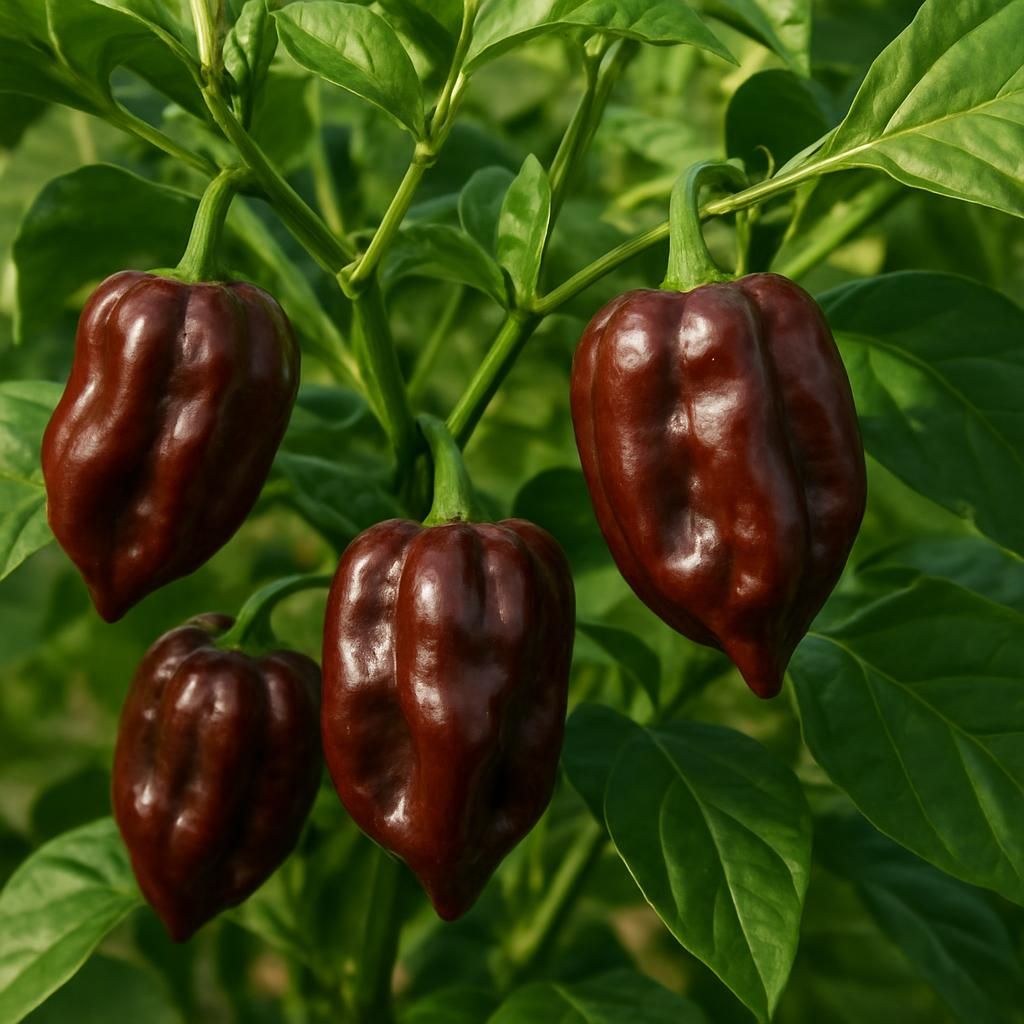
Introduction to Habanero Chocolate
The Habanero Chocolate stands out among hot peppers for its mahogany-brown pods, intense fruity heat, and thick walls that deliver both culinary punch and excellent drying quality. Originating from selective breeding within the Capsicum chinense species, this variety reaches 300,000–500,000 Scoville Heat Units, making it significantly hotter than a standard orange habanero while retaining the signature citrus and tropical notes. Growers value the Chocolate Habanero for its consistent yields, disease resistance, and versatility in fresh, dried, and fermented applications.
Botanical Profile of Habanero Chocolate
Habanero Chocolate plants are compact yet vigorous, typically reaching 60–90 cm in height with a bushy, multi-branched habit. The leaves are dark green, ovate, and slightly glossy. Flowers are small, white to cream-colored with greenish anthers, and appear continuously once plants reach flowering maturity. The distinctive pods start green, transition through purple-brown shades, and ripen to a rich chocolate color. Each fruit is lantern-shaped, 4–6 cm long, and features thick, fleshy walls that store well.
Soil, pH, and Climate Requirements for Habanero Chocolate
Habanero Chocolate thrives in well-drained, fertile loam or sandy loam soils enriched with organic matter. Consistent warmth and full sun exposure are essential for fruit set and color development. The following table summarizes ideal growing conditions:
| Parameter | Ideal Range | Notes |
|---|---|---|
| Soil Type | Loam / Sandy loam | High organic content improves yields |
| Soil pH | 6.0 – 6.8 | Slightly acidic; avoid alkaline conditions |
| Temperature (Day) | 24 – 32 °C | Optimal fruit set above 21 °C |
| Temperature (Night) | 18 – 24 °C | Avoid prolonged dips below 15 °C |
| Sunlight | Full sun (6–8+ hours) | South-facing exposure recommended |
| Spacing | 45–60 cm between plants | 75–90 cm between rows |
| Frost Tolerance | None | Plant after last frost |
Step-by-Step Planting & Propagation
Start seeds indoors 8–10 weeks before the last expected frost. Sow 0.5 cm deep in sterile seed-starting mix at 26–28 °C; germination occurs in 7–14 days. Transplant seedlings into 10 cm pots once they develop two true leaves. Harden off for 7–10 days before moving to the garden when nighttime temperatures remain above 15 °C. Space plants 45–60 cm apart in raised beds or containers with at least 20 L of soil volume. Direct sowing is possible in warm climates but delays harvest by 3–4 weeks.
Care & Maintenance regimes for Habanero Chocolate
Consistent moisture, balanced nutrition, and proper pruning maximize both yield and pod quality. The schedule below provides a professional framework:
| Growth Stage | Watering Schedule | Fertilizer Schedule | Pruning Schedule |
|---|---|---|---|
| Seedling (0–4 wks) | Keep evenly moist; mist twice daily | Dilute fish emulsion (½ strength) weekly | None |
| Vegetative (4–8 wks) | 2–3 cm/week; deep soak twice weekly | Balanced 10-10-10 every 14 days | Pinch tip at 4–6 leaf stage for branching |
| Flowering/Fruiting | 3–4 cm/week; avoid overhead watering | High-potassium formula every 10–14 days | Remove lower leaves and non-fruiting suckers |
| Late Season | Reduce to 2 cm/week as pods ripen | Stop nitrogen; finish with compost tea | Light cleanup of diseased foliage |
Mulch with 5–7 cm of organic material to conserve moisture and suppress weeds. Stake plants in windy areas.
Pests, Diseases & Organic Management
Common threats include Aphids, Spider Mites, Thrips, and fungal issues such as Powdery Mildew. Monitor weekly and apply insecticidal soap or neem oil at first sign of infestation. Rotate crops every 3–4 years and maintain good airflow to reduce disease pressure. Beneficial insects such as ladybugs and lacewings provide natural control when habitat is preserved.
Harvesting, Curing & Optimal Storage
Harvest pods when they reach full chocolate coloration and firm texture, typically 90–110 days after transplant. Use clean shears to cut stems, leaving a short calyx. For fresh use, store at 7–10 °C with 85–90 % humidity for up to two weeks. To dry, place whole pods on screens in a warm, well-ventilated area (32–38 °C) for 7–10 days until brittle. Store dried peppers in airtight glass jars away from light; properly cured pods retain flavor and heat for 12–18 months.
Companion Planting for Habanero Chocolate
Pair Habanero Chocolate with Tomato, Thai Basil, and Marigold to deter pests and improve pollination. Avoid planting near Fennel or members of the Brassica family, which can compete for nutrients or attract shared pests. Nasturtium serves as an effective trap crop for aphids while adding edible flowers to the garden.