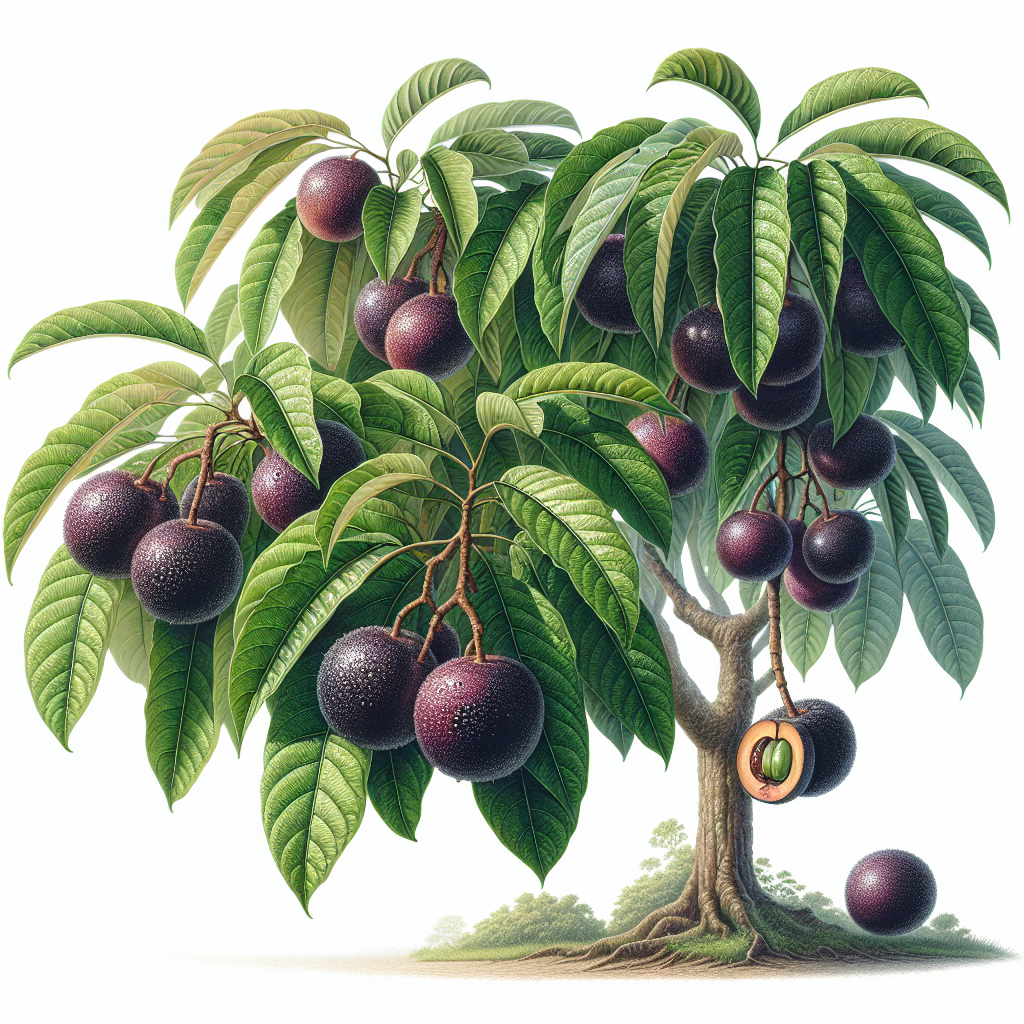
Introduction to Grumichama (Black)
Grumichama (Black), scientifically known as Eugenia brasiliensis in its black-fruited cultivar, is a captivating tropical fruit tree native to the coastal rainforests of Brazil. Often called Brazilian cherry or black grumichama, it produces clusters of glossy, black-purple fruits that resemble cherries in size (1-2 cm diameter) but offer a unique blend of sweet, juicy flesh with a slightly acidic tang. The fruits ripen to a deep, almost black hue, distinguishing them from the red-fruited varieties, and are rich in antioxidants, vitamin C, and fiber, making them ideal for fresh eating, jams, juices, and desserts.
This underutilized gem is gaining popularity among small farmers and home orchardists in USDA zones 10-11 and equivalent subtropical regions worldwide, including parts of Florida, California, Hawaii, and Australia. Trees are compact, reaching 4-8 meters tall with dense, glossy green foliage that provides year-round shade and ornamental appeal. Yields begin in 2-4 years from seed or graft, with mature trees producing 20-50 kg of fruit annually in flushes from late spring to early summer. Guava (crop) growers often appreciate its similar cultural needs but superior flavor profile.
Beyond its delectable taste, Grumichama (Black) enhances biodiversity in permaculture systems, attracting pollinators like bees and birds while resisting many common tropical pests. Its drought tolerance once established and low maintenance make it perfect for backyard orchards or commercial hedges. This guide delivers professional-grade advice to cultivate thriving trees, optimize yields, and troubleshoot issues for sustainable production.
Botanical Profile of Grumichama (Black)
Grumichama (Black) belongs to the Myrtaceae family, closely related to pitanga and common guava. It features opposite, lanceolate leaves (5-10 cm long) that are leathery, dark green above and slightly paler beneath, providing a lush canopy. New growth emerges bronze-red, adding aesthetic value. The tree's bark is smooth and grayish, peeling in patches on older specimens.
Flowers are small (1 cm), white to creamy, hermaphroditic, and borne in axillary clusters of 10-30. They bloom intermittently year-round in humid tropics but peak in spring, with self-fertile flowers pollinated by native bees and flies. Pollination success improves with cross-pollination from nearby trees.
Fruits develop rapidly (30-45 days post-bloom), forming globular drupes with thin, tough, black-purple skin enclosing 1-3 white seeds in translucent, juicy pulp. Seedlings exhibit variable fruit quality, so grafting onto Eugenia brasiliensis rootstock ensures superior black-fruited strains. Trees are evergreen, cold-hardy to 28°F (-2°C) briefly, but prolonged freezes damage foliage. Lifespan exceeds 30 years with proper care, making it a long-term investment for orchards.
Root system is fibrous and shallow, extending 2-3 times canopy width, preferring well-aerated soils to avoid waterlogging. Growth rate is moderate: 0.5-1 m/year initially, slowing after fruiting age.
Soil, pH, and Climate Requirements for Grumichama (Black)
Grumichama (Black) excels in fertile, well-draining soils with pH 5.5-7.0, tolerating slight acidity like many Myrtaceae. Sandy loams or volcanic soils mimic native habitats, retaining moisture without sogginess. Avoid heavy clays prone to root rot. Incorporate 20-30% organic matter (compost, aged manure) during planting for optimal structure.
Climate-wise, it demands frost-free environments with average temperatures 68-86°F (20-30°C). High humidity (60-80%) boosts fruit set, thriving in 40-80 inches annual rainfall distributed evenly. Supplemental irrigation during dry spells (1-2 inches/week) prevents fruit drop. Full sun (6-8 hours daily) promotes vigorous growth and sweetest fruits; partial shade reduces yields by 30-50%.
Wind protection is crucial for young trees, as strong gusts shred leaves. Mulch 4-6 inches deep with wood chips or cocoa hulls conserves moisture, suppresses weeds, and feeds mycorrhizae. Test soil annually; amend deficiencies with balanced fertilizers low in nitrogen post-fruiting to avoid excessive vegetative growth. For more on building resilient soils, check this Soil Health Mastery guide.
Step-by-Step Planting & Propagation
Propagation Methods:
- Seeds: Fresh seeds germinate in 20-40 days at 77-86°F (25-30°C). Extract pulp, sow 0.5 cm deep in sterile mix, keep moist under plastic. Thin to 10 cm spacing; transplant at 30 cm.
- Air-layering: Ideal for clones; girdle branch, apply rooting hormone, wrap in sphagnum moss. Roots form in 4-8 weeks.
- Grafting/Cleft: Use budwood from elite black-fruited trees on seedling rootstock in spring; success rate 70-90%.
- Cuttings: Semi-hardwood under mist, IBA 3000 ppm; lower success but faster rooting.
Planting Steps:
- Select 1-2 year nursery stock (50-100 cm tall).
- Dig hole 2x root ball width, 20% deeper; mix backfill with compost.
- Plant at soil line, water deeply, mulch.
- Space 4-6 m apart for canopy development.
- Stake if windy; fertilize lightly first month.
Best planting: early spring post-frost or rainy season start. Expect first fruits in 2 years from grafts.
Care & Maintenance regimes for Grumichama (Black)
Watering: Deep soak weekly first year, then drought-tolerant; maintain even moisture during flowering/fruiting. Fertilizing: 10-5-20 NPK 3x/year; micronutrients (Fe, Zn, Mn) via foliar sprays. Reduce N after June. Pruning: Annual post-harvest: remove dead/crossing branches, thin canopy for light penetration. Shape to vase form. Weed Control: Mulch heavily; hand-pull around base. Training: Espalier or hedge for small spaces.
Monitor for nutrient deficiencies: yellow leaves indicate iron chlorosis in alkaline soils.
Pests, Diseases & Organic Management
Common pests: Aphids, scale insects, fruit flies. Control with neem oil, insecticidal soap, or beneficials like ladybugs. Birds love ripe fruit—use netting.
Diseases: Anthracnose causes fruit rot; prevent with copper fungicide, airflow. Phytophthora root rot from poor drainage—improve soil, avoid overwatering. Powdery mildew rare; milk sprays effective.
Integrated approach: companion herbs, sanitation, resistant rootstocks. Learn proven organic fixes in this pest management blog.
Harvesting, Curing & Optimal Storage
Harvest when fruits blacken, detach easily (hand-pick clusters). Yields peak 4-6 weeks. Fruits store 1-2 weeks refrigerated; freeze pulp or process into jam (pectin-low, add apple).
Post-harvest: sort, cool to 50°F. Dry excess moisture to prevent mold.
Companion Planting for Grumichama (Black)
Pair with Thai Basil for pest repulsion, Marigold for nematodes, nitrogen-fixers like pigeon pea. Avoid water-hungry crops. Pineapple understory suppresses weeds, retains moisture. Enhances microclimate for mutual benefits.