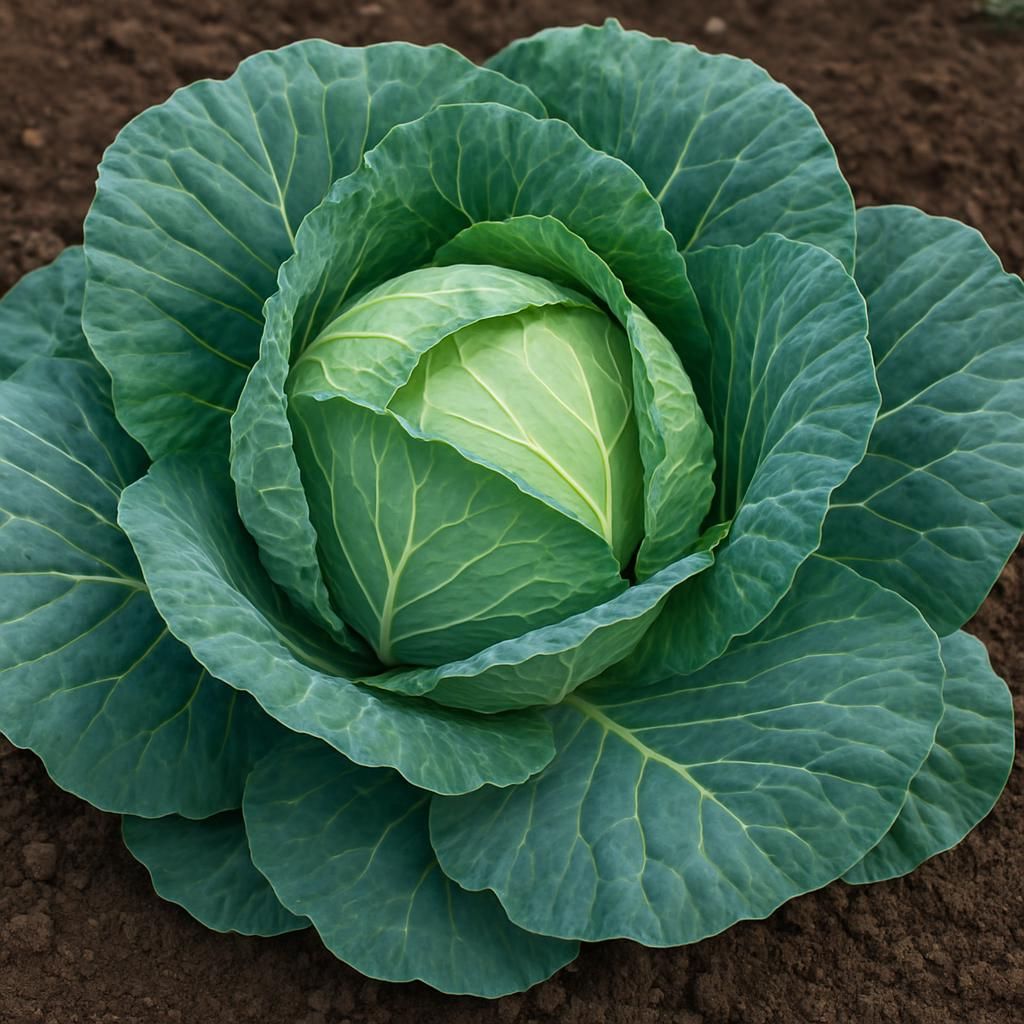
Introduction to German Giant
German Giant is a high-yielding, cold-tolerant cabbage cultivar developed for northern climates and long-term winter storage. Its large, round heads can reach 10–15 pounds with tightly packed, sweet leaves that resist splitting. Growers favor German Giant for its uniform maturity, disease resistance, and ability to hold quality in the field or root cellar for several months after harvest.
Botanical Profile of German Giant
German Giant belongs to the Brassicaceae family and is a biennial crop typically grown as an annual. It produces a compact rosette of broad, glaucous leaves that wrap tightly into a dense head. The cultivar exhibits strong apical dominance, resulting in minimal side-shoot formation and high head-to-plant biomass ratio. Flowering occurs only in the second year under vernalization, producing yellow cruciform flowers typical of the species.
Soil, pH, and Climate Requirements for German Giant
German Giant performs best in fertile, well-drained loam or sandy loam soils with high organic matter. Consistent moisture and cool temperatures promote large, dense heads without bitterness.
| Parameter | Ideal Range/Value |\n|------------------------|------------------------------------| | Soil Type | Loam to sandy loam, well-drained | | Soil pH | 6.0 – 7.0 | | Temperature (Day) | 15–21 °C (59–70 °F) | | Temperature (Night) | 7–13 °C (45–55 °F) | | Frost Tolerance | Hardy to –6 °C (21 °F) | | Spacing | 45–60 cm between plants; 60–75 cm rows | | Sunlight | Full sun (minimum 6 hours) |
Step-by-Step Planting & Propagation
Start seeds indoors 6–8 weeks before the last expected spring frost or direct sow in late summer for fall harvest. Sow 0.5 cm deep in sterile seed-starting mix at 18–21 °C. Transplant seedlings at the 4–6 true-leaf stage, hardening off for 7–10 days. Set plants at the same depth as the nursery plug and firm soil around roots. Water immediately after transplanting to reduce transplant shock. Maintain consistent moisture during the first 10 days to ensure rapid establishment.
Care & Maintenance regimes for German Giant
Consistent irrigation, balanced nutrition, and timely cultivation are essential for large, marketable heads. Mulch with 5–8 cm of organic material to suppress weeds and retain soil moisture.
| Task | Schedule & Rate |
|---|---|
| Watering | 25–35 mm per week; increase to 40 mm during head formation |
| Fertilizer (N-P-K) | Pre-plant: 10-10-10 at 450 kg/ha; Side-dress with 20-0-0 at 4 and 8 weeks after transplant |
| Pruning | Remove lower yellowing leaves at 6 weeks; no heading required |
Pests, Diseases & Organic Management
Common threats include cabbage loopers, imported cabbageworm, aphids, clubroot, and Alternaria leaf spot. Scout weekly and use floating row covers until heads begin to form. Apply Bacillus thuringiensis (Bt) at first sign of caterpillar damage. Maintain soil pH above 6.8 and practice 3–4 year rotations to suppress clubroot. Copper-based sprays provide effective control of Alternaria when applied preventively.
Harvesting, Curing & Optimal Storage
Harvest when heads are firm and reach target weight, typically 85–100 days after transplant. Cut stems at soil level with a sharp knife, leaving 2–3 wrapper leaves for protection. Field-cure for 2–3 days in shade if weather is dry. Store at 0–2 °C and 90–95 % relative humidity for up to 5 months. Check weekly and remove any decaying outer leaves to prevent spread.
Companion Planting for German Giant
German Giant benefits from proximity to aromatic herbs and nitrogen-fixing legumes. Plant with dill and rosemary to deter cabbage pests. Interplant with peas or beans early in the season for natural nitrogen. Avoid planting near strawberries or tomatoes, which can share pest pressures. Incorporate nasturtium as a trap crop for aphids at field edges.