Introduction to Gamboge Resin
Gamboge resin is a natural latex-like substance obtained by tapping the trunk of Garcinia hanburyi, a slow-growing evergreen tree native to Southeast Asia. The resin has been valued for centuries as a vibrant yellow pigment in art and as a component in traditional pharmacopeia. Modern interest focuses on sustainable cultivation methods that maintain tree health while producing consistent resin yields.
Commercial production remains limited because the tree requires specific tropical conditions and careful management to avoid over-tapping. Growers seeking to establish gamboge resin orchards must prioritize long-term tree vigor over short-term extraction. Proper site selection, soil preparation, and integrated pest management are essential for viable production.
Botanical Profile of Gamboge Resin
Garcinia hanburyi belongs to the Clusiaceae family and grows as a dioecious tree reaching 10–15 meters at maturity. Leaves are opposite, leathery, and elliptic with prominent midribs. Small, pale-yellow flowers appear in axillary clusters, followed by globose fruits containing several seeds. The resin canals are located in the inner bark and produce a milky latex that oxidizes to a brilliant orange-yellow color upon exposure to air.
The species thrives in lowland tropical forests with high humidity and consistent rainfall. Unlike many resin-producing trees, G. hanburyi does not form extensive buttresses, making trunk access easier for controlled tapping. Genetic variation exists between populations, with some provenances exhibiting higher resin content and faster growth rates.
Soil, pH, and Climate Requirements for Gamboge Resin
Successful cultivation depends on replicating the well-drained, fertile soils found in its native range. The tree performs best on deep loamy soils rich in organic matter with good water-holding capacity yet excellent drainage. Avoid compacted or waterlogged sites, as root rot quickly develops under anaerobic conditions.
| Parameter | Ideal Range | Notes |
|---|---|---|
| Soil Type | Deep sandy loam to loam | High organic matter content preferred |
| Soil pH | 5.5 – 6.8 | Slightly acidic to neutral |
| Annual Rainfall | 1,800 – 3,000 mm | Evenly distributed; supplemental irrigation during dry spells |
| Temperature Range | 22 – 32 °C | Sensitive to frost; protect young plants |
| Altitude | 0 – 800 m | Lowland tropical zones optimal |
| Relative Humidity | 70 – 90 % | High humidity reduces transplant shock |
| Spacing | 6 m × 6 m (mature) | 278 trees/ha; wider spacing improves airflow |
Step-by-Step Planting & Propagation
Propagation is achieved primarily through seeds collected from healthy, high-resin mother trees. Fresh seeds germinate within 30–45 days when sown in well-drained media under 50 % shade. Seedlings are transplanted to polybags at the two-leaf stage and grown under shade for 12–18 months before field planting.
Site preparation begins 3–6 months prior to planting. Clear competing vegetation, incorporate 10–15 kg of well-rotted compost per planting hole, and ensure drainage channels prevent water accumulation. Plant at the onset of the rainy season using 6 m × 6 m spacing. Stake young trees and provide temporary shade for the first dry season. Mulch with 10 cm of organic material around the base, keeping mulch 15 cm away from the trunk to prevent collar rot.
Care & Maintenance regimes for Gamboge Resin
Young trees require consistent moisture during establishment. Once established, trees tolerate short dry periods but benefit from supplemental irrigation when rainfall drops below 50 mm per week. Fertilization should be balanced and applied in split doses to avoid salt stress.
| Growth Stage | Water Schedule | Fertilizer Schedule | Pruning Schedule |
|---|---|---|---|
| Year 1–2 | 20 L/tree/week; daily light watering | 200 g NPK 15-15-15 every 3 months + 5 kg compost | Formative pruning at 12 and 24 months |
| Year 3–5 | 30–40 L/tree every 7–10 days | 500 g NPK 12-12-17-2 + 2 kg compost twice yearly | Remove crossing branches; maintain single leader |
| Mature (Year 6+) | 50–60 L/tree every 10–14 days | 1 kg NPK 10-10-20 + micronutrients annually | Light sanitation pruning after harvest |
Monitor leaf color and growth flushes to adjust nutrient programs. Avoid heavy nitrogen applications after year five, as excessive vegetative growth reduces resin concentration.
Pests, Diseases & Organic Management
Common insect pressures include Aphids, Mealybugs, and Scale insects. These sap-feeding pests can be managed with regular releases of predatory lady beetles and lacewings combined with neem-oil sprays at 0.5 % concentration. Spider mites may appear during prolonged dry spells; overhead misting and sulfur-based miticides provide effective control.
Fungal issues such as Phytophthora root rot and Anthracnose are the primary disease threats. Improve drainage, avoid over-irrigation, and apply Trichoderma-based bio-fungicides at planting and during the monsoon season. Copper hydroxide sprays (1 g/L) during flowering help suppress anthracnose when cultural practices alone are insufficient.
Harvesting, Curing & Optimal Storage
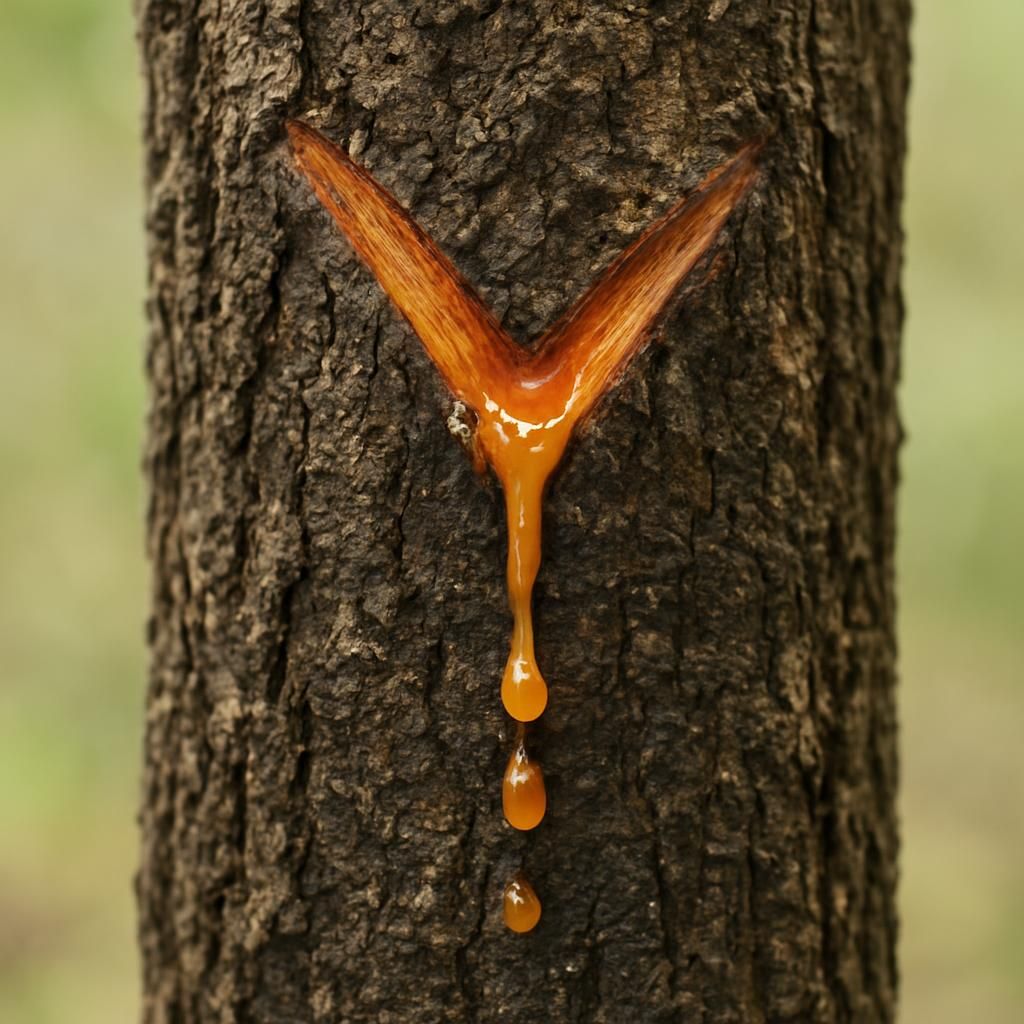
Resin harvesting begins when trees reach 8–10 years of age and trunk diameter exceeds 15 cm. Use a sterile tapping knife to make shallow V-shaped incisions spaced 30 cm apart around the circumference, collecting latex in bamboo or stainless-steel cups. Limit tapping to two or three channels per tree per season to prevent stress.
Fresh resin is allowed to air-dry in shade for 7–10 days until it hardens into brittle, translucent lumps. Store cured gamboge in airtight glass or food-grade plastic containers at 15–20 °C with relative humidity below 60 %. Properly cured resin retains color and solubility for 5–7 years.
Companion Planting for Gamboge Resin
G. hanburyi benefits from understory companions that improve biodiversity without competing for light. Thai Basil and Marigold planted in orchard rows attract beneficial insects and repel certain aphids. Leguminous cover crops such as Clover or Pigeon pea between rows fix nitrogen and reduce soil erosion. Avoid shallow-rooted vegetables directly under the canopy to prevent root disturbance during resin collection.
For further reading on resin crop management, consult the Garcinia hanburyi Wiki page. Additional practical insights on tropical resin systems can be found in the blog post The Truth About Weather Patterns and Small Farm Resilience.