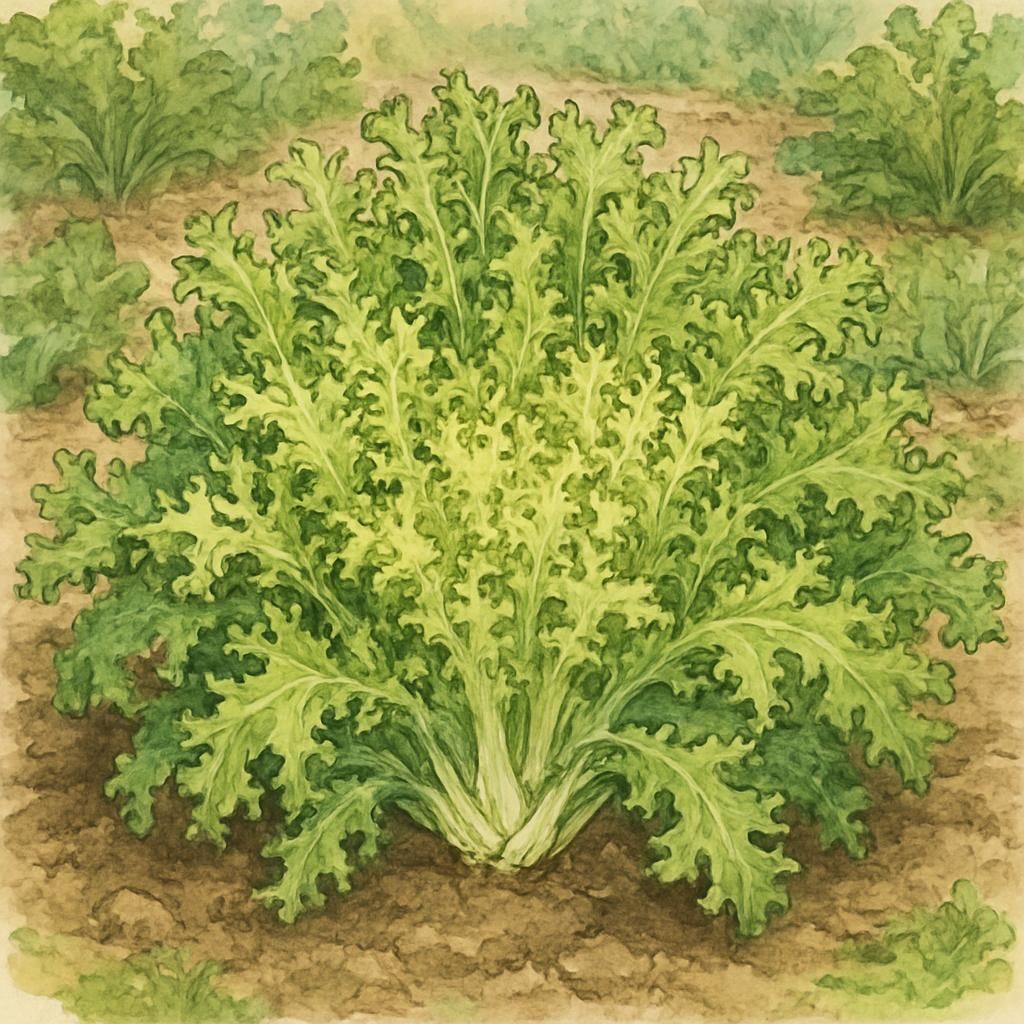
Introduction to Frisée (Myrna)
Frisée, known botanically as Cichorium endivia var. crispum, is a cultivar of endive that features distinctive curly leaves. Often found in gourmet salads, Frisée (Myrna) is especially favored for its nutty and slightly bitter flavor profile. This variety is a member of the Asteraceae family, joining the ranks of other leafy greens like Lettuce and Cabbage.
Botanical Profile of Frisée (Myrna)
Frisée (Myrna) is an herbaceous biennial plant primarily grown for its leaves, which are often used in culinary applications. It belongs to the Asteraceae family, characterized by its similar flowering plant relatives. The plant typically grows to a height of 15-30 cm with deeply serrated leaves forming a rosette structure. When given optimal conditions, the plant produces lush leaves that range from pale to dark green with a central blanch.
Soil, pH, and Climate Requirements for Frisée (Myrna)
Frisée thrives in specific environmental conditions, ensuring optimal growth and flavor.
| Condition | Ideal Range |
|---|---|
| Soil Type | Well-drained, loamy |
| Soil pH | 6.0 - 7.0 |
| Temperature | 10°C - 24°C |
| Sunlight | Full sun to partial shade |
Frisée grows best in cooler climates with well-drained, fertile soil. The pH level should be slightly acidic to neutral, and the crop benefits from regular sunsets or shaded conditions during hot summer days, as it tends to bolt prematurely in excessive heat.
Step-by-Step Planting & Propagation
Step 1: Seed Starting
- Begin by sowing seeds indoors around 4-6 weeks before the last expected frost date. Maintain a soil temperature of around 16°C to encourage germination.
Step 2: Transplanting
- Once seedlings reach about 6 cm in height or have 4-5 leaves, transplant them to the garden. Ensure they are planted at least 30 cm apart to give each plant space to mature without competition.
Step 3: Direct Sowing (Optional)
- For direct sowing, plant seeds in rich, well-prepared soil 2 cm apart in rows spaced 45 cm apart. Thin plants to ensure the optimum final spacing.
Care & Maintenance Regimes for Frisée (Myrna)
Proper maintenance is crucial for a bountiful Frisée crop. Below is a table illustrating their general care needs:
| Care Factor | Maintenance Schedule |
|---|---|
| Watering | Regular, keep soil moist |
| Fertilization | Apply nitrogen-rich fertilizers every 3-4 weeks |
| Weeding | As needed to prevent competition |
| Pruning | Harvest outer leaves as needed |
Frisée plants demand consistent watering, especially when temperatures rise, to prevent bolting. Additionally, applying a mulch layer helps retain soil moisture and decrease weed growth.
Pests, Diseases & Organic Management
Frisée is susceptible to various pests and diseases, but with proper management, they can be controlled.
Common Pests:
- Spider Mites: Appear during hot, dry conditions and cause leaf curling.
- Management: Introduce natural predators like ladybugs and maintain humidity through regular watering.
Common Diseases:
- Downy Mildew: A fungal disease that manifests fuzzy growth on leaves.
- Management: Utilize resistant varieties and rotate crops to prevent buildup of the pathogen in the soil.
For further reading on organic pest management, consider the article on 7 Summer Pest Traps That Sabotage Small Farm Harvests.
Harvesting, Curing & Optimal Storage
Frisée (Myrna) can be harvested once the leaves form a dense rosette. Harvest time is typically around 85-100 days post-germination. To harvest, cut the outer leaves or the entire plant at the base, which then encourages regrowth.
After harvesting, rinse the leaves in cold water and shake off excess moisture. Frisée is best stored in a refrigerator in a loose plastic bag, where it can keep fresh for up to a week.
Companion Planting for Frisée (Myrna)
Frisée grows well alongside other leafy greens and plants that provide some shading, such as pole beans or tomatoes. Companion Plants:
- Tomato: Provides natural shading and deters pests due to its aroma.
- Basil and Chives: These aromatic herbs can repel insects and improve growth and flavor.
For more advanced companion planting techniques, refer to Summer Companion Planting: 10 Organic Pairings to Boost Small Farm Resilience.