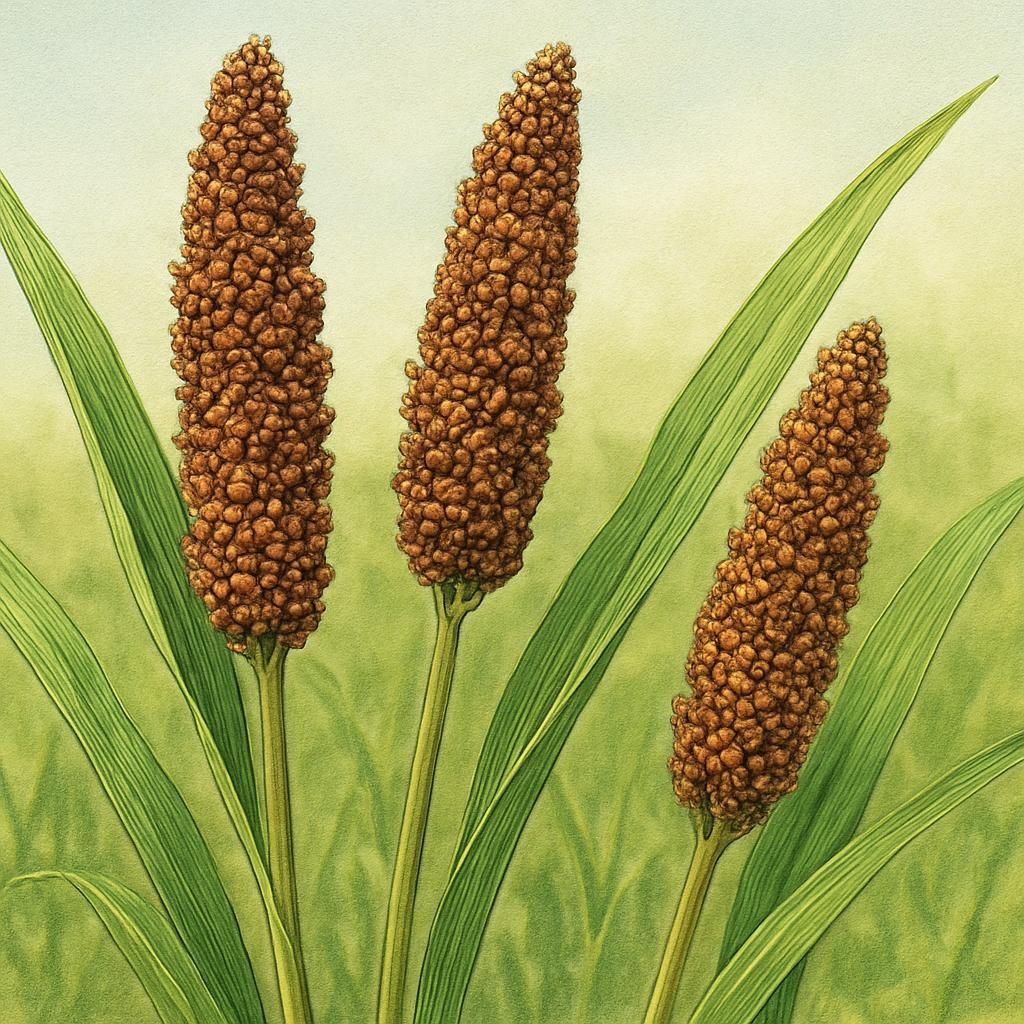
Introduction to Finger Millet (Ragi - GPU 28)
Finger Millet, known locally as Ragi, particularly the GPU 28 variety, is acclaimed for its resilience under harsh climatic conditions, making it an ideal crop for arid regions. It is an essential cereal crop in parts of Africa and Southeast Asia due to its high nutritional value and adaptability.
Botanical Profile of Finger Millet (Ragi - GPU 28)
Belonging to the grass family, Ragi has a fibrous root system and produces small, round seeds. The plant is characterized by its robust, flexible culms and spike-shaped inflorescence with finger-like projections, hence its name.
Soil, pH, and Climate Requirements for Finger Millet (Ragi - GPU 28)
Finger Millet requires well-drained soils, although it can grow in light sandy to heavy black soils. Its pH and climatic conditions are crucial for optimum yield.
| Soil Type | pH Range | Temperature Range | Rainfall Requirement |
|---|---|---|---|
| Loamy | 5.0-7.0 | 23-27°C (73-80°F) | 500-750 mm annually |
Step-by-Step Planting & Propagation
Propagation of Finger Millet is mainly through direct sowing. Prepare the land thoroughly to create a fine tilth. Seeds are usually sown at a depth of 2.5-5 cm. Ensure seed spacing is around 15-20 cm apart for optimal plant density.
- Land Preparation: Plow the field once and harrowed it twice to get a fine and smooth seedbed.
- Seed Treatment: Before sowing, treat seeds with fungicides to prevent root rot.
- Sowing: Direct sowing is preferred, adjust the seeding rate based on soil type and fertility.
Care & Maintenance regimes for Finger Millet (Ragi - GPU 28)
Proper management and scheduled care play a pivotal role in achieving good yields of Finger Millet.
| Aspect | Frequency | Procedure Description |
|---|---|---|
| Irrigation | Weekly | Ensure adequate soil moisture during crucial growth stages |
| Fertilizer | Pre-Sowing | Apply balanced NPK fertilizers |
| Pruning | As Needed | Remove weeds regularly to ensure healthy growth |
Pests, Diseases & Organic Management
Finger Millet is relatively hardy but can be affected by Spider Mites and aphid attacks. Common diseases include Blast and leaf spots.
- Organic Management: Use neem oil or garlic extracts as a preventive measure against pests. Implement crop rotation to manage soil-borne diseases effectively.
Harvesting, Curing & Optimal Storage
Harvest when the spikes turn brown. Avoid delaying as grains usually shatter easily upon drying. After harvesting, allow the millet to dry thoroughly before threshing. Optimal storage conditions involve low moisture content and cool, dry environments to prolong shelf life.
Companion Planting for Finger Millet (Ragi - GPU 28)
Companion planting with crops like Turmeric and Chickpeas can enhance soil fertility. Practices like leguminous intercrops are beneficial for soil nitrogen enrichment, supporting Ragi’s growth.
For further information on complementary planting techniques in small farms, you may find Summer Companion Planting: 10 Organic Pairings to Boost Small Farm Resilience helpful.
For detailed notes on millet as a cereal crop, you can refer to Millet.