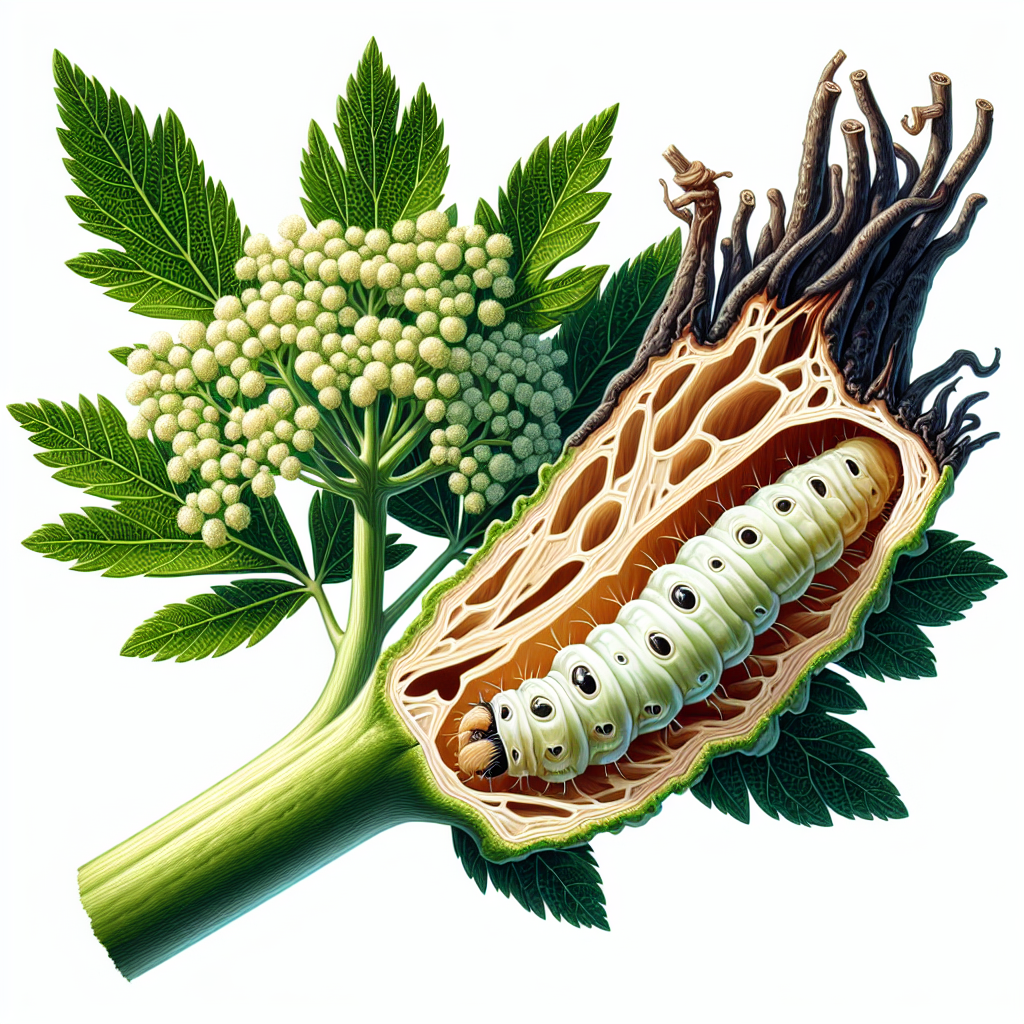
Introduction to Elder shoot borers
Elder shoot borers, primarily the larvae of the currant clearwing moth (Synanthedon tipuliformis), represent a significant threat to elderberry (Sambucus spp.) cultivation worldwide. These pests target the tender shoots and stems of elder plants, boring into the vascular tissue and disrupting nutrient and water flow. This leads to characteristic wilting, shoot tip dieback, and reduced berry production, which can devastate yields in commercial elderberry farms, home gardens, and wild forage areas. Native to Europe but now widespread in North America, elder shoot borers thrive in temperate climates where elderberries are commonly grown for their flowers, berries, and medicinal uses.
Understanding this pest is crucial for growers, as unchecked infestations can weaken entire plants, making them susceptible to secondary issues like leaf-feeding caterpillars or powdery mildew. Early identification and intervention are key to maintaining healthy elderberry stands. This guide provides comprehensive diagnostic tools, lifecycle insights, and proven organic management strategies to protect your crops. For small farms, timely action can preserve up to 80% of potential yield—check out Spring Pest Patrol: Organic AI Strategies to Shield Your Crops from Common Invaders for tech-enhanced monitoring tips.
Elder shoot borers are particularly problematic in organic systems, where chemical controls are limited. Adults resemble wasps with clear wings and yellow bands on the abdomen, while larvae are creamy-white caterpillars up to 20mm long. Infestations often go unnoticed until visible damage appears, underscoring the need for vigilant scouting. With climate change extending growing seasons, borers are emerging earlier, demanding proactive defenses. This definitive guide equips botanists, farmers, and gardeners with professional-grade advice to diagnose, manage, and prevent elder shoot borer damage effectively.
Identifying Symptoms & Damage
Spotting elder shoot borer damage early is essential for minimizing losses. The most telltale sign is the sudden wilting and blackening of shoot tips, often starting at the apex and progressing downward. Affected shoots droop, turn brown, and die back, resembling shepherd's crook symptoms. Look for small entry holes (2-3mm diameter) near the base of wilted shoots, often with sawdust-like frass (insect waste) extruding from them.
Internally, longitudinal tunnels filled with frass and sawdust run through the pith and vascular cambium. Peel back the bark or split the stem to reveal creamy-white larvae feeding within. Heavily infested stems may ooze sap or show reddish-brown discoloration. In severe cases, multiple shoots per plant are affected, leading to bushy, stunted growth as the plant compensates with lateral buds.
Damage peaks during summer, coinciding with larval development. Yield impacts are profound: bored shoots fail to produce flowers or berries, reducing harvests by 30-50% in moderate infestations. Differentiate from other issues—unlike cane borers, elder shoot borers target current-season growth; fungal wilts show root rot, absent here. Scout weekly from spring flush, focusing on young plantations. Use a hand lens to inspect for eggs (tiny, white, ribbed) laid singly on bark crevices.
Secondary signs include increased bird predation on weakened stems or sooty mold from sap leaks attracting ants. Photograph suspect shoots for records; split 10-20 per plant to confirm larvae presence. Threshold: 5% shoot infestation warrants action. Accurate diagnosis prevents misapplication of controls, saving time and resources.
Lifecycle and Progression of Elder shoot borers
The elder shoot borer completes one generation per year, with lifecycle stages finely tuned to elderberry phenology. Adults emerge in late spring to early summer (May-June in temperate zones), coinciding with elder shoot elongation. Males patrol vigorously, mimicking wasps to evade predators; females lay 20-50 eggs over 10-14 days on tender bark.
Eggs hatch in 7-10 days into tiny larvae that bore directly into shoots. Larvae feed and grow through summer, molting four times, reaching full size (15-20mm) by August. They overwinter as partially grown larvae within stems, pupating in spring (April-May). Pupae are reddish-brown, encased in silk-lined tunnels; adults eclose after 2-3 weeks.
Progression varies by climate: warmer regions see earlier emergence, potentially overlapping generations. Peak larval activity (June-August) aligns with maximum damage. Monitor with pheromone traps for adults—capture peaks predict egg-laying. Lifecycle knowledge enables precise timing: prune overwintering sites in winter, target neonates in spring.
Environmental Triggers & Risk Factors
Elder shoot borers flourish under specific conditions. High humidity and temperatures above 20°C (68°F) during shoot growth accelerate larval development. Overly fertile soils promote succulent shoots, prime targets. Poor air circulation in dense plantings exacerbates infestations, as adults prefer sheltered oviposition sites.
Risk factors include nearby wild elder stands harboring overwintering larvae, introducing pests via wind-dispersed adults. New plantations from infested cuttings perpetuate cycles. Drought-stressed plants resist better, as shoots harden earlier. Climate shifts—milder winters reduce mortality, increasing populations. Companion crops like elderberry (American) without barriers heighten spread.
Organic Control & Treatment Plans
Organic management emphasizes integrated pest management (IPM). Cultural: Prune and destroy infested shoots promptly, especially post-harvest. Remove wild elders within 500m. Maintain spacing (1.5-2m) for airflow.
Biological: Encourage natural enemies—birds prey on larvae; release Trichogramma wasps for egg parasitism. Bt (Bacillus thuringiensis) kurstaki targets young larvae; apply at egg hatch (scout-detected) every 7-10 days, 3 applications.
Organic Sprays: Neem oil or spinosad on young shoots deters oviposition; add insecticidal soap for contact kill. Pheromone traps disrupt mating; place 2-4/ha from May.
Treatment Plan: 1. Scout weekly. 2. At 1% eggs, apply neem. 3. Prune at 5% wilt. 4. Bt if larvae detected. 5. Monitor traps. Rotate tactics to prevent resistance. Efficacy: 70-90% control with diligence.
Preventing Elder shoot borers in the Future
Prevention hinges on sanitation and resistance. Plant certified clean stock. Winter prune to remove 90% overwintering sites; burn debris. Use row covers during peak flight (May-July). Mulch suppresses soil pupation. Select resistant elder varieties like 'Adams' or 'York'. Monitor with traps; threshold 5 adults/trap/week triggers action. Long-term: interplant marigold as repellent. Annual IPM audits sustain low populations.
Crops Most Affected by Elder shoot borers
Elder shoot borers primarily target elderberry species: American elderberry (Sambucus canadensis), European elder (S. nigra), including cultivars like 'Black Lace'. Wild Sambucus stands amplify spread. Minor hosts include currants, gooseberries, and related Caprifoliaceae. Commercial elderberry orchards bear the brunt, with losses up to 50% in untreated fields. Home gardens with ornamental elders suffer aesthetic and yield hits. No major field crops affected, but proximity to currant sawfly hosts increases risk.