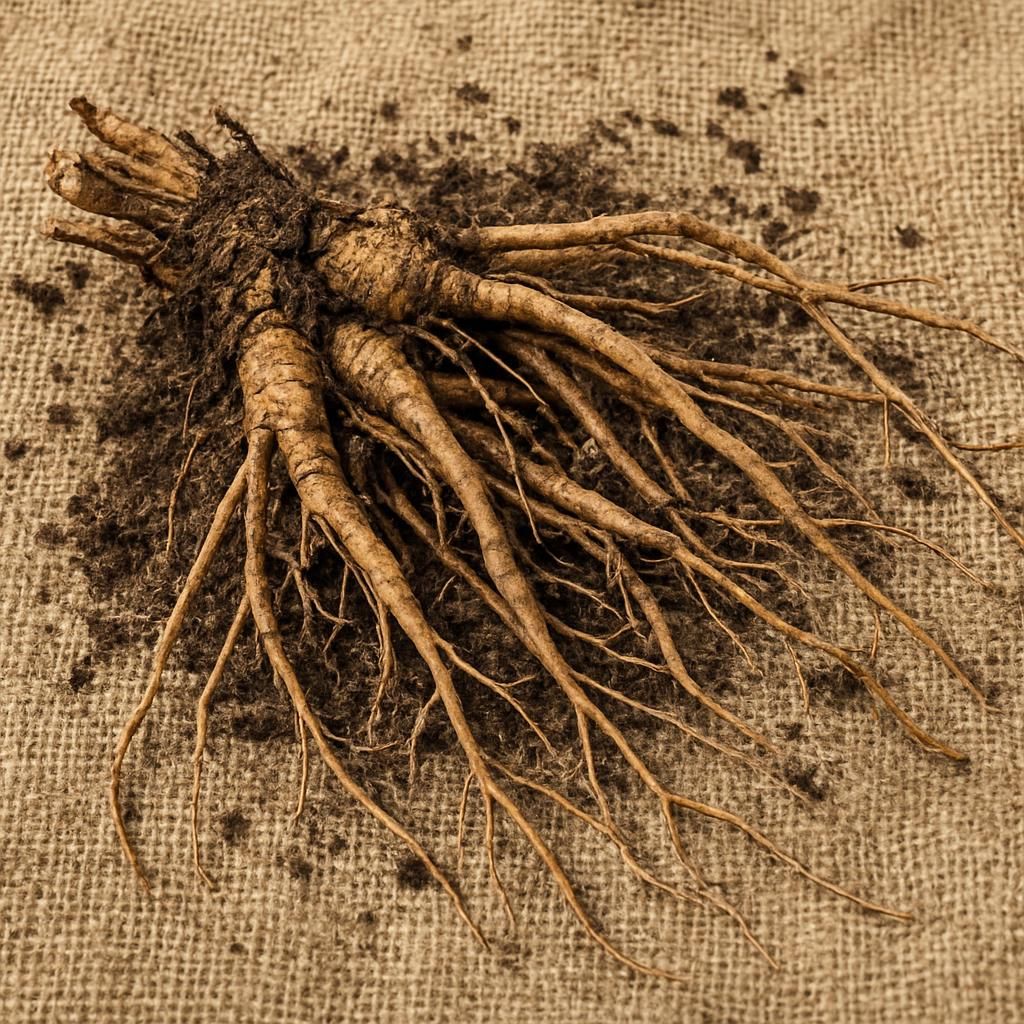
Introduction to Echinacea Root (Purpurea)
Echinacea purpurea, commonly known as purple coneflower, produces a thick, fibrous taproot that is harvested for its potent medicinal compounds. The root is valued in both conventional and organic markets for its alkylamides and polysaccharides. Commercial growers target 2–3 year harvest cycles to maximize root mass and active constituent levels.
The plant is native to the central United States but adapts well to temperate climates worldwide. It is a hardy perennial that returns reliably for 4–7 seasons when properly managed. Demand for certified organic echinacea root continues to rise in nutraceutical and herbal supplement industries.
Botanical Profile of Echinacea Root (Purpurea)
Echinacea purpurea is a member of the Asteraceae family. It forms a basal rosette of lance-shaped leaves and produces showy purple-pink flowers on 60–120 cm stems. The root system consists of a central taproot with numerous lateral feeder roots that store starches and secondary metabolites.
The plant exhibits strong winter hardiness (USDA zones 3–9) and tolerates both full sun and partial shade. Flower heads attract pollinators while the foliage provides minor habitat for beneficial insects. Root chemistry peaks in the third year, making delayed harvest economically advantageous.
Soil, pH, and Climate Requirements for Echinacea Root (Purpurea)
Successful echinacea root production requires well-drained, fertile loam with consistent moisture and full sun exposure. The crop tolerates a wide pH range but performs best in slightly acidic to neutral conditions.
| Parameter | Ideal Range | Notes |
|---|---|---|
| Soil Type | Loamy, well-drained | Avoid heavy clay; raised beds recommended |
| Soil pH | 6.0–7.0 | Optimal nutrient uptake occurs in this range |
| Temperature | 15–25 °C daytime | Roots tolerate -20 °C winter dormancy |
| Annual Rainfall | 500–900 mm | Supplemental irrigation needed in dry spells |
| Sun Exposure | Full sun (6+ hours) | Partial shade reduces root yield |
| Elevation | 0–1500 m | Higher elevations may shorten growing season |
Step-by-Step Planting & Propagation
Echinacea purpurea is most reliably established from seed or root divisions. Seed stratification for 8–12 weeks at 4 °C improves germination rates to 70–85 %. Direct sow in early spring when soil reaches 10 °C.
Space plants 30–45 cm apart in rows 60–75 cm wide. Plant crown divisions in fall or early spring at the same depth they were previously grown. Transplant seedlings at the 4–6 true leaf stage. Maintain weed-free beds during the first 60 days to reduce competition.
Care & Maintenance regimes for Echinacea Root (Purpurea)
Consistent moisture during the first growing season is critical for root development. Established plants are moderately drought tolerant but benefit from supplemental irrigation during flowering.
| Task | Schedule | Details |
|---|---|---|
| Watering | Weeks 1–8: 25 mm/week | Keep soil evenly moist; reduce after establishment |
| Fertilizer | Early spring & post-harvest | 5-5-5 organic blend at 200 kg/ha; avoid excess nitrogen |
| Pruning | Remove spent flowers mid-season | Direct energy to root growth; deadhead selectively |
| Mulching | 5–7 cm organic mulch annually | Retains moisture and suppresses weeds |
| Weeding | Hand or shallow cultivation | Avoid deep tillage near roots |
Pests, Diseases & Organic Management
Echinacea purpurea is generally resilient but can be affected by Aphids, Spider Mites, and Powdery Mildew. Root rots caused by Pythium and Rhizoctonia occur in poorly drained soils.
Monitor weekly for aphids on new growth. Use insecticidal soap or neem oil at first sign of infestation. Practice crop rotation and improve drainage to prevent fungal root diseases. Remove and destroy infected foliage to reduce overwintering inoculum.
Harvesting, Curing & Optimal Storage
Harvest roots in the third or fourth year after planting when foliage begins to senesce in late autumn. Dig carefully with a fork to avoid damaging the taproot. Wash roots gently and remove excess soil.
Dry roots at 35–40 °C with good airflow until brittle. Store in airtight containers away from light and moisture. Properly cured root retains potency for 18–24 months.
Companion Planting for Echinacea Root (Purpurea)
Echinacea benefits from pairing with Yarrow and Thyme which deter pests and improve soil biodiversity. Avoid planting near Potato to reduce shared disease pressure. Marigold provides additional pollinator support and nematode suppression.
Interplant with nitrogen-fixing Clover to improve soil fertility between rows. Maintain 1 m buffers from heavy feeders such as Corn to prevent nutrient competition.