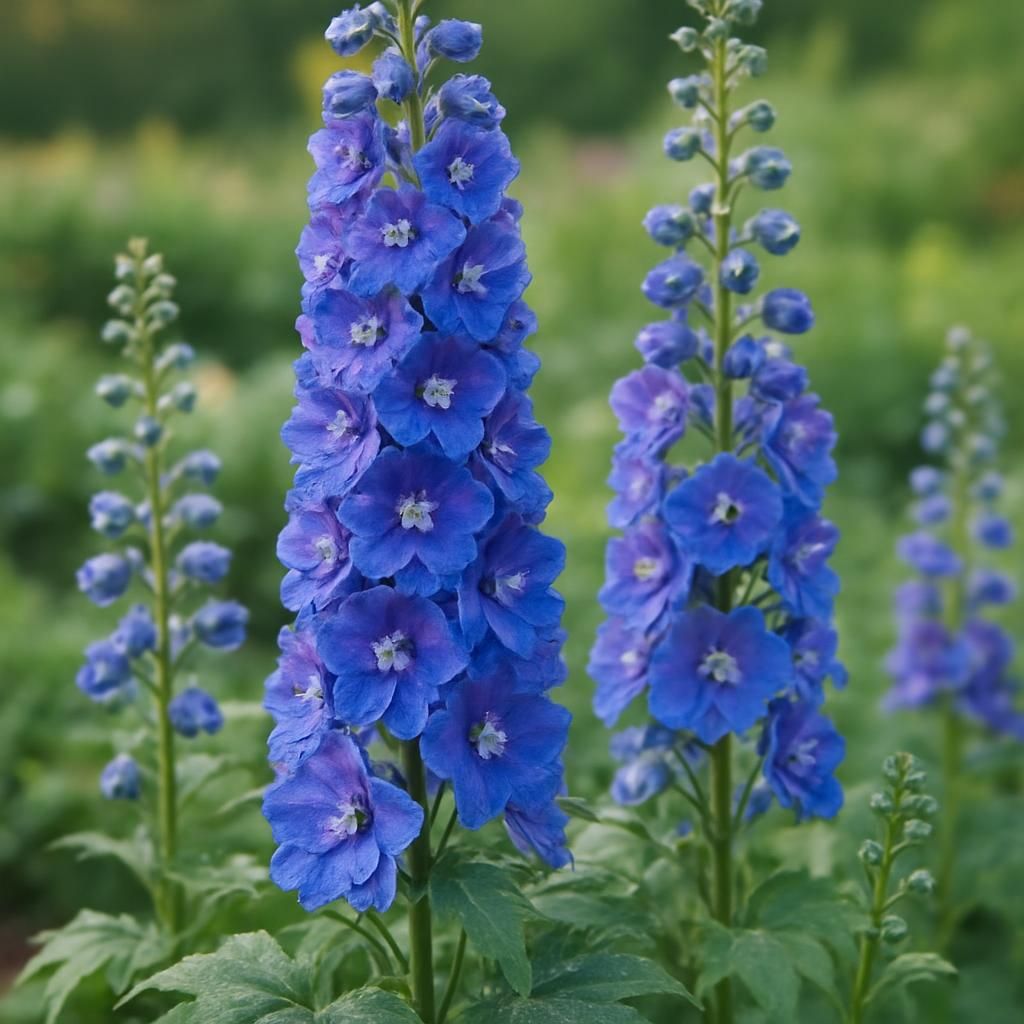
Introduction to Delphinium
Delphinium is a genus of approximately 300 species of perennials and annuals in the buttercup family (Ranunculaceae). Gardeners and commercial cut-flower growers prize the plants for their dramatic vertical spikes that can reach 6–8 feet in height. The most commonly cultivated forms derive from Delphinium elatum hybrids, which produce dense columns of spurred flowers in shades of blue, purple, pink, and white. Because of their height and heavy flower load, delphiniums require staking and regular maintenance, making them a moderately challenging crop for both home and professional settings.
Botanical Profile of Delphinium
Delphinium plants develop from a woody crown with fleshy roots that store carbohydrates for rapid spring growth. Each flowering stem produces palmately lobed leaves at the base and along the lower half of the stalk. Individual flowers consist of five petal-like sepals surrounding a central spur that contains nectar, attracting long-tongued bees and hummingbirds. After pollination, the plant forms follicles containing small, dark seeds. Most commercial cultivars are sterile hybrids and must be propagated vegetatively or purchased as plugs.
Soil, pH, and Climate Requirements for Delphinium
Delphinium thrives in deep, fertile, well-drained loam with high organic matter. The plants are heavy feeders and sensitive to both drought and waterlogging. Cool summers with night temperatures below 15 °C (59 °F) promote strong stems and intense flower color. In warmer regions, afternoon shade and consistent moisture are essential.
| Parameter | Ideal Range | Notes |
|---|---|---|
| Soil Type | Loamy, well-drained | Incorporate 5–8 cm compost annually |
| Soil pH | 6.5–7.5 | Slightly alkaline reduces clubroot risk |
| Temperature (Day) | 15–24 °C (59–75 °F) | Higher temps reduce flower quality |
| Temperature (Night) | 7–15 °C (45–59 °F) | Cool nights essential for tall stems |
| USDA Zones | 3–7 | Mulch crowns in zones 6–7 for winter |
| Spacing | 30–45 cm (12–18 in) between plants | Rows 60–90 cm (24–36 in) apart |
Step-by-Step Planting & Propagation
- Start seeds indoors 10–12 weeks before last frost at 15–18 °C (59–64 °F). Press seeds lightly into sterile mix; light aids germination.
- Transplant seedlings when they have 4–6 true leaves into 10 cm pots; harden off for 7–10 days.
- Prepare beds by incorporating 5–8 cm well-rotted compost and a balanced organic fertilizer (NPK 5-5-5).
- Plant crowns at the same depth they were grown; firm soil and water thoroughly.
- Install stakes or grow-through supports at planting to avoid root disturbance later.
- For division, lift established clumps in early spring or fall every 3–4 years and replant vigorous sections.
Care & Maintenance regimes for Delphinium
Consistent moisture, balanced feeding, and timely pruning produce the strongest stems and longest bloom period. Mulch with 5 cm of organic material to retain moisture and suppress weeds.
| Task | Frequency | Details |
|---|---|---|
| Watering | 2–3 times weekly in dry periods | Deep soak to 20 cm; avoid overhead irrigation |
| Fertilizer | Early spring & post-bloom | High-nitrogen organic feed (10-5-5) then switch to bloom formula (5-10-10) |
| Pruning | After first flush & fall cleanup | Cut stems to 15 cm after flowering; remove foliage at season end |
| Staking | At 30 cm height | Use bamboo or metal rings; tie loosely |
| Mulching | Spring & fall | 5 cm layer of leaf mold or bark chips |
Pests, Diseases & Organic Management
Common problems include Aphids, Slugs and snails, and Powdery mildew. Crown rot and root rot occur in poorly drained soils. Practice crop rotation, improve air circulation, and apply neem oil or insecticidal soap at first sign of aphids. Copper-based fungicides or baking-soda sprays manage mildew. Remove and destroy infected foliage at season end.
Harvesting, Curing & Optimal Storage
Harvest when two-thirds of the florets on the spike are open. Cut stems early in the morning and place immediately in cool water with floral preservative. For longer storage, recut stems and hold in a 2–4 °C (35–39 °F) cooler for up to 7 days. Dried delphinium spikes retain color when hung upside down in a dark, well-ventilated space for 2–3 weeks.
Companion Planting for Delphinium
Pair delphinium with lower-growing companions that do not compete for light. Nasturtium and Marigold deter aphids while providing ground cover. Thyme and Yarrow attract beneficial insects. Avoid planting near Tomato or Potato to reduce shared disease pressure.