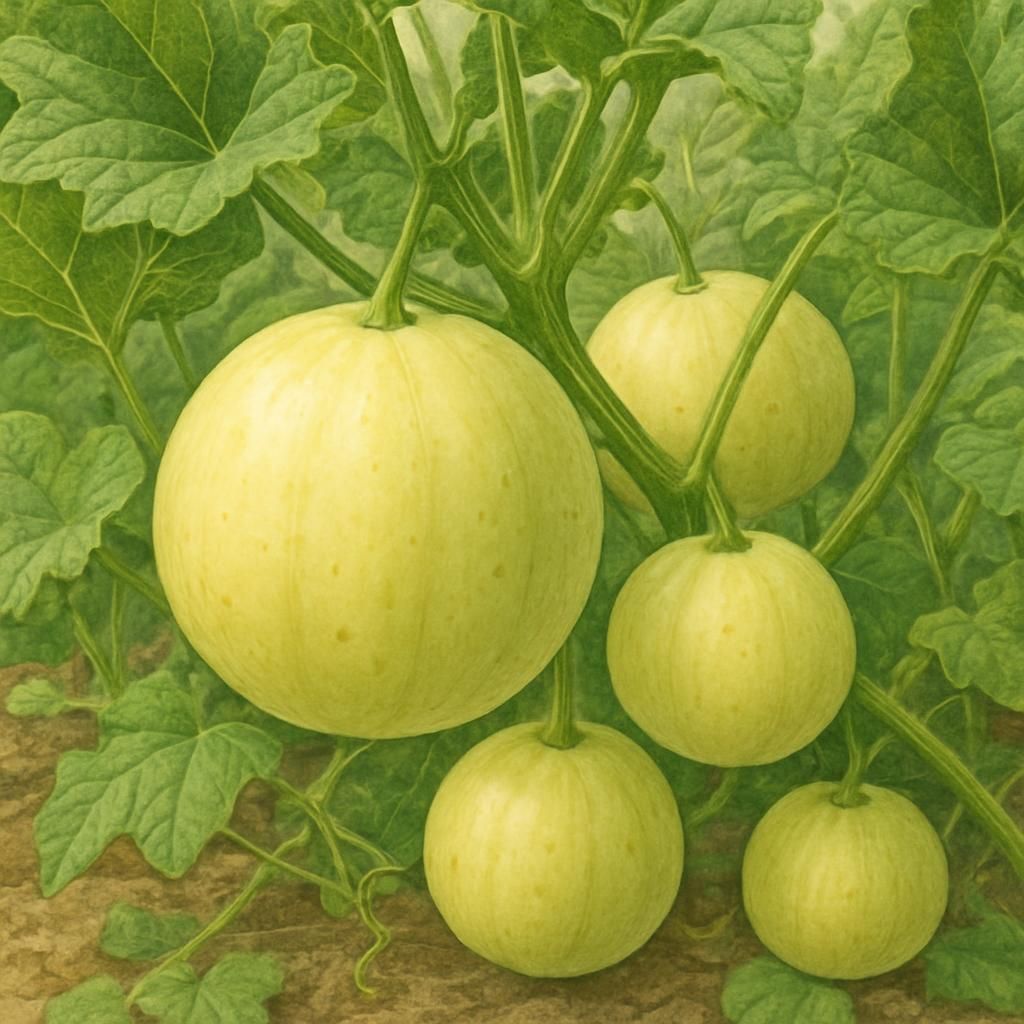
Introduction to Cucumber (Crystal Apple)
The Cucumber (Crystal Apple) is a unique heirloom variety that is beloved by gardeners and gourmets alike. This plant produces round, pale yellow fruits that resemble small apples, both in size and appearance. With a crisp texture and a mild, refreshing taste, Crystal Apple cucumbers are ideal for fresh salads or eating raw. Dating back to 1934 in New Zealand, this cucumber has garnered popularity for its tasty and unusual fruits.
Botanical Profile of Cucumber (Crystal Apple)
Cucumber (Crystal Apple) is botanically classified as Cucumis sativus 'Crystal Apple'. This variety is a vine plant in the Cucurbitaceae family, which includes other vegetables like Pumpkin, Zucchini, and Squash. Characterized by its vigorous growth, this variety forms sprawling vines that produce round, apple-like cucumbers. They are typically harvested when they are about the size of a cricket ball, displaying a creamy white or yellow skin.
Soil, pH, and Climate Requirements for Cucumber (Crystal Apple)
The success of growing Cucumber (Crystal Apple) largely depends on the ideal environmental conditions and soil quality.
| Factor | Ideal Conditions |
|---|---|
| Soil Type | Well-drained, fertile soil |
| Soil pH | 6.0 - 7.0 |
| Temperature Range | 18°C – 30°C (65°F – 85°F) |
| Sunlight | Full sun |
Cucumber (Crystal Apple) prefers a warm environment with plenty of sunshine. Moderate to high humidity levels favor robust growth, but adequate airflow is essential to avoid fungal diseases.
Step-by-Step Planting & Propagation
- Seed Selection and Preparation: Start by selecting high-quality Cucumber (Crystal Apple) seeds from a reputable source. Soak the seeds in water for about 24 hours to accelerate germination.
- Sowing the Seeds: Sow seeds directly into the soil once the danger of frost has passed and temperatures remain above 18°C (65°F). Plant seeds 1 inch deep and 12-18 inches apart in rows.
- Transplanting: If starting indoors, seedlings can be transplanted outdoors after about 3-4 weeks, once they have developed a few true leaves.
- Supporting the Vines: Provide support systems such as trellises to encourage vertical growth, enhancing air circulation and making harvesting easier.
Care & Maintenance Regimes for Cucumber (Crystal Apple)
Cucumber (Crystal Apple) requires consistent care for maximal yield and quality.
| Aspect | Recommendations |
|---|---|
| Watering | 1-2 inches per week; avoid watering foliage directly |
| Fertilizer | Apply balanced fertilizer at planting; side-dress with compost every few weeks |
| Pruning | Prune older leaves to increase air circulation and light penetration |
Regularly inspect the vines for signs of stress or pest invasions. Mulching helps retain moisture and suppress weeds, while compost feeds the soil throughout the growing season.
Pests, Diseases & Organic Management
Cucumber (Crystal Apple) is susceptible to a variety of pests and diseases, including Cucumber Beetles, Spider Mites, and Powdery Mildew.
- Pests: Use organic insecticidal soap or neem oil to deter pest infestations. Encourage beneficial insects, like ladybugs, to naturally control pest populations.
- Diseases: To prevent foliar diseases, ensure adequate spacing between plants and good air circulation. Remove any infected plant material to avoid spread.
For more organic pest management strategies, consider reading 7 Summer Pest Traps That Sabotage Small Farm Harvests.
Harvesting, Curing & Optimal Storage
Crystal Apple cucumbers are typically ready for harvest around 60 days after planting. Gather them when they are about the size of a small apple, firm to the touch, and light yellow in color.
- Harvesting: Use scissors or a sharp knife to cut the cucumbers off the vine to prevent damage.
- Storage: Store cucumbers in a cool, dry place, ideally at 10°C (50°F). They can last up to 2 weeks under optimal conditions.
Companion Planting for Cucumber (Crystal Apple)
Companion planting enhances growth and prevents pest issues. Beneficial companions for Cucumber (Crystal Apple) include Corn, Beans, and Marigolds, which deter pests and improve soil health.
To learn about effective pairings that improve resilience, check out Spring Companion Planting: 8 Organic Pairings to Maximize Small Farm Yields.