Introduction to Coriander Seed (Moroccan)
Coriander Seed (Moroccan) is a premium seed coriander cultivar selected for its high essential oil content, heat tolerance, and strong fragrance. Grown primarily for its dried fruits (commonly called seeds), this variety delivers superior yields of aromatic spice used in Moroccan, Middle Eastern, and Indian cuisines as well as perfumery and pharmaceutical industries. Unlike leaf coriander, seed coriander requires longer maturation and specific environmental conditions to maximize seed set and oil quality.
Commercial growers value Moroccan coriander for its drought resilience once established and its ability to produce uniform, plump seeds with elevated linalool levels. The crop fits well into rotation systems in Mediterranean and semi-arid climates and can be integrated into both conventional and certified organic operations.
Botanical Profile of Coriander Seed (Moroccan)
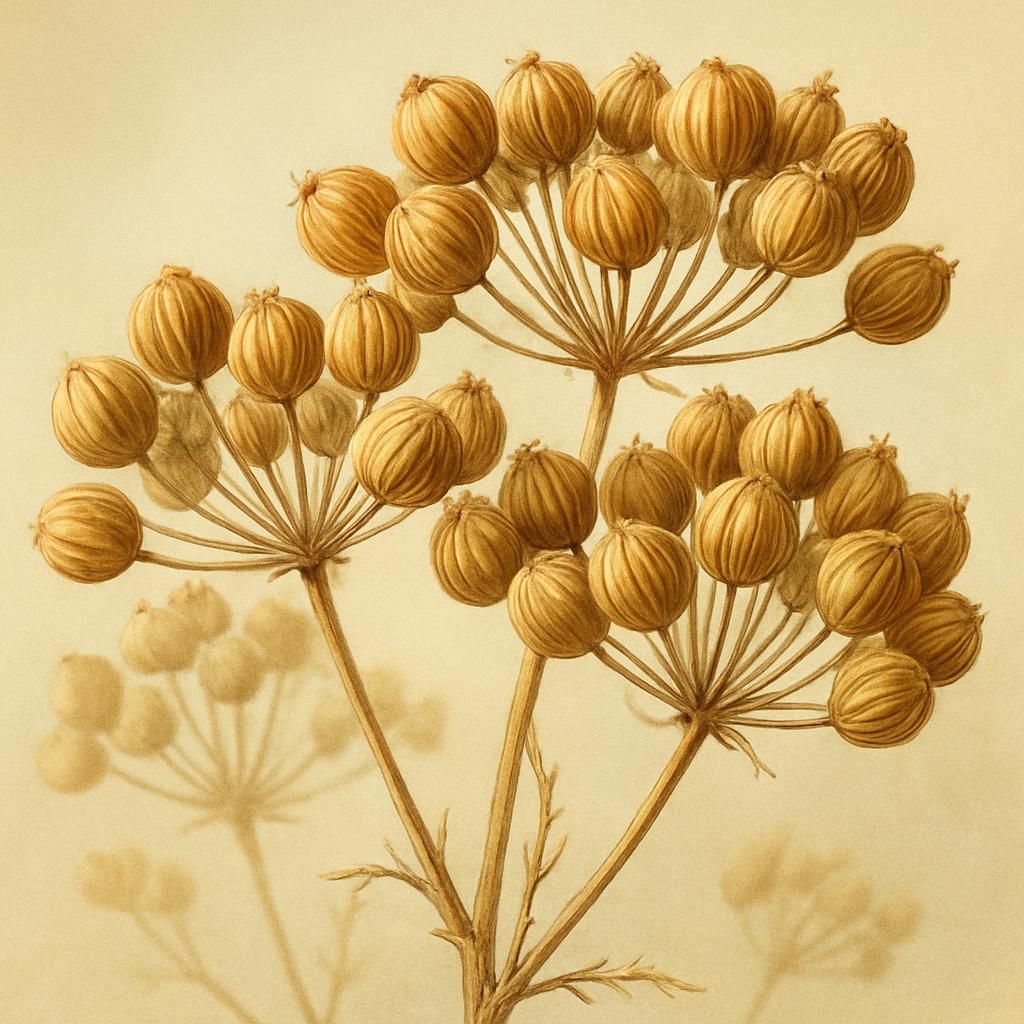
Coriander belongs to the Apiaceae family. The Moroccan type exhibits compact growth reaching 40–60 cm in height with finely divided, aromatic leaves and small white-pink flowers arranged in compound umbels. Each plant produces 20–40 schizocarps that split into two mericarps at maturity. The seeds are round to slightly ovate, 3–5 mm in diameter, and turn golden-brown when fully ripe. The essential oil profile is dominated by linalool (65–75 %) with smaller amounts of geraniol, camphor, and pinene.
Soil, pH, and Climate Requirements for Coriander Seed (Moroccan)
Successful cultivation depends on well-drained, fertile soils with moderate fertility. Moroccan coriander performs best in loamy or sandy loam textures that retain moisture without waterlogging. Heavy clay soils should be amended with organic matter to improve drainage.
| Parameter | Ideal Range | Notes |
|---|---|---|
| Soil Type | Sandy loam to loam | Avoid compacted or saline soils |
| Soil pH | 6.2 – 7.5 | Slightly acidic to neutral |
| Temperature (Day) | 18 – 28 °C | Optimal flowering and seed set |
| Temperature (Night) | 10 – 15 °C | Prevents premature bolting |
| Annual Rainfall | 400 – 700 mm | Supplemental irrigation required below 400 mm |
| Frost Tolerance | Light frost (-2 °C) tolerated | Seedlings more sensitive than mature plants |
Step-by-Step Planting & Propagation
- Site Selection: Choose a sunny location with at least 6 hours of direct sunlight. Prepare beds 1.2 m wide with 30 cm raised edges for drainage.
- Soil Preparation: Incorporate 3–5 kg/m² well-rotted compost or aged manure two weeks before sowing. Conduct a soil test and correct deficiencies.
- Seed Treatment: Use certified seed treated with a mild fungicide or biological inoculant to reduce damping-off risk.
- Sowing Time: In Mediterranean climates sow from late February to early April. In cooler regions start indoors 4–6 weeks before last frost.
- Sowing Method: Direct sow in rows 30–40 cm apart at 1–1.5 cm depth. Thin seedlings to 8–10 cm spacing when they reach 5 cm height.
- Germination: Expect 7–12 days at 15–20 °C soil temperature. Maintain consistent moisture during this period.
Care & Maintenance regimes for Coriander Seed (Moroccan)
Consistent moisture and balanced nutrition are critical during vegetative growth and flowering. Avoid excess nitrogen after flowering begins to prevent lush foliage at the expense of seed production.
| Growth Stage | Watering Schedule | Fertilizer Application | Pruning / Other Care |
|---|---|---|---|
| Germination (0–14 days) | Light daily misting to keep surface moist | None | None |
| Vegetative (2–6 weeks) | 25–30 mm/week; maintain even moisture | 40 kg N/ha at 3 weeks | Weed control; thin to final spacing |
| Flowering (6–9 weeks) | 20 mm/week; reduce slightly | 20 kg N + 30 kg P + 20 kg K/ha | Monitor for lodging; install light support if needed |
| Seed Fill (9–12 weeks) | 15 mm/week; allow surface to dry between irrigations | None; side-dress potassium if deficiency appears | Remove any late weeds |
Pests, Diseases & Organic Management
Common pests include Aphids, Thrips, and Spider Mites. Use reflective mulch and introduce beneficial insects such as lady beetles and lacewings. For fungal issues, practice crop rotation and avoid overhead irrigation. Powdery mildew can be suppressed with weekly applications of potassium bicarbonate or neem oil.
Harvesting, Curing & Optimal Storage
Harvest when 60–70 % of seeds have turned brown and umbels begin to dry. Cut plants at the base early in the morning and bundle loosely. Hang in a shaded, well-ventilated area for 7–10 days. Once fully dry, thresh by hand or mechanical thresher and winnow to remove chaff. Store seeds in airtight containers at 10–15 °C and <60 % relative humidity. Properly cured Moroccan coriander retains aroma for up to 18 months.
Companion Planting for Coriander Seed (Moroccan)
Coriander pairs well with Tomato and Cucumber by attracting beneficial insects that control aphids and whiteflies. Avoid planting near Fennel which can inhibit coriander germination. Interplanting with Marigold provides additional pest deterrence through root exudates and flower nectar.
For further reading on strategic crop pairings see Summer Companion Planting: 10 Organic Pairings to Boost Small Farm Resilience.